This website uses cookies to enhance your browsing experience and ensure the functionality of our site. For more detailed information about the types of cookies we use and how we protect your privacy, please visit our Privacy Information page.
×
Cookie Settings
This website uses different types of cookies to enhance your experience. Please select your preferences below:
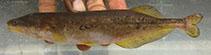
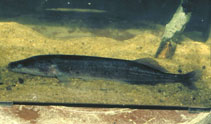
Mormyrops anguilloides, Cornish jack : fisheries, gamefish
Africa: a very wide distribution area which includes most of the West African river basins (Ref. 81274), the White Nile, Uebi Shebeli and Juba (Ref. 3203), and the Congo River basin (Ref. 52193). In southern Africa, restricted to the middle and lower Zambezi, Buzi and Pungwe (Ref. 52193). Also known from Lake Malawi, Lake Tanganyika and Lake Albert [former Lake Mobuto] (Ref. 3203, 52193).
Longitud en la primera madurez / Tamaño / Peso / Edad
Madurez: Lm32.5 range ? - ? cm Max length : 150 cm TL macho / no sexado; (Ref. 2915); peso máximo publicado: 15.0 kg (Ref. 52193)
Espinas dorsales (total) : 0; Radios blandos dorsales (total) : 21 - 33; Espinas anales: 0; Radios blandos anales: 38 - 51. Diagnosis: head depressed (Ref. 13337, 52193). Body elongated (Ref. 2915, 13337, 52193), shallow (Ref. 28714), ratio standard length/body depth 4.9-7.5 (Ref. 81274). Mouth large (Ref. 13337, 52193) and terminal (Ref. 13337, 28714, 52193, 81274), with 16-28 teeth in upper, and 14-28 in lower jaw (the number of teeth increases with size) (Ref. 81274). Chin (mental swelling) absent (Ref. 52193). Origin of dorsal fin behind origin of anal fin, nearer caudal fin base than tip of snout (Ref. 4903, 52193). Dorsal fin shorter than anal fin; mouth width subequal to snout length (Ref. 52193). Snout long (Ref. 52193), rounded, its length 1/5-1/4 that of the head (Ref. 4903), almost as broad as head (Ref. 2915, 81274). 21-33 dorsal- and 38-50 anal-fin rays (Ref. 52193, 81274). Head 3.4-5.1 times in standard length; interorbital space relatively broad, ratio head length/interorbital width 2.9-6.8; wide ranges for most of the meristic characters are caused by the existence of geographical clines (Ref. 2915, 81274).
Body shape (shape guide): elongated; Cross section: compressed.
Juveniles occur in marginal habitats, adults prefer deep quiet water between boulders and below overhangs, away from strong currents; also occurs beneath Salvinia mats and in river estuaries in Lake Kariba; juveniles prey on invertebrates, mainly shrimps and insect larvae (Ref. 7248, 52193). Adults/larger individuals are piscivorous (Ref. 28714), feeding on small cichlids, minnows and labeos (Ref. Ref. 7248, 52193). May live for 8 years or more; breeds in summer during the rainy season; mature females carry 25000 or more eggs (Ref. 7248, 52193). A fractional spawner (Ref. 10606, 10605). Affinities: M. breviceps.
Ciclo vital y comportamiento de apareamiento Madurez | Reproducción | Puesta | Huevos | Fecundidad | Larva
Bigorne, R., 1990. Mormyridae. p. 122-184. In C. Lévêque, D. Paugy and G.G. Teugels (eds.) Faune des poissons d'eaux saumâtres d'Afrique de l'Ouest. tome 1. Faune Trop. 28. Musée Royal de l'Afrique Centrale, Tervuren, and ORSTOM, Paris. (Ref. 2915)
Situación en la Lista Roja de la UICN (Ref. 130435: Version 2025-2 (Global))
Fisiología Composición corporal Nutrientes Consumo del oxígeno Tipo de natación Velocidad de natación Pigmentos visuales Sonido de peces Enfermedades y parásitos Toxicidad (CL50)