



Leptocharias smithii (Müller & Henle, 1839)
Barbeled houndshark
Добавить Ваши наблюдения в Fish Watcher
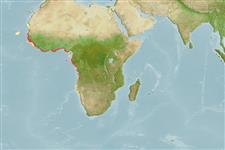
| Native range | All suitable habitat | Point map | Year 2050 |
|
| This map was computer-generated and has not yet been reviewed. |
| Leptocharias smithii AquaMaps Data sources: GBIF OBIS |
Загрузить свой Фото и Видео
изображения | Марки, монеты и прочее. | Изображение на Google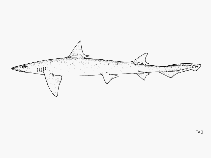 Leptocharias smithii
Изображение сделано FAO
изображения | Марки, монеты и прочее. | Изображение на Google
Изображение сделано FAO
Классификация / Имена народные названия | синонимы | Catalog of Fishes(род, виды) | ITIS | CoL | WoRMS | Cloffa
Пластиножаберные (акулы и скаты) (sharks and rays) > Carcharhiniformes (Ground sharks) > Leptochariidae (Barbeled houndsharks)
Etymology: Leptocharias: Etymology not explained, perhaps leptos (Gr.), slender; [Car]charias, i.e., a slender shark “very nearly related to Carcharias” (See ETYFish); smithii: In honor of Andrew Smith (1797-1872), Scottish military physician, explorer, ethnologist and zoologist, who collected many South African sharks and coined many of the shark names later used by Müller and Henle (See ETYFish).
Eponymy: Dr Sir Andrew Smith (1797–1872) was a Scotsman who joined the Army Medical Service (1819) after graduating from Edinburgh University. [...] (Ref. 128868), visit book page.
More on authors: Müller & Henle.
Etymology: Leptocharias: Etymology not explained, perhaps leptos (Gr.), slender; [Car]charias, i.e., a slender shark “very nearly related to Carcharias” (See ETYFish); smithii: In honor of Andrew Smith (1797-1872), Scottish military physician, explorer, ethnologist and zoologist, who collected many South African sharks and coined many of the shark names later used by Müller and Henle (See ETYFish).
Eponymy: Dr Sir Andrew Smith (1797–1872) was a Scotsman who joined the Army Medical Service (1819) after graduating from Edinburgh University. [...] (Ref. 128868), visit book page.
More on authors: Müller & Henle.
Окружающая среда: среда / климатическая зона / пределы глубины / диапазон распространения экология
морской; солоноватоводный демерсальный; пределы глубины 10 - 75 m (Ref. 244), usually 10 - 60 m (Ref. 5377). Tropical; 20°C - 27°C; 22°N - 23°S, 26°W - 17°E
распространение Территории | регионы FAO | Экосистемы | места находок | карта точек | интродукции | Faunafri
Eastern Atlantic: Mauritania to Namibia (Ref. 127434).
Размер / Вес / Возраст
половая зрелость: Lm ? range ? - ? cm
Max length : 77.0 cm TL самец/пол неопределен; (Ref. 244); 82.0 cm TL (female); common length : 55.0 cm TL самец/пол неопределен; (Ref. 26999)
Max length : 77.0 cm TL самец/пол неопределен; (Ref. 244); 82.0 cm TL (female); common length : 55.0 cm TL самец/пол неопределен; (Ref. 26999)
Краткое описание определительные ключи | морфология | морфометрия
Similar to species of Mustelus but nostrils with anterior flaps formed into distinct barbels (Ref. 5485).
Body shape (shape guide): elongated.
Body shape (shape guide): elongated.
Found on the continental shelf, especially abundant off river mouths on muddy bottoms. Salinity: 35-36 ppt. Oxygen: 3-4 ppm. Feeds on small bottom and littoral organisms like crustaceans, bony fishes, octopi and sponges. Viviparous (Ref. 50449), with 7 young in a litter (Ref. 244). Dental sexual dimorphism is manifested by males having greatly enlarged anterior teeth. Utilized fresh, smoked or dried salted for human consumption, skin for leather.
Жизненный цикл и брачное поведение половая зрелость | размножение | нерест | икра | Плодовитость | личинки
Viviparous, placental (Ref. 50449), with 7 young in a litter (Ref. 244). Distinct pairing with embrace (Ref. 205).
Основная ссылка
Загрузите свои рекомендации | ссылки | координатор | соавторы
Compagno, L.J.V., 1984. FAO Species Catalogue. Vol. 4. Sharks of the world. An annotated and illustrated catalogue of shark species known to date. Part 2 - Carcharhiniformes. FAO Fish. Synop. 125(4/2):251-655. Rome: FAO. (Ref. 244)
Статус Красного Списка МСОП (Ref. 130435: Version 2025-2 (Global))
Уязвимые (VU) (A2d); Date assessed: 04 August 2020
CITES
Not Evaluated
Угроза для людей
Harmless
Использование человеком
рыболовство: не имеет хозяйственного значения
FAO - Publication: search | FishSource | Море вокруг нас
дополнительная информация
Трофическая экология
Пищевые предметы (добыча)
состав пищи
потребление пищи
Продовольственные пайки
хищники
Пищевые предметы (добыча)
состав пищи
потребление пищи
Продовольственные пайки
хищники
Динамика численности населения
Параметры роста
Макс. возраст / размер
Отношение длины к весу.
Отношение длины к длине.
Размерный состав
Преобразование массы
пополнение
численность
Параметры роста
Макс. возраст / размер
Отношение длины к весу.
Отношение длины к длине.
Размерный состав
Преобразование массы
пополнение
численность
Жизненный цикл
размножение
половая зрелость
Зрелость/Жиры относительно.
Плодовитость
нерест
Нерестовые скопления
икра
Развитие икры
личинки
динамика численности личинок
размножение
половая зрелость
Зрелость/Жиры относительно.
Плодовитость
нерест
Нерестовые скопления
икра
Развитие икры
личинки
динамика численности личинок
Анатомия
жаберная область
Мозг
Отолит
жаберная область
Мозг
Отолит
Физиология
Состав тела
Питательные вещества
Потребление кислорода
Тип плавания
Скорость плавания
Зрительные пигменты
Звук рыбы
Болезни и паразиты
Токсичность (LC50s)
Состав тела
Питательные вещества
Потребление кислорода
Тип плавания
Скорость плавания
Зрительные пигменты
Звук рыбы
Болезни и паразиты
Токсичность (LC50s)
генетика
Геном
генетика
Гетерозиготность
наследуемость
Генетическое разнообразие
Геном
генетика
Гетерозиготность
наследуемость
Генетическое разнообразие
Связанные с человеком
Системы аквакультуры
особенности рыбоводства
степень растяжения
Случаи заболевания сигуатерой
Марки, монеты и прочее.
Системы аквакультуры
особенности рыбоводства
степень растяжения
Случаи заболевания сигуатерой
Марки, монеты и прочее.
инструменты
Специальные отчеты
Проверить содержание в аквариумах | Проверить опубликованные видовые данные | Проверить опубликованные данные по аквакультуре
Скачать в формате XML
ресурсы в Интернет
AFORO (otoliths) | Aquatic Commons | BHL | Cloffa | Websites from users | Проверить FishWatcher | CISTI | Catalog of Fishes: род, виды | DiscoverLife | ECOTOX | FAO - Publication: search | Faunafri | Fishipedia | Fishtrace | GloBI | Google Books | Google Scholar | Google | IGFA World Record | OneZoom | Open Tree of Life | Otolith Atlas of Taiwan Fishes | PubMed | Reef Life Survey | Socotra Atlas | TreeBase | Tree of Life | Wikipedia: Вперёд, поиск | | Зоологическая летопись
Оценки, основанные на моделях
|
Индекс филогенетического разнообразия (ссылка 82804) |
PD50 = 1.5000 [Uniqueness, from 0.5 = low to 2.0 = high]. |
| Bayesian length-weight | a=0.00389 (0.00180 - 0.00842), b=3.12 (2.94 - 3.30), in cm total length, based on all LWR estimates for this body shape (Ref. 93245). |
|
Трофический уровень (ссылка 69278) |
3.8 ±0.49 se; based on food items. |
|
устойчивость к внешним воздействиям (ссылка 120179) |
очень низкий, минимальное время удвоения популяции более 14 лет (Fec=7). |
|
Уязвимость рыбной ловли (Ref. 59153) |
Low to moderate vulnerability (33 of 100). 🛈 |
|
Категория цены (Ref. 80766) |
Unknown. |