



Ανεβάστε το φωτογραφίες και Βίντεο
Φωτογραφίες | Google image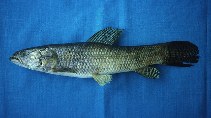 Hoplias microlepis
Εικόνα από Béarez, P.
Φωτογραφίες | Google image
Εικόνα από Béarez, P.
Ταξινόμηση / Ονόματα Κοινά ονόματα | Συνώνυμα | Catalog of Fishes(Γένος, Είδη) | ITIS | CoL | WoRMS | Cloffa
> Characiformes (Characins) > Erythrinidae (Trahiras)
Etymology: Hoplias: Greek, hoplon = weapon (Ref. 45335).
More on author: Günther.
Etymology: Hoplias: Greek, hoplon = weapon (Ref. 45335).
More on author: Günther.
Taxonomic Remarks
See Eigenmann & Eigenmann (1889:102) for key of identification and description.
Περιβάλλον: περιβάλλον / κλιματική ζώνη / εύρος βάθους / εύρος διανομής Οικολογία
; Γλυκού νερού βενθοπελαγικό. Tropical; 26°C - 28°C (Ref. 36880)
Κατανομή Εδάφη | Περιοχές FAO | Οικοσυστήματα | Παρουσίες | Σημειακός χάρτης | Εισαγωγές | Faunafri
Central and South America: Pacific drainages of Panama; records in the Atlantic coast of Panama are restricted to the Canal Zone, suggesting dispersal through the Panama Canal; Puntarenas in southwestern Costa Rica; río Guayas basin in Ecuador and río Tumbes in northwestern Peru (Ref. 96873); and Colombia (Ref. 37025).
Μέγεθος / Βάρος / Ηλικία
Γεννητική Ωρίμανση: Lm ? range ? - ? cm
Max length : 36.0 cm SL αρσενικό/απροσδιόριστο; (Ref. 37025)
Max length : 36.0 cm SL αρσενικό/απροσδιόριστο; (Ref. 37025)
Σύντομη περιγραφή Κλείδες προσδιορισμού | Μορφολογία | Μορφομετρία
Μαλακές ραχιαίες ακτίνες (συνολικά) : 13 - 15; Σπόνδυλοι: 42 - 45. Hoplias microlepis is distinguished from all congeners, except species of H. malabaricus group, by the the shape of the dentaries abruptly converging towards the mandibular symphysis (vs. dentaries parallel and only gently converging towards the mandibular symphysis) and by having tooth plates on tongue (vs. absence of tooth plates on tongue). H. microlepis can be separated from H. brasiliensis and H. curupira by having 43-47 scales on lateral line (vs. 38-43 and 34-39, respectively), and from H. australis and H. lacerdae by having 4 pores of the laterosensory system along the ventral surface of dentary (vs. always 5 and 6-8 respectively). It differs from H. aimara by having accessory ectopterygoid and by lacking vertically elongate dark spot on the opercular membrane (vs. absence of accessory ectopterygoid and presence of dark spot). It can be diagnosed from the other members of the H. malabaricus species group by having more circumpeduncular scales (22-24, usually 24 vs. 18-20, usually 20) (Ref. 96873).
Body shape (shape guide): elongated.
Body shape (shape guide): elongated.
Inhabits rivers (Ref. 96873). Collected in creeks and swamps in areas of little or no current on sand and mud bottoms. Lives between 20 and 40 m elevation. Piscivorous (Ref. 36880). Reported to reach 50.0 cm TL (Ref. 9585).
Κύκλος ζωής και συμπεριφορά ζευγαρώματος Γεννητική Ωρίμανση | Αναπαραγωγή | Γεννοβολία | Αβγά | Γονιμότητα | Προνύμφες
Κύρια αναφορά
Ανεβάστε τις αναφορές σας | Αναφορές | Συντονιστής : Oyakawa, Osvaldo T. | Συνεργάτες
Mattox, G.M.T., A.G. Bifi and O.T. Oyakawa, 2014. Taxonomic study of Hoplias microlepis (Günther, 1864), a trans-Andean species of trahiras (Ostariophysi: Characiformes: Erythrinidae). Neotrop. Ichthyol. 12(2):343-352. (Ref. 96873)
Κατάσταση Κόκκινου Καταλόγου IUCN (Ref. 130435: Version 2025-2 (Global))
Least Concern (LC) ; Date assessed: 01 April 2019
CITES
Not Evaluated
Απειλή για τον άνθρωπο
Harmless
Ανθρώπινες χρήσεις
αλιεία: Εμπορικό(ά)
FAO - Publication: search | FishSource |
Περισσότερες πληροφορίες
Πληθυσμιακή δυναμική
Παράμετροι Αύξησης
Μέγιστες ηλικίες / μεγέθη
Μήκος-βάρος σχετ.
Μήκος-μήκος rel.
Μήκος-συχνότητες
Μετατροπή μάζας
Στρατολόγηση
Αφθονία
Παράμετροι Αύξησης
Μέγιστες ηλικίες / μεγέθη
Μήκος-βάρος σχετ.
Μήκος-μήκος rel.
Μήκος-συχνότητες
Μετατροπή μάζας
Στρατολόγηση
Αφθονία
Κύκλος ζωής
Αναπαραγωγή
Γεννητική Ωρίμανση
Ωριμότητα / Gills rel.
Γονιμότητα
Γεννοβολία
Συγκεντρώσεις αναπαραγωγής
Αβγά
Ανάπτυξη αυγών
Προνύμφες
Δυναμική προνυμφών
Αναπαραγωγή
Γεννητική Ωρίμανση
Ωριμότητα / Gills rel.
Γονιμότητα
Γεννοβολία
Συγκεντρώσεις αναπαραγωγής
Αβγά
Ανάπτυξη αυγών
Προνύμφες
Δυναμική προνυμφών
Ανατομία
Επιφάνεια βραγχίων
Εγκέφαλος
Ωτόλιθος
Επιφάνεια βραγχίων
Εγκέφαλος
Ωτόλιθος
Φυσιολογία
Σύνθεση σώματος
Θρεπτικά συστατικά
Κατανάλωση οξυγόνου
Τύπος κολύμβησης
Ταχύτητα κολύμβησης
Οπτικές χρωστικές ουσίες
Ήχος ψαριών
Ασθένειες & παράσιτα
Τοξικότητα (LC50)
Σύνθεση σώματος
Θρεπτικά συστατικά
Κατανάλωση οξυγόνου
Τύπος κολύμβησης
Ταχύτητα κολύμβησης
Οπτικές χρωστικές ουσίες
Ήχος ψαριών
Ασθένειες & παράσιτα
Τοξικότητα (LC50)
Γενετική
Γονιδίωμα
Γενετική
Ετεροζυγωτία
Κληρονομικότητα
Γενετική ποικιλομορφία
Γονιδίωμα
Γενετική
Ετεροζυγωτία
Κληρονομικότητα
Γενετική ποικιλομορφία
Ανθρώπινη σχέση
Συστήματα υδατοκαλλιέργειας
Προφίλ υδατοκαλλιεργειών
Στελέχοι
Περιπτώσεις Ciguatera
Γραμματόσημα, νομίσματα, διάφορα.
Συστήματα υδατοκαλλιέργειας
Προφίλ υδατοκαλλιεργειών
Στελέχοι
Περιπτώσεις Ciguatera
Γραμματόσημα, νομίσματα, διάφορα.
Εργαλεία
Ηλεκτρονικό βιβλίο | Οδηγός πεδίου | Ανάλυση κατά μήκος συνθέσεων | Εργαλείο ιστορίας ζωής | Σημειακός χάρτης |
Catch-MSY |
Ειδικές εκθέσεις
Έλεγχος για συντήρηση ενυδρείου | Ελέγξτε για ενημερωτικά δελτία ειδών | Ελέγξτε για ενημερωτικά δελτία υδατοκαλλιέργειας
Λήψη XML
Διαδικτυακές πηγές
AFORO (otoliths) | Aquatic Commons | BHL | Cloffa | Websites from users | Check FishWatcher | CISTI | Catalog of Fishes: Γένος, Είδη | DiscoverLife | ECOTOX | FAO - Publication: search | Faunafri | Fishipedia | Fishtrace | GloBI | Google Books | Google Scholar | Google | IGFA World Record | OneZoom | Open Tree of Life | OsteoBase: skull, spine | Otolith Atlas of Taiwan Fishes | PubMed | Reef Life Survey | Socotra Atlas | TreeBase | Δέντρο Ζωής | Wikipedia: Go, αναζήτηση | World Records Freshwater Fishing | Zoological Record
Εκτιμήσεις βάσει μοντέλων
Δείκτης φυλογενετικής ποικιλότητας (Αναφ. 82804): PD50 = 0.5000 [Uniqueness, from 0.5 = low to 2.0 = high].
Bayesian length-weight: a=0.00676 (0.00304 - 0.01503), b=3.12 (2.93 - 3.31), in cm total length, based on LWR estimates for this (Sub)family-body shape (Ref. 93245).
Τροφικό Επίπεδο (Αναφ. 69278): 4.5 ±0.80 se; based on food items.
Ελαστικότητα (Αναφ. 120179): Μεσαίο(α), ελάχιστος χρόνος για διπλασιασμό πληθυσμού 1,4 - 4,4 έτη (Preliminary K or Fecundity.).