



Strongylura leiurus (Bleeker, 1850)
Banded needlefish
Ladda upp din foton och Videor
Bilder | Videor | Frimärken, mynt, diverse. | Google image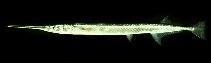 Strongylura leiurus
Bild av Randall, J.E.
Bilder | Videor | Frimärken, mynt, diverse. | Google image
Bild av Randall, J.E.
Klassificering / Namn Populärnamn | synonymer | Catalog of Fishes(Släkte, Arter) | ITIS | CoL | WoRMS | Cloffa
> Beloniformes (Needle fishes) > Belonidae (Needlefishes)
Etymology: Strongylura: Greek, strongylos = round + Greek, oura = tail (Ref. 45335).
More on author: Bleeker.
Etymology: Strongylura: Greek, strongylos = round + Greek, oura = tail (Ref. 45335).
More on author: Bleeker.
Miljö: miljö / Klimatzon / djupintervall / distributionsområde Ekologi
marina; brackvatten revassocierade; havsvandrande (Ref. 51243); djupintervall 0 - 3 m (Ref. 86942). Tropical; 30°N - 40°S, 30°E - 180°E
Utbredning Territorier | FAO områden | Ekosystem | Förekomster | Prickkarta | Utplanteringar | Faunafri
Indo-West Pacific: Somalia (Ref. 30573) and Tanzania to Durban, South Africa (Ref. 3130) east to Pakistan, India, Sri Lanka and southeast Asia to New Guinea, Australia, and the Philippines. Reported from southern China (Ref. 5317). The Australian population is regarded as subspecies Strongylura leiura ferox by Parin (1967) (Ref. 1602).
Storlek / Vikt / Ålder
Könsmognad: Lm ? range ? - ? cm
Max length : 100.0 cm TL hane/ej könsbestämd; (Ref. 3678); common length : 35.0 cm OT hane/ej könsbestämd; (Ref. 9682)
Max length : 100.0 cm TL hane/ej könsbestämd; (Ref. 3678); common length : 35.0 cm OT hane/ej könsbestämd; (Ref. 9682)
Kort beskrivning Bestämningsnycklar | Morfologi | Morfometri
Taggstrålar i ryggfenan (totalt) : 0; Mjukstrålar i ryggfenan (totalt) : 17 - 21; Taggstrålar i analfenan: 0; Mjukstrålar i analfenan: 23 - 25. Laterally compressed; origin of dorsal fin over 7th-10th ray of anal fin; dorsal fin rays 17-21; anal fin rays 23-25; caudal peduncle without lateral keels; caudal fin emarginate; predorsal scales moderately small, 130-180 (Ref. 9682). Caudal fin sub truncate; a black bar on cheek between opercle and preopercle; greenish dorsally, grading to silvery white ventrally.
Body shape (shape guide): elongated; Cross section: compressed.
Body shape (shape guide): elongated; Cross section: compressed.
Inhabit coastal waters and estuaries (Ref. 5213). Larvae and early juveniles are found in mangroves (Ref. 43081). Feed mainly on small fishes (Ref. 3130) and crustaceans (Ref. 43081). Oviparous (Ref. 205). Eggs may be found attached to objects in the water by tendrils on the egg's surface (Ref. 205). Marketed fresh (Ref. 9682).
Livscykel och parningsbeteende Könsmognad | Reproduktion | Lek | Ägg | Fekunditet | Larver
Huvudreferens
Ladda upp dina referenser | referenser | Koordinator : Collette, Bruce B. | Medarbetare
Randall, J.E., G.R. Allen and R.C. Steene, 1990. Fishes of the Great Barrier Reef and Coral Sea. University of Hawaii Press, Honolulu, Hawaii. 506 p. (Ref. 2334)
CITES
Not Evaluated
Hot mot människor
Harmless
Mänskliga användningsområden
Fiskeri: kommersiell; sportfisk: ja
FAO - Publication: search | FishSource |
Ytterligare information
Populationsdynamik
Tillväxtparametrar
Max. åldrar / storlekar
Längd-vikt rel.
Längd-längd rel.
Längd-frekvenser
Massakonvertering
Rekrytering
Abundans
Tillväxtparametrar
Max. åldrar / storlekar
Längd-vikt rel.
Längd-längd rel.
Längd-frekvenser
Massakonvertering
Rekrytering
Abundans
Fysiologi
Kroppssammansättning
Näringsämnen
Syreförbrukning
Typ av simning
Simhastighet
Visuella pigment
Ljud från fisk
Sjukdomar & Parasiter
Toxicitet (LC50)
Kroppssammansättning
Näringsämnen
Syreförbrukning
Typ av simning
Simhastighet
Visuella pigment
Ljud från fisk
Sjukdomar & Parasiter
Toxicitet (LC50)
Människorelaterad
Vattenbrukssystem
Vattenbruksprofiler
Avelslinjer
Ciguatera-fall
Frimärken, mynt, diverse.
Vattenbrukssystem
Vattenbruksprofiler
Avelslinjer
Ciguatera-fall
Frimärken, mynt, diverse.
Verktyg
E-bok | Fälthandbok | Bestämningsnycklar | Längdfördelnings-verktyg | Livshistorie-verktyg | Prickkarta |
Fångst-MSY |
Särskilda rapporter
Kontrollera för underhåll av akvarium | Kontrollera om det finns faktablad om arter | Kontrollera om det finns faktablad om vattenbruk
Ladda ner XML
Internet-källor
AFORO (otoliths) | Aquatic Commons | BHL | Cloffa | Websites from users | Check FishWatcher | CISTI | Catalog of Fishes: Släkte, Arter | DiscoverLife | ECOTOX | FAO - Publication: search | Faunafri | Fishipedia | Fishtrace | GloBI | Google Books | Google Scholar | Google | IGFA World Record | Nationella databaser | OneZoom | Open Tree of Life | Otolith Atlas of Taiwan Fishes | PubMed | Reef Life Survey | Socotra Atlas | TreeBase | Tree of Life | Wikipedia: Go, sök | | Zoologiskt register
Uppskattningar baserade på modeller
|
Index för fylogenetisk mångfald (Ref. 82804) |
PD50 = 0.5000 [Uniqueness, from 0.5 = low to 2.0 = high]. |
| Bayesian length-weight | a=0.00148 (0.00078 - 0.00281), b=3.05 (2.89 - 3.21), in cm total length, based on LWR estimates for this species & Genus-body shape (Ref. 93245). |
|
Trofisk nivå (Ref. 69278) |
3.9 ±0.64 se; based on food items. |
|
Resiliens (Ref. 120179) |
Mellan, lägsta populationsfördubblingstid 1,4-4,4 år (Preliminary K or Fecundity.). |
|
Sårbarhet i fisket (Ref. 59153) |
Moderate vulnerability (38 of 100). 🛈 |
|
Priskategori (Ref. 80766) |
High. |
|
Näringsämnen (Ref. 124155) |
Calcium = 54.1 [17.3, 251.2] mg/100g; Iron = 0.425 [0.198, 1.184] mg/100g; Protein = 17.6 [15.6, 19.7] %; Omega3 = 0.103 [0.041, 0.287] g/100g; Selenium = 25.4 [11.8, 57.8] μg/100g; VitaminA = 72.1 [21.3, 254.1] μg/100g; Zinc = 1.11 [0.71, 1.73] mg/100g (wet weight); |