



Yasuhikotakia lecontei (Fowler, 1937)
Silver loach
Adicionar o seu Fotografias e vídeos
Fotografias | Imagem do Google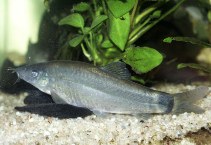 Yasuhikotakia lecontei
Fotografia de Janiczak, B.J.
Fotografias | Imagem do Google
Fotografia de Janiczak, B.J.
Classificação / Nomes Nomes comuns | Sinónimos | Catalog of Fishes(Género, Espécies) | ITIS | CoL | WoRMS | Cloffa
> Cypriniformes (Carps) > Botiidae (Pointface loaches) > Botiinae
Eponymy: Dr Yasuhiko Taki (1931-2020) was an Japanese ichthyologist and researcher ‘…who contributed very much’ to the study of loaches, according to the etymology. [...] Dr John Lawrence Le Conte (1825–1883) was an American biologist and the most important American entomologist of the 19th century. [...] (Ref. 128868), visit book page.
More on author: Fowler.
Eponymy: Dr Yasuhiko Taki (1931-2020) was an Japanese ichthyologist and researcher ‘…who contributed very much’ to the study of loaches, according to the etymology. [...] Dr John Lawrence Le Conte (1825–1883) was an American biologist and the most important American entomologist of the 19th century. [...] (Ref. 128868), visit book page.
More on author: Fowler.
Ambiente: milieu / zona climática / intervalo de profundidade / gama de distribuição Ecologia
; Água doce demersal; pH range: 6.0 - 6.5; dH range: ? - 8. Tropical; 24°C - 28°C (Ref. 2060)
Distribuição Territórios | Áreas FAO | Ecossistemas | Ocorrências | Mapa dos pontos | Introduções | Faunafri
Tamanho / Peso / Idade
Descrição breve Chaves de identificação | Morfologia | Morfometria
Raios dorsais moles (total) : 12 - 13; Raios anais moles: 8 - 10; Vértebras: 33 - 36. Has 8 branched dorsal rays; in life, a brown to yellowish body; a large blackish blotch on the caudal peduncle; dusky yellow fins (Ref. 27732); lacks a mid-dorsal stripe at all ages, young may have many narrow black bars; erect ethmoid spine perpendicular to snout when viewed from above; large mental lobe (Ref. 12693).
Body shape (shape guide): elongated.
Body shape (shape guide): elongated.
Apparently associated with fast waters and stony to rocky substrate (Ref. 27732). Found in medium to large-sized rivers (Ref. 12975). Occurs at the bottom of flowing rivers. Takes shelter in crevices and under bottom cover of rocks, tree limbs or other objects during the day and comes out to forage at dusk and night time. Feeds on mollusks and other benthic invertebrates. When young of the year return to the river in November and December, this species, along with B. helodes, B. morleti and B. modesta is often used as food for fish reared in cages. Commonly seen in the aquarium trade (Ref. 12693).
Ciclo de vida e comportamento de acasalamento Maturidade | Reprodução | Desova | Ovos | Fecundidade | Larvas
Referência principal
Carregar as suas referências | Referências | Coordenador | Colaboradores
Rainboth, W.J., 1996. Fishes of the Cambodian Mekong. FAO species identification field guide for fishery purposes. FAO, Rome, 265 p. (Ref. 12693)
Categoria na Lista Vermelha da IUCN (Ref. 130435: Version 2025-2 (Global))
Preocupação menor (LC) ; Date assessed: 15 February 2011
CITES
Not Evaluated
Ameaça para o homem
Harmless
Utilização humana
Pescarias: espécies comerciais; Aquário: Espécies comerciais
FAO - Publication: search | FishSource |
Mais informação
Ecologia Trófica
Produtos alimentares (presas)
Composição da dieta
Consumo alimentar
Rações alimentares
Predadores
Produtos alimentares (presas)
Composição da dieta
Consumo alimentar
Rações alimentares
Predadores
Dinâmica das populações
Parâmetros de crescimento
Idades / tamanhos máximos
Comprimento-peso rel.
Comprimento-comprimento rel.
Frequência de comprimento
Conversão de massa
Recrutamento
Abundância
Parâmetros de crescimento
Idades / tamanhos máximos
Comprimento-peso rel.
Comprimento-comprimento rel.
Frequência de comprimento
Conversão de massa
Recrutamento
Abundância
Ciclo de vida
Reprodução
Maturidade
Maturidade/Rel. das guelras
Fecundidade
Desova
Agregações de desova
Ovos
Desenvolvimento dos ovos
Larvas
Dinâmica larvar
Reprodução
Maturidade
Maturidade/Rel. das guelras
Fecundidade
Desova
Agregações de desova
Ovos
Desenvolvimento dos ovos
Larvas
Dinâmica larvar
Anatomia
Área branquial
Cérebro
Otólitos
Área branquial
Cérebro
Otólitos
Fisiologia
Composição corporal
Nutrientes
Consumo de oxigénio
Tipo de natação
Velocidade de natação
Pigmentos visuais
Som de peixe
Doenças e Parasitas
Toxicidade (LC50s)
Composição corporal
Nutrientes
Consumo de oxigénio
Tipo de natação
Velocidade de natação
Pigmentos visuais
Som de peixe
Doenças e Parasitas
Toxicidade (LC50s)
Genética
genoma
Genética
Heterozigotia
Hereditariedade
Diversidade genética
genoma
Genética
Heterozigotia
Hereditariedade
Diversidade genética
Relacionado com o ser humano
Sistemas de aquacultura
Perfis para aquacultura
Estirpes
Casos de Ciguatera
Selos, moedas, diversos.
Sistemas de aquacultura
Perfis para aquacultura
Estirpes
Casos de Ciguatera
Selos, moedas, diversos.
Ferramentas
Questionário orgânico | E-book | Guia de campo | Ferramenta auxiliar de frequências de comprimento | Ferramenta sobre a história de vida | Mapa dos pontos |
Captura-MSY |
Relatórios especiais
Descarregue XML
Fontes da internet
AFORO (otoliths) | Aquatic Commons | BHL | Cloffa | Websites from users | Consultar FishWatcher | CISTI | Catalog of Fishes: Género, Espécies | DiscoverLife | ECOTOX | FAO - Publication: search | Faunafri | Fishipedia | Fishtrace | GloBI | Google Books | Google Scholar | Google | IGFA World Record | OneZoom | Open Tree of Life | Otolith Atlas of Taiwan Fishes | PubMed | Reef Life Survey | Socotra Atlas | TreeBase | Árvore da vida | Wikipedia: ir para, procurar | World Records Freshwater Fishing | Registo zoológico
Estimativas baseadas em modelos
Índice de diversidade filogenética (Ref. 82804): PD50 = 0.5078 [Uniqueness, from 0.5 = low to 2.0 = high].
Bayesian length-weight: a=0.00589 (0.00250 - 0.01388), b=3.08 (2.88 - 3.28), in cm total length, based on LWR estimates for this (Sub)family-body shape (Ref. 93245).
Nível Trófico (Ref. 69278): 3.4 ±0.45 se; based on food items.