



Yasuhikotakia lecontei (Fowler, 1937)
Silver loach
Uploaden van uw Foto's en video's
Afbeeldingen | Google afbeelding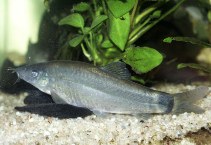 Yasuhikotakia lecontei
Afbeelding van Janiczak, B.J.
Afbeeldingen | Google afbeelding
Afbeelding van Janiczak, B.J.
Classificatie / Namen Lokale namen | Synoniemen | Catalog of Fishes(Genus, Soort(en)) | ITIS | CoL | WoRMS | Cloffa
> Cypriniformes (Carps) > Botiidae (Pointface loaches) > Botiinae
Eponymy: Dr Yasuhiko Taki (1931-2020) was an Japanese ichthyologist and researcher ‘…who contributed very much’ to the study of loaches, according to the etymology. [...] Dr John Lawrence Le Conte (1825–1883) was an American biologist and the most important American entomologist of the 19th century. [...] (Ref. 128868), visit book page.
More on author: Fowler.
Eponymy: Dr Yasuhiko Taki (1931-2020) was an Japanese ichthyologist and researcher ‘…who contributed very much’ to the study of loaches, according to the etymology. [...] Dr John Lawrence Le Conte (1825–1883) was an American biologist and the most important American entomologist of the 19th century. [...] (Ref. 128868), visit book page.
More on author: Fowler.
Milieu: milieu / Klimaatzone / Diepte / verspreidingsgebied Ecologie
; zoet water demersaal; pH range: 6.0 - 6.5; dH range: ? - 8. Tropical; 24°C - 28°C (Ref. 2060)
Verspreiding Gebieden | FAO regio's | Ecosystemen | Voorkomen | Verspreidingskaart | Introducties | Faunafri
Grootte / Gewicht / Leeftijd
Korte beschrijving Determinatiesleutels | Morfologie | Morfometrie
Dorsale zachte stralen (totaal) : 12 - 13; Anale zachte stralen: 8 - 10; Wervels: 33 - 36. Has 8 branched dorsal rays; in life, a brown to yellowish body; a large blackish blotch on the caudal peduncle; dusky yellow fins (Ref. 27732); lacks a mid-dorsal stripe at all ages, young may have many narrow black bars; erect ethmoid spine perpendicular to snout when viewed from above; large mental lobe (Ref. 12693).
Body shape (shape guide): elongated.
Body shape (shape guide): elongated.
Apparently associated with fast waters and stony to rocky substrate (Ref. 27732). Found in medium to large-sized rivers (Ref. 12975). Occurs at the bottom of flowing rivers. Takes shelter in crevices and under bottom cover of rocks, tree limbs or other objects during the day and comes out to forage at dusk and night time. Feeds on mollusks and other benthic invertebrates. When young of the year return to the river in November and December, this species, along with B. helodes, B. morleti and B. modesta is often used as food for fish reared in cages. Commonly seen in the aquarium trade (Ref. 12693).
Levenscyclus en paargedrag Maturiteit | Voortplanting | Paaien | Eieren | Fecunditeit | Larven
Hoofdreferentie
Upload uw referenties | Referenties | Coördinator | Medewerkers
Rainboth, W.J., 1996. Fishes of the Cambodian Mekong. FAO species identification field guide for fishery purposes. FAO, Rome, 265 p. (Ref. 12693)
Status op de Rode Lijst van het IUCN (Ref. 130435: Version 2025-2 (Global))
Niet bedreigd (LC) ; Date assessed: 15 February 2011
CITES
Not Evaluated
Gevaar voor de mens
Harmless
Gebruik door de mens
Visserij: commercieel; Aquarium: Commercieel
FAO - Publication: search | FishSource |
Meer informatie
Trofische ecologie
Voedsel (prooien)
Dieetsamenstelling
Voedselconsumptie
Voedselrantsoenen
Predatoren
Voedsel (prooien)
Dieetsamenstelling
Voedselconsumptie
Voedselrantsoenen
Predatoren
Populatiedynamica
Groeiparameters
Max. leeftijden / maten
Lengte-gewicht rel.
Lengte-lengte rel.
Lengtefrequenties
Massaconversie
Rekrutering
Abundantie
Groeiparameters
Max. leeftijden / maten
Lengte-gewicht rel.
Lengte-lengte rel.
Lengtefrequenties
Massaconversie
Rekrutering
Abundantie
Levenscyclus
Voortplanting
Maturiteit
Rijpheid/kieuwen rel.
Fecunditeit
Paaien
Paaibestanden
Eieren
Ontwikkeling van de eieren
Larven
Larvale populatiedynamiek
Voortplanting
Maturiteit
Rijpheid/kieuwen rel.
Fecunditeit
Paaien
Paaibestanden
Eieren
Ontwikkeling van de eieren
Larven
Larvale populatiedynamiek
Anatomie
Kieuwoppervlak
Hersenen
Otoliet
Kieuwoppervlak
Hersenen
Otoliet
Fysiologie
Lichaamssamenstelling
Voedingsstoffen
Zuurstofverbruik
Type zwemmen
Zwemsnelheid
Visuele pigmenten
Vis geluid
Ziekten en parasieten
Toxiciteit (LC50)
Lichaamssamenstelling
Voedingsstoffen
Zuurstofverbruik
Type zwemmen
Zwemsnelheid
Visuele pigmenten
Vis geluid
Ziekten en parasieten
Toxiciteit (LC50)
Genetica
genoom
Genetica
Heterozygositeit
Erfelijkheid
Genetische diversiteit
genoom
Genetica
Heterozygositeit
Erfelijkheid
Genetische diversiteit
Menselijk gerelateerd
Aquacultuursystemen
Aquacultuurprofielen
Kweeklijnen
Ciguatera gevallen
Postzegels, munten, diversen.
Aquacultuursystemen
Aquacultuurprofielen
Kweeklijnen
Ciguatera gevallen
Postzegels, munten, diversen.
Tools
Biologische quiz | E-boek | Veldgids | Lengtefrequentie Tool | Levenscyclus tool | Verspreidingskaart |
Vangst-MSY |
Speciale rapporten
Bekijk gegevens voor het houden in een aquarium | Bekijk Fact Sheets voor de soort | Bekijk Aquacultuur Fact Sheets
Download XML
Internetbronnen
AFORO (otoliths) | Aquatic Commons | BHL | Cloffa | Websites from users | Bekijk FishWatcher | CISTI | Catalog of Fishes: Genus, Soort(en) | DiscoverLife | ECOTOX | FAO - Publication: search | Faunafri | Fishipedia | Fishtrace | GloBI | Google Books | Google Scholar | Google | IGFA World Record | OneZoom | Open Tree of Life | Otolith Atlas of Taiwan Fishes | PubMed | Reef Life Survey | Socotra Atlas | TreeBase | Tree of Life | Wikipedia: ga naar, zoek | World Records Freshwater Fishing | Zoological Record
Schattingen op basis van modellen
Fylogenetische diversiteitsindex (Ref. 82804): PD50 = 0.5078 [Uniqueness, from 0.5 = low to 2.0 = high].
Bayesian length-weight: a=0.00589 (0.00250 - 0.01388), b=3.08 (2.88 - 3.28), in cm total length, based on LWR estimates for this (Sub)family-body shape (Ref. 93245).
Trofisch niveau (Ref. 69278): 3.4 ±0.45 se; based on food items.