This website uses cookies to enhance your browsing experience and ensure the functionality of our site. For more detailed information about the types of cookies we use and how we protect your privacy, please visit our Privacy Information page.
×
Cookie Settings
This website uses different types of cookies to enhance your experience. Please select your preferences below:
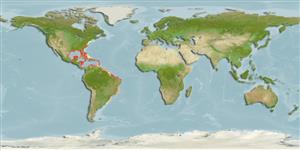
Western Atlantic: Canada (Ref. 5951), Massachusetts (USA) to Brazil, including Bermuda, the Gulf of Mexico and the Caribbean. Mediterranean Sea (Ref. 50345).
Größe / Gewicht / Alter
Geschlechtsreife: Lm? range ? - ? cm Max length : 55.0 cm TL Männchen/unbestimmt; (Ref. 40637); common length : 30.0 cm TL Männchen/unbestimmt; (Ref. 5217); max. veröff. Gewicht: 3.3 kg (Ref. 40637)
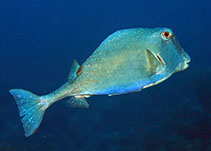
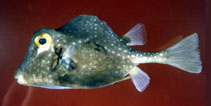
With small diffuse white spots; two areas where the hexagonal plates are dark-edged, forming chain-like markings, one on the pectoral region of the body and the other half way between gill opening and posterior end of carapace; large individuals lose the pale spots and chain markings and develop an irregular dark reticulate pattern over the entire carapace and caudal peduncle (Ref. 13442). Body shape (shape guide): short and / or deep.
Inhabits seagrass beds, coral rubble areas, and offshore reefs down to about 50 m. Feeds on a wide variety of small benthic invertebrates such as mollusks, crustaceans, worms and sessile tunicates, as well as some sea grasses (Ref. 3696). Highly esteemed food fish in the Caribbean (Ref. 3696).