This website uses cookies to enhance your browsing experience and ensure the functionality of our site. For more detailed information about the types of cookies we use and how we protect your privacy, please visit our Privacy Information page.
×
Cookie Settings
This website uses different types of cookies to enhance your experience. Please select your preferences below:
> Ovalentaria/misc (Various families in series Ovalentaria) > Pomacentridae (Damselfishes) > Pomacentrinae
Etymology: Neoglyphidodon:Greek, para = the side of + Greek, glyphis = carved + Greek, odous = teeth. More on author: Bleeker.
Entorno: milieu / zona climática / rango de profundidad / gama de distribución Ecología
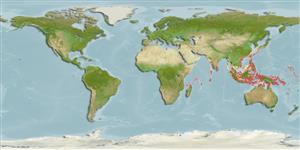
marino asociado a arrecife; no migratorio; rango de profundidad 1 - 20 m (Ref. 7247). Tropical; 45°N - 14°S
Indo-West Pacific: Sri Lanka to the Indo-Australian Archipelago including Sumatra, Java, Sulawesi, and the Solomon Islands. Records from other locations are mostly misidentifications.
Tamaño / Peso / Edad
Madurez: Lm? range ? - ? cm Max length : 13.5 cm TL macho / no sexado; (Ref. 90102)
Espinas dorsales (total) : 13; Radios blandos dorsales (total) : 15 - 16; Espinas anales: 2; Radios blandos anales: 13 - 15. Body shape (shape guide): short and / or deep; Cross section: compressed.
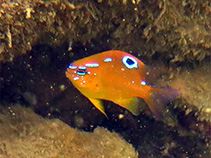
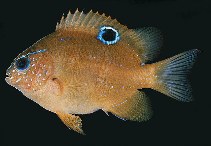
Adults inhabit coral reefs (Ref. 9710), probably subject to surge to 20 m depth. Poorly known species that is seldom seen. Probably overlooked because of the drab appearance. Juveniles unknown and probably have large ocellus like N. thoracotaeniatus (Ref. 48636). Life history characteristics for the family specify that this group is oviparous, with distinct pairing during breeding (Ref. 205). Eggs are demersal and adhere to the substrate (Ref. 205). Males guard and aerate the eggs (Ref. 205). Diurnal species (Ref. 113699).
Ciclo vital y comportamiento de apareamiento Madurez | Reproducción | Puesta | Huevos | Fecundidad | Larva
Life history characteristics for the family specify that this group is oviparous, with distinct pairing during breeding (Ref. 205). Eggs are demersal and adhere to the substrate (Ref. 205). Males guard and aerate the eggs (Ref. 205).
Ecología Trófica Alimentos (presas) Composición de la dieta consumo de alimento Raciones de comida Despredadores
Ecología Ecología
Dinámica de la población Coeficiente del crecimiento para Edades / tallas máximas Longitud-peso rel. Longitud-longitud rel. Longitud-frecuencias Conversión de masas Reclutamiento Abundancia
Ciclo de vida Reproducción Madurez Madurez/Gills rel. Fecundidad Puesta Agregaciones de desove Huevos Desarrollo de los huevos Larva Dinámica larvaria
Fisiología Composición corporal Nutrientes Consumo del oxígeno Tipo de natación Velocidad de natación Pigmentos visuales Sonido de peces Enfermedades y parásitos Toxicidad (CL50)
Temperatura preferida (Referencia 123201): 28.2 - 29.3, mean 28.8 °C (based on 731 cells).
Índice de diversidad filogenética (Referencia 82804): PD50 = 0.5020 [Uniqueness, from 0.5 = low to 2.0 = high].
Bayesian length-weight: a=0.02344 (0.01149 - 0.04783), b=2.98 (2.80 - 3.16), in cm total length, based on LWR estimates for this (Sub)family-body shape (Ref. 93245).
Nivel trófico (Referencia 69278): 2.7 ±0.3 se; based on size and trophs of closest relatives
Resiliencia (Referencia 120179): Alto, población duplicada en un tiempo mínimo inferior a 15 meses (Preliminary K or Fecundity.).
Vulnerabilidad pesquera (Ref. 59153): Low vulnerability (10 of 100). 🛈