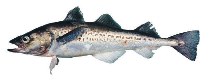
Gadus chalcogrammus, Alaska pollock : fisheries, gamefish

Gadus chalcogrammus Pallas, 1814

Alaska pollock
إضافة ملاحظاتك Fish Watcher
Native range | All suitable habitat | Point map | Year 2050
This map was computer-generated and has not yet been reviewed.
Gadus chalcogrammus   AquaMaps   Data sources: GBIF OBIS
ارفع صور و مقاطع فيديو
صور | مقاطع فيديو | صور قوقل
Image of Gadus chalcogrammus (Alaska pollock)
Gadus chalcogrammus
صورة بواسطة Archipelago Marine Research Ltd.

التصنيف / الأسماء الأسماء الشائعة | مرادفات | Catalog of Fishes(جنس, الانواع) | ITIS | CoL | WoRMS | Cloffa

> Gadiformes (Cods) > Gadidae (Cods and haddocks)
Etymology: Gadus: Latin, gadus = a fish, cod? (Ref. 45335)chalcogrammus: Name from the Greek 'chalcos' meaning brass and 'gramma' meaning mark (Ref. 6885).
More on author: Pallas.

Taxonomic Remarks
This species is placed in the genus Gadus in Eschmeyer (CofF ver. Jan. 2012: Ref. 89336). More studies are needed for a complete revision of all genera of Gadidae. In the past decade, a number of molecular works have shown that T. chalcogramma coud be deeply nested in a clade that contains the Gadus spp. It has been suggested that the species should be now assigned to Gadus, although none of these works had a conclusive statement with a complete taxonomic re-assessment. However, the name Gadus chalcogrammus may be used in scientific publications. If the American Fisheries Society has endorsed that change in the latest edition of its list of fish names, FAO will not change it until a more stable consensus is reached. Since this species is highly commercial, with a number of regulations and statistical reports using that name, it is preferable to change it with the strongest scientific support. In addition, they are other taxonomic issue in that family, with the same issues about names. Therefore, for the use by the rest of the society, the fishery domain in particular, we recommend to continue using T. chalcogramma and wait that a complete revision of the family and thorough taxonomic and nomenclatural decisions are published.

البيئة: الوسط / المنطقة المناخية / نطاق العمق / نطاق التوزيع البيئة

بحري; مياه مخلوطة قاعية التغذية و المعيشة; محيطية (Ref. 87829); نطاق العمق ? - 1280 m (Ref. 50550), usually 30 - 400 m (Ref. 54255). Polar; 68°N - 34°N, 129°E - 120°W (Ref. 54255)

التوزيع الأقاليم | مناطق الفاو | النظام البيئي | الظهور | نقطة علي الخريطة | مقدمة | Faunafri

North Pacific: from Kivalina, Alaska, to the southern Sea of Japan and to Carmel, California, USA. The occurrence off the northern part of Baja California (Mexico), as reported from Quast and Hall, (1972) (Ref. 6876) is apparently erroneous.

الطول عند النضج الأول / الحجم / وزن / العمر

النضج: Lm 36.9  range ? - ? cm
Max length : 91.0 cm TL ذكر/ مختلط الجنس; (Ref. 2850); أعلا وزن تم نشرة: 3.9 kg (Ref. 56335); العمر: 28 سنين (Ref. 55701)

وصف مختصر مفاتيح التعريف | الوصف الخارجي | قياسات المظهر الخارجي

الأشواك الظهرية (المجموع) : 0; الأشعة الظهرية الناعمة (المجموع) : 38 - 48; شوكة شرجية: 0; أشعه شرجية لينه: 33 - 42. The dorsal fins are widely separated. The pelvic fins have a slightly elongated filament. The lateral line is continuous to about the back end of the first dorsal-fin base; it is interrupted at the read of the body. On the head are lateral line pores. Body color is olive green to brown on the back and becomes silvery on the sides and pale ventrally, often with mottled patterns or blotches.
Body shape (shape guide): fusiform / normal; Cross section: circular.

أحياء     المصطلحات (على سبيل المثال epibenthic)

The adults usually live near to the sea floor, but sometimes they also appear near the surface (Ref. 1371). They perform diurnal vertical migrations (Ref. 1371) and are considered as one of the straddling stocks in the northwest and northeast Pacific (Ref. 87829). They mainly feed on krill (Ref. 39882) but they also eat fishes and crustaceans (Ref. 6885). The adults which are spawning are often solely captured for their roe (may have been the case in the first years of the fishery in the U.S., but hasn't been true for some time. In 1994, the North Pacific Fishery Management Council/NOAA enacted an amendment to the Bering Sea and Gulf of Alaska Fishery Management Plans effectively banning the practice of stripping roe and discarding the carcasses, R. Rogness, pers.comm. April 2022). The meat is used to produce surimi (this is an imitation of shellfish meat) (Ref. 28499). They are traded as fresh fish, boneless flesh, in frozen blocks or as surimi. The fish is cooked in the microwave, steamed or fried in butter (Ref. 9988).

دورة الحياة وسلوك التزاوج النضج | التكاثر | وضع البيض | بيض | الخصوبة | اليرقات

Oviparous, sexes are separate (Ref. 205). Congregate in dense schools to spawn, usually at 50 to 250 m depth.

المرجع الرئيسي قم بتحميل مراجعك | مراجع | المنظم | المتعاونين

Cohen, D.M., T. Inada, T. Iwamoto and N. Scialabba, 1990. FAO species catalogue. Vol. 10. Gadiform fishes of the world (Order Gadiformes). An annotated and illustrated catalogue of cods, hakes, grenadiers and other gadiform fishes known to date. FAO Fish. Synop. 125(10). Rome: FAO. 442 p. (Ref. 1371)

حالة القائمة الحمراء للاتحاد الدولي لحفظ الطبيعة والموارد الطبيعية (Ref. 130435: Version 2025-2 (Global))


CITES

Not Evaluated

CMS (Ref. 116361)

Not Evaluated

خطر للأنسان

  Harmless


استخدامات بشرية

مصائد: ذو قيمة تاجرية عالية; لعبة سمكه: نعم

مزيد من المعلومات

دورة الحياة
التكاثر
النضج
النضج/الخياشيم المتعلقة.
الخصوبة
وضع البيض
تجمعات التفريخ
بيض
تطور البيضة
اليرقات
حركة انتقال اليرقات
التوزيع
الأقاليم
مناطق الفاو
النظام البيئي
الظهور
مقدمة
بروفس - فيديوهات
التشريح
منطقة الخياشيم
الدماغ
الأوتوليث
علم وظائف الأعضاء
تكوين الجسم
المغذيات
استهلاك الأوكسجين
نوع السباحة
سرعة السباحة
الأصباغ البصرية
صوت السمك
الأمراض والطفيليات
السمية (LC50s)
جيني
الوراثة
جيني
التغاير
التوريث
التنوع الوراثي
ذات الصلة بالبشر
أنظمة الاستزراع المائي
ملامح تربية الأحياء المائية
سلالات
حالات سيغواتيرا
طوابع بريدية وعملات معدنية ومتنوعة
التوعية
المتعاونين
مراجع
مراجع

أدوات

تقارير خاصة

تنزيل XML

مصادر علي الأنترنت

تقديرات تستند إلى النماذج

درجة الحرارة المفضلة (مرجع 123201): 0.4 - 5.6, mean 1.6 °C (based on 444 cells).
مؤشر التنوع الشُعبي الوراثي (مرجع 82804):  PD50 = 0.5625   [Uniqueness, from 0.5 = low to 2.0 = high].
Bayesian length-weight: a=0.00631 (0.00549 - 0.00725), b=3.03 (2.99 - 3.07), in cm total length, based on LWR estimates for this species (Ref. 93245).
مستوى غذائي (مرجع 69278):  3.6   ±0.1 se; based on diet studies.
Generation time: 6.5 (3.6 - 7.8) years. Estimated as median ln(3)/K based on 25 growth studies.
المرونه (مرجع 120179):  منخفض, الحد الزمني الأدني لتضاعف عدد أفراد المجتمع 4.5-14 سنة (Musick et al. 2000 (Ref. 36717); tmax = 28).
Prior r = 0.29, 95% CL = 0.19 - 0.44, Based on 16 full stock assessments.
ضعف الصيد (Ref. 59153):  High vulnerability (59 of 100). 🛈
قابلية التأثر بالمناخ (Ref. 125649):  High vulnerability (55 of 100). 🛈
فئة السعر (Ref. 80766):   Low.
المغذيات (Ref. 124155):  Calcium = 12 [8, 19] mg/100g; Iron = 0.185 [0.122, 0.296] mg/100g; Protein = 16.5 [15.1, 17.9] %; Omega3 = 0.337 [0.159, 0.741] g/100g; Selenium = 14.5 [5.7, 33.5] μg/100g; VitaminA = 11.2 [2.0, 57.3] μg/100g; Zinc = 0.445 [0.340, 0.563] mg/100g (wet weight); based on nutrient studies.