



إضافة ملاحظاتك Fish Watcher
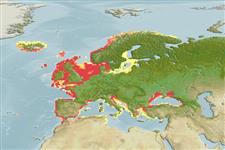
| Native range | All suitable habitat | Point map | Year 2050 |
|
| This map was computer-generated and has not yet been reviewed. |
| Acipenser sturio AquaMaps Data sources: GBIF OBIS |
ارفع صور و مقاطع فيديو
صور | طوابع بريدية وعملات معدنية ومتنوعة | صور قوقل Acipenser sturio
صورة بواسطة Svensson, A.
صور | طوابع بريدية وعملات معدنية ومتنوعة | صور قوقل
صورة بواسطة Svensson, A.
التصنيف / الأسماء الأسماء الشائعة | مرادفات | Catalog of Fishes(جنس, الانواع) | ITIS | CoL | WoRMS | Cloffa
> Acipenseriformes (Sturgeons and paddlefishes) > Acipenseridae (Sturgeons)
Etymology: Acipenser: Latin, acipenser = sturgeon, 1853 (Ref. 45335).
More on author: Linnaeus.
Etymology: Acipenser: Latin, acipenser = sturgeon, 1853 (Ref. 45335).
More on author: Linnaeus.
البيئة: الوسط / المنطقة المناخية / نطاق العمق / نطاق التوزيع البيئة
بحري; المياه العذبة; مياه مخلوطة القاع; pH range: 7.5 - ? ; dH range: 10 - 20; أسماك صاعدة (Ref. 138126); نطاق العمق 4 - 93 m (Ref. 51346), usually 5 - 60 m (Ref. 26160). Temperate; 10°C - 18°C (Ref. 2059); 71°N - 34°N, 25°W - 42°E (Ref. 59043)
التوزيع الأقاليم | مناطق الفاو | النظام البيئي | الظهور | نقطة علي الخريطة | مقدمة | Faunafri
Currently restricted only to the Garonne River in France (Ref. 137675).
Used to range from Norway to the Bay of Biscay, including the North Sea, European coasts of Atlantic, northern Mediterranean eastward to Rhodos, western and southern Black Sea; occasionally recorded from the White Sea, Iceland, Morocco and Algeria. Anadromous, in most large rivers, but not recorded from Danube upriver of delta.
Recent DNA studies using museum specimens revealed that this species co-exists with A. naccarii from the Adriatic Sea to the Iberian Peninsula (Ref. 52173). Several DNA sequence differences were found between individuals of the species from the Gironde River population and from the North and Baltic Seas showing that different populations of A. sturio are genetically divergent (Ref. 82476).
الطول عند النضج الأول / الحجم / وزن / العمر
النضج: Lm ?, range 165 - ? cm
Max length : 600 cm TL ذكر/ مختلط الجنس; (Ref. 59043); common length : 125 cm TL ذكر/ مختلط الجنس; (Ref. 3397); أعلا وزن تم نشرة: 400.0 kg (Ref. 556); أعلا وزن تم نشرة: 400.0 kg; العمر: 100 سنين (Ref. 556)
Max length : 600 cm TL ذكر/ مختلط الجنس; (Ref. 59043); common length : 125 cm TL ذكر/ مختلط الجنس; (Ref. 3397); أعلا وزن تم نشرة: 400.0 kg (Ref. 556); أعلا وزن تم نشرة: 400.0 kg; العمر: 100 سنين (Ref. 556)
وصف مختصر مفاتيح التعريف | الوصف الخارجي | قياسات المظهر الخارجي
الأشواك الظهرية (المجموع) : 0; الأشعة الظهرية الناعمة (المجموع) : 30 - 44; شوكة شرجية: 0; أشعه شرجية لينه: 23 - 30. Body elongated, pentagonal section (Ref. 51442). Snout moderate with tip narrow and pointed (Ref. 3397), mouth inferior (Ref. 59043). Lower lip not continuous, interrupted at center (Ref. 3397). Four barbels halfway between snout tip and mouth but not reaching the latter (Ref. 3397, Ref. 51442). No scales, but 5 rows of scutes on the body: dorsal 9-16, lateral 24-39 on each side, ventral 9-14 on each side, with dense cross-lines of smaller rhombic plates between the dorsal and lateral rows (Ref. 2196, Ref. 3397, Ref. 40476, Ref. 51442). Dorsal side greenish-brown to blackish with golden tints, flanks light with silvery tints, belly white (Ref. 3397).
Body shape (shape guide): elongated.
Body shape (shape guide): elongated.
Amphihaline and anadromous fish (Ref. 51346, 51439), frequenting littoral zones (Ref. 2163, 51439, 51442). A long-lived and slow-growing species (Ref. 9988). It lives the major part of his life in sea but enters rivers for reproduction (Ref. 30578, 51442). Found on various substrates, from sand to rocks (Ref. 51346). At the sea, it occurs in coastal and estuarine zones. In freshwaters, it inhabits estuaries and large rivers (Ref. 59043). Juveniles found both in estuaries and in the sea (Ref. 2163), they slowly adapt to saltwater (Ref. 89103) and usually spend around 2-3 years in river estuaries before moving to the sea (Ref. 40152), some may migrate to the sea during their first summer (Ref. 59043). Usually solitary. Feeds on crustaceans, mollusks, polychaete worms and small fish. Today most males only reach 100-150 cm length, females 130-215 cm (Ref. 59043, 89104). Utilized fresh and frozen, and also for caviar; eaten steamed, pan-fried, broiled, boiled, microwaved and baked (Ref. 9988). A threatened species, mainly due to bycatch, poaching, habitat degradation (spawning grounds, nursery areas) and physical obstacles to migration (Ref. 26160).
دورة الحياة وسلوك التزاوج النضج | التكاثر | وضع البيض | بيض | الخصوبة | اليرقات
Anadromous species, with adults migrating to the middle reaches of large rivers mainly in spring and early summer. Spawning occurs between March and August, when water temperature rises above 20 °C at depths of 2-10 m over stony bottoms in areas with strong current (1.5-2.0 m/s) (Ref. 51442, 59043, 89103).
Mature individuals do not feed during spawning migration (Ref. 3193). Number of spawned eggs increases with age. After spawning adults return to the sea (Ref. 51442). The development of the sticky dark grey eggs (2.6-3.0 mm diameter) takes about one week at 17°C (Ref. 26160, 35388).
It is suggested that males spawn every 2 years, females every 3-4 years (Ref. 89072). Upstream spawning migrations appear to be positively correlated with water levels in rivers and distances of 1,000 kilometres or more may be covered when water levels are high (Ref. 89104).
Sturgeons in general have a high capacity for hybridization and most species are able to cross-breed (Ref. 89103, 89117). This species has been reported to cross-breed (albeit rarely) with the Danube sturgeon (Acipenser gueldenstaedti) (Ref. 89105).
المرجع الرئيسي
قم بتحميل مراجعك | مراجع | المنظم | المتعاونين
Bauchot, M.-L., 1987. Poissons osseux. p. 891-1421. In W. Fischer, M.L. Bauchot and M. Schneider (eds.) Fiches FAO d'identification pour les besoins de la pêche. (rev. 1). Méditerranée et mer Noire. Zone de pêche 37. Vol. II. Commission des Communautés Européennes and FAO, Rome. (Ref. 3397)
حالة القائمة الحمراء للاتحاد الدولي لحفظ الطبيعة والموارد الطبيعية (Ref. 130435: Version 2025-2 (Global))
معرضه للخطر بشكل حرج (CR) (A2cde; D); Date assessed: 15 September 2020
خطر للأنسان
Harmless
استخدامات بشرية
مصائد: تجاري; الأستزراع المائي: تجاري
FAO - أنظمة الاستزراع المائي: الأنتاج; مصائد: ملف الأنواع; Publication: search | FishSource | البحر حولنا
مزيد من المعلومات
علم البيئة الغذائية
المواد الغذائية (الفرائس)
التركيبة الغذائية
استهلاك الأغذية
الحصص الغذائية
مفتريسات
المواد الغذائية (الفرائس)
التركيبة الغذائية
استهلاك الأغذية
الحصص الغذائية
مفتريسات
الديناميكيات السكانية
معاملات النمو
الحد الأقصى للأعمار/الأحجام
علاقة الطول بالوزن.
علاقة الطول بالطول.
الطول- الترددات
التحويل الجماعي
توظيف
الوفرة
معاملات النمو
الحد الأقصى للأعمار/الأحجام
علاقة الطول بالوزن.
علاقة الطول بالطول.
الطول- الترددات
التحويل الجماعي
توظيف
الوفرة
دورة الحياة
التكاثر
النضج
النضج/الخياشيم المتعلقة.
الخصوبة
وضع البيض
تجمعات التفريخ
بيض
تطور البيضة
اليرقات
حركة انتقال اليرقات
التكاثر
النضج
النضج/الخياشيم المتعلقة.
الخصوبة
وضع البيض
تجمعات التفريخ
بيض
تطور البيضة
اليرقات
حركة انتقال اليرقات
التشريح
منطقة الخياشيم
الدماغ
الأوتوليث
منطقة الخياشيم
الدماغ
الأوتوليث
علم وظائف الأعضاء
تكوين الجسم
المغذيات
استهلاك الأوكسجين
نوع السباحة
سرعة السباحة
الأصباغ البصرية
صوت السمك
الأمراض والطفيليات
السمية (LC50s)
تكوين الجسم
المغذيات
استهلاك الأوكسجين
نوع السباحة
سرعة السباحة
الأصباغ البصرية
صوت السمك
الأمراض والطفيليات
السمية (LC50s)
ذات الصلة بالبشر
أنظمة الاستزراع المائي
ملامح تربية الأحياء المائية
سلالات
حالات سيغواتيرا
طوابع بريدية وعملات معدنية ومتنوعة
أنظمة الاستزراع المائي
ملامح تربية الأحياء المائية
سلالات
حالات سيغواتيرا
طوابع بريدية وعملات معدنية ومتنوعة
أدوات
اختبار عضوي | كتاب إلكتروني | دليل الميدان | معالج تردد الطول-التردد | أداة تاريخ الحياة | نقطة علي الخريطة |
Catch-MSY |
تقارير خاصة
البحث عن صيانت الأحواض المائيه | التحقق من وجود صفحات حقائق الأنواع | البحث عنا حقائق حول الأحواض المائيه
تنزيل XML
مصادر علي الأنترنت
AFORO (otoliths) | Aquatic Commons | BHL | Cloffa | Websites from users | البحث في مراقبي الأسماك | CISTI | Catalog of Fishes: جنس, الانواع | DiscoverLife | DORIS | ECOTOX | FAO - أنظمة الاستزراع المائي: الأنتاج; مصائد: ملف الأنواع; Publication: search | Faunafri | Fishipedia | Fishtrace | GloBI | Google Books | Google Scholar | Google | IGFA World Record | قاعدة البينات الوطنية | OneZoom | Open Tree of Life | Otolith Atlas of Taiwan Fishes | احواض مائية عامة | PubMed | Reef Life Survey | Socotra Atlas | TreeBase | شجرة الحياة | Wikipedia: ذهب, بحث | World Records Freshwater Fishing | Zoobank | سجلات علم الحيوانات
تقديرات تستند إلى النماذج
درجة الحرارة المفضلة (مرجع 123201): 7.3 - 18.8, mean 11 °C (based on 738 cells).
مؤشر التنوع الشُعبي الوراثي (مرجع 82804): PD50 = 0.5000 [Uniqueness, from 0.5 = low to 2.0 = high].
Bayesian length-weight: a=0.00263 (0.00153 - 0.00452), b=3.14 (3.00 - 3.28), in cm total length, based on LWR estimates for this species & Genus-body shape (Ref. 93245).
مستوى غذائي (مرجع 69278): 3.5 ±0.51 se; based on food items.
Generation time: 36.6 ( na - na) years. Estimated as median ln(3)/K based on 1 growth studies.
المرونه (مرجع 120179): منخفظ جدا, الحد الزمني الأدني لتضاعف عدد أفراد المجتمع أكثر من 14 سنة (tm=7-20; tmax=100).
المغذيات (Ref. 124155): Calcium = 8.49 [4.38, 16.01] mg/100g; Iron = 0.212 [0.119, 0.345] mg/100g; Protein = 17.7 [15.1, 20.3] %; Omega3 = 0.293 [0.144, 0.603] g/100g; Selenium = 30.4 [14.0, 64.8] μg/100g; VitaminA = 3.3 [1.0, 11.0] μg/100g; Zinc = 0.403 [0.274, 0.606] mg/100g (wet weight);