This website uses cookies to enhance your browsing experience and ensure the functionality of our site. For more detailed information about the types of cookies we use and how we protect your privacy, please visit our Privacy Information page.
×
Cookie Settings
This website uses different types of cookies to enhance your experience. Please select your preferences below:
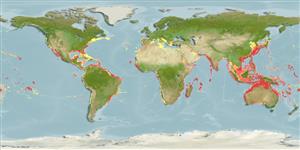
Circumglobal. Western Atlantic: Nova Scotia, Canada and Bermuda to approximately Rio de Janeiro, Brazil (Ref. 57756). Appears to be absent from the Gulf of Mexico (Ref. 9626). Eastern Atlantic: St. Helena, Ascension, Cape Verde, and Gulf of Guinea (Ref. 7097); Azores and Madeira (Ref. 4233). Indian Ocean: Red Sea, Gulf of Aden, Seychelles, Mascarenes, South Africa, and Sri Lanka (Ref. 3287). Eastern Pacific: Gulf of California and Revillagigedo Island to Ecuador (Ref. 9283).
Tamaño / Peso / Edad
Madurez: Lm? range ? - ? cm Max length : 46.0 cm TL macho / no sexado; (Ref. 55763); common length : 30.0 cm TL macho / no sexado; (Ref. 55763)
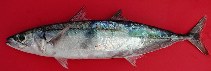
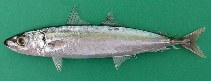
Espinas dorsales (total) : 9; Radios blandos dorsales (total) : 31 - 37; Espinas anales: 3; Radios blandos anales: 27 - 31; Vértebra: 24. This species is distinguished by the following characters: oral valve (membrane) at symphysis of upper jaw conspicuously white in adults; posterior end of upper jaw straight above, moderately rounded and noticeably slanted anteroventrally; both jaws without teeth; shoulder girdle (cleithrum) margin with 2 small papillae, the lower papilla larger; terminal dorsal- and anal-fin rays each consisting of a widely detached finlet; pectoral fins short (58 to 72% of head length), tip of appressed fins falling considerably short of a vertical line from second dorsal-fin origin; lateral line scales, curved 58-75 and without scutes, straight 18-39 with 24-40 scutes, the total scales and scutes in lateral line (excluding scales on caudal fin) 110 to 138; interorbital scales usually extending to above front margin of the pupil. Colour in life bluish green and slivery below; small black blotch on margin of opercle near upper edge; caudal fin yellow-green and dorsal fin lobe sometimes dark distally; anal and pelvic fins pale to whitish (Ref. 9894, 11228). Body shape (shape guide): fusiform / normal; Cross section: oval.
Adults prefer clear oceanic waters, frequently around islands (Ref. 5217). Sometimes they are found near the surface, but generally caught between 40 and 200 m depth (Ref. 9283). Pelagic (Ref. 58302). Usually seen as fast moving schools along the reef edges near deep water (Ref. 48635, 26235). They feed mainly on zooplankton (Ref. 9283). Eggs are pelagic (Ref. 4233). Caught with purse seines and trawls (Ref. 9894). Marketed fresh and salted or dried (Ref. 9283).
Smith-Vaniz, W.F., 1995. Carangidae. Jureles, pámpanos, cojinúas, zapateros, cocineros, casabes, macarelas, chicharros, jorobados, medregales, pez pilota. p. 940-986. In W. Fischer, F. Krupp, W. Schneider, C. Sommer, K.E. Carpenter and V. Niem (eds.) Guia FAO para Identification de Especies para lo Fines de la Pesca. Pacifico Centro-Oriental. 3 Vols. FAO, Rome. (Ref. 9283)
Situación en la Lista Roja de la UICN (Ref. 130435: Version 2025-2 (Global))
Fisiología Composición corporal Nutrientes Consumo del oxígeno Tipo de natación Velocidad de natación Pigmentos visuales Sonido de peces Enfermedades y parásitos Toxicidad (CL50)
Temperatura preferida (Referencia 123201): 13 - 27.9, mean 21.9 °C (based on 2100 cells).
Índice de diversidad filogenética (Referencia 82804): PD50 = 0.5005 [Uniqueness, from 0.5 = low to 2.0 = high].
Bayesian length-weight: a=0.01202 (0.00779 - 0.01855), b=2.99 (2.86 - 3.12), in cm total length, based on LWR estimates for this species & Genus-body shape (Ref. 93245).
Nivel trófico (Referencia 69278): 4.0 ±0.2 se; based on diet studies.
Generation time: 3.9 ( na - na) years. Estimated as median ln(3)/K based on 2 growth studies.
Resiliencia (Referencia 120179): Medio, población duplicada en un tiempo mínimo de 1.4-4.4 años (K=0.28-0.8; assumed tm=1-2).
Prior r = 1.08, 95% CL = 0.71 - 1.62, Based on 3 data-limited stock assessments.
Vulnerabilidad pesquera (Ref. 59153): Low vulnerability (23 of 100). 🛈