



Добавить Ваши наблюдения в Fish Watcher
| Native range | All suitable habitat | Point map | Year 2050 |

|
| This map was computer-generated and has not yet been reviewed. |
| Euthynnus lineatus AquaMaps Data sources: GBIF OBIS |
Загрузить свой Фото и Видео
изображения | Видео | Изображение на Google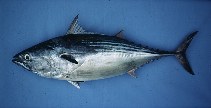 Euthynnus lineatus
Изображение сделано Béarez, P.
изображения | Видео | Изображение на Google
Изображение сделано Béarez, P.
Классификация / Имена народные названия | синонимы | Catalog of Fishes(род, виды) | ITIS | CoL | WoRMS | Cloffa
> Scombriformes (Mackerels) > Scombridae (Mackerels, tunas, bonitos) > Scombrinae
Etymology: Euthynnus: Greek, eu = good + Greek, thynnos = tunna (Ref. 45335).
Etymology: Euthynnus: Greek, eu = good + Greek, thynnos = tunna (Ref. 45335).
Окружающая среда: среда / климатическая зона / пределы глубины / диапазон распространения экология
морской pelagic-oceanic; мигрирует в океане (Ref. 51243); пределы глубины 0 - 40 m (Ref. 5227). Tropical; 39°N - 16°S, 128°W - 77°W (Ref. 168)
распространение Территории | регионы FAO | Экосистемы | места находок | карта точек | интродукции | Faunafri
Eastern Pacific: off San Simeon, California, USA southward to the Galapagos Islands and northern Peru. Two stray specimens collected in the Hawaiian Islands.
Размер / Вес / Возраст
половая зрелость: Lm ? range ? - ? cm
Max length : 84.0 cm FL самец/пол неопределен; (Ref. 168); common length : 60.0 cm FL самец/пол неопределен; (Ref. 9340); наибольший вес (опубликованные данные): 9.1 kg (Ref. 168)
Max length : 84.0 cm FL самец/пол неопределен; (Ref. 168); common length : 60.0 cm FL самец/пол неопределен; (Ref. 9340); наибольший вес (опубликованные данные): 9.1 kg (Ref. 168)
Краткое описание определительные ключи | морфология | морфометрия
колючие лучи спинного плавника (общее число) : 10 - 15; членистые (мягкие) лучи анального плавника: 11 - 12; позвонки: 37. Anterior spines of first dorsal fin much higher than those mid-way, giving the fin a strongly concave outline. Interpelvic process small and bifid. Body naked except for corselet and lateral line. Swim bladder absent. A large rounded protuberances on 31st and 32nd vertebrae. Color is generally iridescent blue with black dorsal markings composed of 3 to 5 horizontal stripes. Also with variable black or dark gray spots above the pelvic fins. Occasionally with extensive longitudinal stripes of light gray on belly; some individuals have few or no belly markings.
Body shape (shape guide): fusiform / normal; Cross section: oval.
Body shape (shape guide): fusiform / normal; Cross section: oval.
Occurs rarely where surface temperatures fall below 23°C. Its larvae are more frequently encountered at temperatures above 26°C and are practically confined to waters within about 240 miles off the mainland. Inhabits near the surface of coastal waters and offshore waters (Ref. 11035). Form multi-species schools with Thunnus albacares and Katsuwonus pelamis. An opportunistic predator which shares feeding pattern with other tunas and probably compete for food with other species such as yellowfin tuna, common dolphin, oriental bonito, among others.
Жизненный цикл и брачное поведение половая зрелость | размножение | нерест | икра | Плодовитость | личинки
Основная ссылка
Загрузите свои рекомендации | ссылки | координатор : Collette, Bruce B. | соавторы
Collette, B.B. and C.E. Nauen, 1983. FAO Species Catalogue. Vol. 2. Scombrids of the world. An annotated and illustrated catalogue of tunas, mackerels, bonitos and related species known to date. Rome: FAO. FAO Fish. Synop. 125(2):137 p. (Ref. 168)
Статус Красного Списка МСОП (Ref. 130435: Version 2025-2 (Global))
Не вызывающий беспокойства (LC) ; Date assessed: 01 March 2022
CITES
Not Evaluated
Угроза для людей
Harmless
Использование человеком
рыболовство: не имеет хозяйственного значения; объект спортивного рыболовства: да
FAO - рыболовство: посадки; Publication: search | FIRMS - Stock assessments | FishSource | Море вокруг нас
дополнительная информация
Трофическая экология
Пищевые предметы (добыча)
состав пищи
потребление пищи
Продовольственные пайки
хищники
Пищевые предметы (добыча)
состав пищи
потребление пищи
Продовольственные пайки
хищники
Динамика численности населения
Параметры роста
Макс. возраст / размер
Отношение длины к весу.
Отношение длины к длине.
Размерный состав
Преобразование массы
пополнение
численность
Параметры роста
Макс. возраст / размер
Отношение длины к весу.
Отношение длины к длине.
Размерный состав
Преобразование массы
пополнение
численность
Жизненный цикл
размножение
половая зрелость
Зрелость/Жиры относительно.
Плодовитость
нерест
Нерестовые скопления
икра
Развитие икры
личинки
динамика численности личинок
размножение
половая зрелость
Зрелость/Жиры относительно.
Плодовитость
нерест
Нерестовые скопления
икра
Развитие икры
личинки
динамика численности личинок
Анатомия
жаберная область
Мозг
Отолит
жаберная область
Мозг
Отолит
Физиология
Состав тела
Питательные вещества
Потребление кислорода
Тип плавания
Скорость плавания
Зрительные пигменты
Звук рыбы
Болезни и паразиты
Токсичность (LC50s)
Состав тела
Питательные вещества
Потребление кислорода
Тип плавания
Скорость плавания
Зрительные пигменты
Звук рыбы
Болезни и паразиты
Токсичность (LC50s)
генетика
Геном
генетика
Гетерозиготность
наследуемость
Генетическое разнообразие
Геном
генетика
Гетерозиготность
наследуемость
Генетическое разнообразие
Связанные с человеком
Системы аквакультуры
особенности рыбоводства
степень растяжения
Случаи заболевания сигуатерой
Марки, монеты и прочее.
Системы аквакультуры
особенности рыбоводства
степень растяжения
Случаи заболевания сигуатерой
Марки, монеты и прочее.
инструменты
Специальные отчеты
Проверить содержание в аквариумах | Проверить опубликованные видовые данные | Проверить опубликованные данные по аквакультуре
Скачать в формате XML
ресурсы в Интернет
AFORO (otoliths) | Aquatic Commons | BHL | Cloffa | Websites from users | Проверить FishWatcher | CISTI | Catalog of Fishes: род, виды | DiscoverLife | ECOTOX | FAO - рыболовство: посадки; Publication: search | Faunafri | Fishipedia | Fishtrace | GloBI | Google Books | Google Scholar | Google | IGFA World Record | OneZoom | Open Tree of Life | OsteoBase: skull, spine | Otolith Atlas of Taiwan Fishes | PubMed | Reef Life Survey | Socotra Atlas | TreeBase | Tree of Life | Wikipedia: Вперёд, поиск | World Records Freshwater Fishing | Zoobank | Зоологическая летопись
Оценки, основанные на моделях
Предпочтительная температура (ссылка 123201): 21.3 - 28.6, mean 26 °C (based on 34 cells).
Индекс филогенетического разнообразия (ссылка 82804): PD50 = 0.6250 [Uniqueness, from 0.5 = low to 2.0 = high].
Bayesian length-weight: a=0.01148 (0.00591 - 0.02229), b=3.08 (2.92 - 3.24), in cm total length, based on LWR estimates for this species & (Sub)family-body (Ref. 93245).
Трофический уровень (ссылка 69278): 3.8 ±0.60 se; based on food items.
устойчивость к внешним воздействиям (ссылка 120179): средний (среднего размера), минимальное время удвоения популяции 1.4-4.4 года (Assuming tm=2).
Питательные вещества (Ref. 124155): Calcium = 23.2 [9.9, 173.5] mg/100g; Iron = 1.96 [0.74, 5.26] mg/100g; Protein = 22.9 [20.8, 24.6] %; Omega3 = 0.187 [0.101, 0.355] g/100g; Selenium = 47.9 [25.5, 98.2] μg/100g; VitaminA = 17.8 [4.2, 71.6] μg/100g; Zinc = 0.585 [0.293, 2.306] mg/100g (wet weight);