



Caesio caerulaurea Lacepède, 1801
Blue and gold fusilier
Waarneming toevoegen in Fish Watcher
| Native range | All suitable habitat | Point map | Year 2050 |

|
| This map was computer-generated and has not yet been reviewed. |
| Caesio caerulaurea AquaMaps Data sources: GBIF OBIS |
Uploaden van uw Foto's en video's
Afbeeldingen | video's | Google afbeelding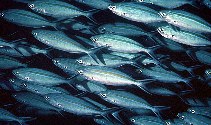 Caesio caerulaurea
Afbeelding van Randall, J.E.
Afbeeldingen | video's | Google afbeelding
Afbeelding van Randall, J.E.
Classificatie / Namen Lokale namen | Synoniemen | Catalog of Fishes(Genus, Soort(en)) | ITIS | CoL | WoRMS | Cloffa
> Eupercaria/misc (Various families in series Eupercaria) > Lutjanidae (Snappers) > Caesioninae
Etymology: Caesio: Latin, caesius, bluish-grey, 1835; it is the same name given to the silvery metal (Cs) (Ref. 45335).
More on author: Lacepède.
Etymology: Caesio: Latin, caesius, bluish-grey, 1835; it is the same name given to the silvery metal (Cs) (Ref. 45335).
More on author: Lacepède.
Milieu: milieu / Klimaatzone / Diepte / verspreidingsgebied Ecologie
marien rifbewoner; standvastig; diepte 1 - 60 m (Ref. 30874). Tropical; 34°N - 31°S, 30°E - 116°W (Ref. 94071)
Verspreiding Gebieden | FAO regio's | Ecosystemen | Voorkomen | Verspreidingskaart | Introducties | Faunafri
Indo-West Pacific: Red Sea and East Africa to Samoa, north to southern Japan, south to New Caledonia. Absent in the Arabian (Persian) Gulf.
Grootte / Gewicht / Leeftijd
Maturiteit: Lm ? range ? - ? cm
Max length : 45.4 cm FL mannelijk / geslacht onbekend; (Ref. 125599); common length : 25.0 cm TL mannelijk / geslacht onbekend; (Ref. 39189); max. gepubliceerd gewicht: 1.6 kg (Ref. 125599)
Max length : 45.4 cm FL mannelijk / geslacht onbekend; (Ref. 125599); common length : 25.0 cm TL mannelijk / geslacht onbekend; (Ref. 39189); max. gepubliceerd gewicht: 1.6 kg (Ref. 125599)
Korte beschrijving Determinatiesleutels | Morfologie | Morfometrie
Dorsale stekels (totaal) : 10; Dorsale zachte stralen (totaal) : 14 - 16; Anale stekels: 3; Anale zachte stralen: 10 - 12. This species is distinguished by the following characters: postmaxillary process single; A III,12 (rarely 13); lateral line scales 57-65 (usually around 61); scale rows on spinous part of dorsal fin horizontal; supratemporal bands of scales often interrupted at dorsal midline by a scaleless zone, always a V-shaped scaleless zone anteriorly at midline intruding between the supratemporal band of scales; body colour with upper body bluish and the lower white to pale bluish; a single yellow or golden stripe directly above lateral line except on caudal peduncle where it is about 1 scale above lateral line, the yellow stripe 2 or 3 scales wide, bordered directly above and below by a white or light blue stripe which is about 1 scale wide, caudal-fin lobes with a black median streak (Ref. 68703).
Body shape (shape guide): fusiform / normal; Cross section: compressed.
Body shape (shape guide): fusiform / normal; Cross section: compressed.
Adults are found in schools in deep lagoons and along seaward reefs in coastal areas (Ref. 9710), mixing with other species of fusiliers (Ref. 48636). Juveniles are used as tuna bait fish. They are oviparous, with small pelagic eggs (Ref. 402). Maximum depth reported taken from Ref. 128797.
Levenscyclus en paargedrag Maturiteit | Voortplanting | Paaien | Eieren | Fecunditeit | Larven
Mating behavior is marked by six distinguishable patterns, namely: 1) nuzzling; 2) several males joining in courtship; 3) spiraling towards the surface; 4) pair spawning; 5) sperm release by sneakers; and 6) post spawning.
Nuzzling is done about 1-1.5 hours before spawning. For most of the day the fish swam slowly in school. At nearly spawning time, one or two males approach a selected female and begin pecking and pushing her swollen abdomen with their snouts. Interruption happens at this stage resulting in spawners returning to the school. With less than an hour until spawning, 2-6 males may attempt to get their abdomen as close to the female's abdomen as possible. For the pair that completes this position, a spiraling ascent to the surface occurs followed by a release of both eggs and sperm while other males come in pursuit. These sneakers release sperm at the same spot where the initial pair had released their gametes. Some spawnings may occur without sneakers getting involved in the process (Ref. 37498).
Hoofdreferentie
Upload uw referenties | Referenties | Coördinator | Medewerkers
Carpenter, K.E., 1987. Revision of the Indo-Pacific fish family Caesionidae (Lutjanoidea), with descriptions of five new species. Indo-Pac. Fish. (15):56 p. (Ref. 1723)
Status op de Rode Lijst van het IUCN (Ref. 130435: Version 2025-2 (Global))
Niet bedreigd (LC) ; Date assessed: 04 February 2009
CITES
Not Evaluated
Gevaar voor de mens
Harmless
Gebruik door de mens
Visserij: commercieel; aas: occasionally
FAO - Publication: search | FishSource | Sea Around Us
Meer informatie
Trofische ecologie
Voedsel (prooien)
Dieetsamenstelling
Voedselconsumptie
Voedselrantsoenen
Predatoren
Voedsel (prooien)
Dieetsamenstelling
Voedselconsumptie
Voedselrantsoenen
Predatoren
Populatiedynamica
Groeiparameters
Max. leeftijden / maten
Lengte-gewicht rel.
Lengte-lengte rel.
Lengtefrequenties
Massaconversie
Rekrutering
Abundantie
Groeiparameters
Max. leeftijden / maten
Lengte-gewicht rel.
Lengte-lengte rel.
Lengtefrequenties
Massaconversie
Rekrutering
Abundantie
Levenscyclus
Voortplanting
Maturiteit
Rijpheid/kieuwen rel.
Fecunditeit
Paaien
Paaibestanden
Eieren
Ontwikkeling van de eieren
Larven
Larvale populatiedynamiek
Voortplanting
Maturiteit
Rijpheid/kieuwen rel.
Fecunditeit
Paaien
Paaibestanden
Eieren
Ontwikkeling van de eieren
Larven
Larvale populatiedynamiek
Fysiologie
Lichaamssamenstelling
Voedingsstoffen
Zuurstofverbruik
Type zwemmen
Zwemsnelheid
Visuele pigmenten
Vis geluid
Ziekten en parasieten
Toxiciteit (LC50)
Lichaamssamenstelling
Voedingsstoffen
Zuurstofverbruik
Type zwemmen
Zwemsnelheid
Visuele pigmenten
Vis geluid
Ziekten en parasieten
Toxiciteit (LC50)
Genetica
genoom
Genetica
Heterozygositeit
Erfelijkheid
Genetische diversiteit
genoom
Genetica
Heterozygositeit
Erfelijkheid
Genetische diversiteit
Menselijk gerelateerd
Aquacultuursystemen
Aquacultuurprofielen
Kweeklijnen
Ciguatera gevallen
Postzegels, munten, diversen.
Aquacultuursystemen
Aquacultuurprofielen
Kweeklijnen
Ciguatera gevallen
Postzegels, munten, diversen.
Tools
Biologische quiz | E-boek | Veldgids | Determinatiesleutels | Lengtefrequentie Tool | Levenscyclus tool | Verspreidingskaart |
Vangst-MSY |
Speciale rapporten
Bekijk gegevens voor het houden in een aquarium | Bekijk Fact Sheets voor de soort | Bekijk Aquacultuur Fact Sheets
Download XML
Internetbronnen
AFORO (otoliths) | Aquatic Commons | BHL | Cloffa | Websites from users | Bekijk FishWatcher | CISTI | Catalog of Fishes: Genus, Soort(en) | DiscoverLife | ECOTOX | FAO - Publication: search | Faunafri | Fishipedia | Fishtrace | GloBI | Google Books | Google Scholar | Google | IGFA World Record | Nationale databanken | OneZoom | Open Tree of Life | Otolith Atlas of Taiwan Fishes | PubMed | Reef Life Survey | Socotra Atlas | TreeBase | Tree of Life | Wikipedia: ga naar, zoek | World Records Freshwater Fishing | Zoological Record
Schattingen op basis van modellen
Gewenste temperatuur (Ref. 123201): 24.7 - 29, mean 28 °C (based on 814 cells).
Fylogenetische diversiteitsindex (Ref. 82804): PD50 = 0.5010 [Uniqueness, from 0.5 = low to 2.0 = high].
Bayesian length-weight: a=0.01259 (0.00958 - 0.01654), b=3.05 (2.98 - 3.12), in cm total length, based on LWR estimates for this species (Ref. 93245).
Trofisch niveau (Ref. 69278): 3.4 ±0.45 se; based on food items.
Weerstandsvermogen (Ref. 120179): Gemiddeld, minimale populatieverdubbelingstijd 1,4-4,4 jaar (Preliminary K or Fecundity.).
Voedingsstoffen (Ref. 124155): Calcium = 58.9 [38.9, 86.2] mg/100g; Iron = 0.742 [0.489, 1.080] mg/100g; Protein = 19 [18, 20] %; Omega3 = 0.141 [0.098, 0.203] g/100g; Selenium = 32.6 [20.7, 55.2] μg/100g; VitaminA = 102 [42, 251] μg/100g; Zinc = 1.14 [0.83, 1.52] mg/100g (wet weight);