



Loxodon macrorhinus Müller & Henle, 1839
Sliteye shark
Waarneming toevoegen in Fish Watcher
| Native range | All suitable habitat | Point map | Year 2050 |

|
| This map was computer-generated and has not yet been reviewed. |
| Loxodon macrorhinus AquaMaps Data sources: GBIF OBIS |
Uploaden van uw Foto's en video's
Afbeeldingen | Google afbeelding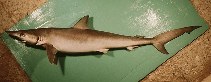 Loxodon macrorhinus
Afbeelding van Randall, J.E.
Afbeeldingen | Google afbeelding
Afbeelding van Randall, J.E.
Classificatie / Namen Lokale namen | Synoniemen | Catalog of Fishes(Genus, Soort(en)) | ITIS | CoL | WoRMS | Cloffa
Elasmobranchii (haaien en roggen) (sharks and rays) > Carcharhiniformes (Ground sharks) > Carcharhinidae (Requiem sharks)
Etymology: Loxodon: loxos (Gr.), slanting; odon (Gr.), tooth, probably referring to oblique teeth cusps [name first published with no included species; species added by Müller & Henle in 1839] (See ETYFish); macrorhinus: macro-, from makros (Gr.), long; rhinos (Gr.), nose, probably referring to its long, narrow snout (See ETYFish).
More on authors: Müller & Henle.
Etymology: Loxodon: loxos (Gr.), slanting; odon (Gr.), tooth, probably referring to oblique teeth cusps [name first published with no included species; species added by Müller & Henle in 1839] (See ETYFish); macrorhinus: macro-, from makros (Gr.), long; rhinos (Gr.), nose, probably referring to its long, narrow snout (See ETYFish).
More on authors: Müller & Henle.
Milieu: milieu / Klimaatzone / Diepte / verspreidingsgebied Ecologie
marien demersaal; diepte 7 - 100 m (Ref. 6871). Tropical; 34°N - 30°S
Verspreiding Gebieden | FAO regio's | Ecosystemen | Voorkomen | Verspreidingskaart | Introducties | Faunafri
Indo-West Pacific: Red Sea and East Africa to Indonesia, north to Japan, south to Australia.
Lengte bij maturiteit / Grootte / Gewicht / Leeftijd
Maturiteit: Lm 85.0, range 79 - 90 cm
Max length : 98.0 cm TL mannelijk / geslacht onbekend; (Ref. 58048)
Max length : 98.0 cm TL mannelijk / geslacht onbekend; (Ref. 58048)
Korte beschrijving Determinatiesleutels | Morfologie | Morfometrie
Dorsale stekels (totaal) : 0; Anale stekels: 0. A small, very slim shark with a long, narrow snout, big eyes with rear notches, short labial furrows, and small, oblique-cusped teeth with smooth edges; 2nd dorsal fin small, low and behind larger anal fin; interdorsal ridge rudimentary or absent (Ref. 5578). Grey above, pale below, fins with pale edges (transparent in life), caudal and first dorsal fins with narrow dark margin, first dorsal fin also with a dusky tip (Ref. 9997).
Body shape (shape guide): fusiform / normal.
Body shape (shape guide): fusiform / normal.
Found on continental and insular shelves; mainly near the bottom (Ref. 6871). Feeds on small bony fishes, shrimps and cuttlefish (Ref. 244). Viviparous (Ref. 50449); gives birth annually to litters of 2-4 pups (Ref. 58048). Caught in artisanal and small scale commercial fisheries (Ref. 9997). Utilized fresh for human consumption (Ref. 244); meat and fins, but of limited value due to its small size (Ref. 58048).
Levenscyclus en paargedrag Maturiteit | Voortplanting | Paaien | Eieren | Fecunditeit | Larven
Viviparous, with a yolk-sac placenta; 2-4 pups per litter. Size at birth 40-43 cm; 54-55 cm TL (Ref.58048). Distinct pairing with embrace (Ref. 205).
Hoofdreferentie
Upload uw referenties | Referenties | Coördinator : Compagno, Leonard J.V. | Medewerkers
Compagno, L.J.V., 1984. FAO Species Catalogue. Vol. 4. Sharks of the world. An annotated and illustrated catalogue of shark species known to date. Part 2 - Carcharhiniformes. FAO Fish. Synop. 125(4/2):251-655. Rome: FAO. (Ref. 244)
Status op de Rode Lijst van het IUCN (Ref. 130435: Version 2025-2 (Global))
Gevoelig (NT) (A2d); Date assessed: 19 March 2021
Gevaar voor de mens
Harmless (Ref. 244)
Gebruik door de mens
Visserij: commercieel; sportvis: ja
FAO - Publication: search | FishSource |
Meer informatie
Trofische ecologie
Voedsel (prooien)
Dieetsamenstelling
Voedselconsumptie
Voedselrantsoenen
Predatoren
Voedsel (prooien)
Dieetsamenstelling
Voedselconsumptie
Voedselrantsoenen
Predatoren
Populatiedynamica
Groeiparameters
Max. leeftijden / maten
Lengte-gewicht rel.
Lengte-lengte rel.
Lengtefrequenties
Massaconversie
Rekrutering
Abundantie
Groeiparameters
Max. leeftijden / maten
Lengte-gewicht rel.
Lengte-lengte rel.
Lengtefrequenties
Massaconversie
Rekrutering
Abundantie
Levenscyclus
Voortplanting
Maturiteit
Rijpheid/kieuwen rel.
Fecunditeit
Paaien
Paaibestanden
Eieren
Ontwikkeling van de eieren
Larven
Larvale populatiedynamiek
Voortplanting
Maturiteit
Rijpheid/kieuwen rel.
Fecunditeit
Paaien
Paaibestanden
Eieren
Ontwikkeling van de eieren
Larven
Larvale populatiedynamiek
Anatomie
Kieuwoppervlak
Hersenen
Otoliet
Kieuwoppervlak
Hersenen
Otoliet
Fysiologie
Lichaamssamenstelling
Voedingsstoffen
Zuurstofverbruik
Type zwemmen
Zwemsnelheid
Visuele pigmenten
Vis geluid
Ziekten en parasieten
Toxiciteit (LC50)
Lichaamssamenstelling
Voedingsstoffen
Zuurstofverbruik
Type zwemmen
Zwemsnelheid
Visuele pigmenten
Vis geluid
Ziekten en parasieten
Toxiciteit (LC50)
Menselijk gerelateerd
Aquacultuursystemen
Aquacultuurprofielen
Kweeklijnen
Ciguatera gevallen
Postzegels, munten, diversen.
Aquacultuursystemen
Aquacultuurprofielen
Kweeklijnen
Ciguatera gevallen
Postzegels, munten, diversen.
Tools
E-boek | Veldgids | Determinatiesleutels | Lengtefrequentie Tool | Levenscyclus tool | Verspreidingskaart |
Vangst-MSY |
Speciale rapporten
Bekijk gegevens voor het houden in een aquarium | Bekijk Fact Sheets voor de soort | Bekijk Aquacultuur Fact Sheets
Download XML
Internetbronnen
AFORO (otoliths) | Aquatic Commons | BHL | Cloffa | Websites from users | Bekijk FishWatcher | CISTI | Catalog of Fishes: Genus, Soort(en) | DiscoverLife | ECOTOX | FAO - Publication: search | Faunafri | Fishipedia | Fishtrace | GloBI | Google Books | Google Scholar | Google | IGFA World Record | Nationale databanken | OneZoom | Open Tree of Life | Otolith Atlas of Taiwan Fishes | PubMed | Reef Life Survey | Socotra Atlas | TreeBase | Tree of Life | Wikipedia: ga naar, zoek | World Records Freshwater Fishing | Zoobank | Zoological Record
Schattingen op basis van modellen
Gewenste temperatuur (Ref. 123201): 24.6 - 29, mean 28 °C (based on 1702 cells).
Fylogenetische diversiteitsindex (Ref. 82804): PD50 = 1.0000 [Uniqueness, from 0.5 = low to 2.0 = high].
Bayesian length-weight: a=0.00490 (0.00233 - 0.01031), b=3.08 (2.91 - 3.25), in cm total length, based on LWR estimates for this (Sub)family-body shape (Ref. 93245).
Trofisch niveau (Ref. 69278): 4.0 ±0.4 se; based on diet studies.
Generation time: 3.3 ( na - na) years. Estimated as median ln(3)/K based on 2 growth studies.
Weerstandsvermogen (Ref. 120179): Zeer laag, minimale populatieverdubbelingstijd meer dan 14 jaar (Fec=2).