



Carcharhinus leucas (Valenciennes, 1839)
Bull shark
เพิ่มการสังเกตของคุณใน Fish Watcher
| Native range | All suitable habitat | Point map | Year 2050 |
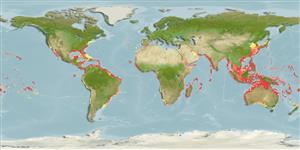
|
| This map was computer-generated and has not yet been reviewed. |
| Carcharhinus leucas AquaMaps Data sources: GBIF OBIS |
อัพโหลดของคุณ ภาพถ่าย และ วิดีโอ
รูปภาพหลายรูป | วิดีโอ | แสตมป์ เหรียญ อื่นๆ | Google image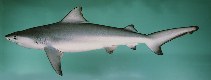 Carcharhinus leucas
ภาพโดย Randall, J.E.
รูปภาพหลายรูป | วิดีโอ | แสตมป์ เหรียญ อื่นๆ | Google image
ภาพโดย Randall, J.E.
การจำแนกประเภท / ชื่อ ชื่อสามัญ | ชื่อพ้อง | Catalog of Fishes(สกุล, ชนิด) | ITIS | CoL | WoRMS | Cloffa
sub class Elasmobranchii (ฉลามและกระเบน) (sharks and rays) > Carcharhiniformes (Ground sharks) > Carcharhinidae (Requiem sharks)
Etymology: Carcharhinus: karcharos (Gr.), sharp or jagged; rhinus, an ancient name for sharks, from rhine (Gr.), rasp, both words alluding to a shark's jagged, rasp-like skin (See ETYFish); leucas: From leukos (Gr.), white, referring to its body color, usually grayish with white underside [authorship often attributed to Müller & Henle, who published Valenciennes’ description] (See ETYFish).
Etymology: Carcharhinus: karcharos (Gr.), sharp or jagged; rhinus, an ancient name for sharks, from rhine (Gr.), rasp, both words alluding to a shark's jagged, rasp-like skin (See ETYFish); leucas: From leukos (Gr.), white, referring to its body color, usually grayish with white underside [authorship often attributed to Müller & Henle, who published Valenciennes’ description] (See ETYFish).
สิ่งแวดล้อม : สิ่งแวดล้อม / เขตภูมิอากาศ / ระดับความลึก / ระยะการกระจายสินค้า นิเวศวิทยา
เกี่ยวกับทะเล,น้ำเค็ม; น้ำจืด; กร่อย เกี่ยวกับหินโสโครก; สัตว์น้ำที่อพยพไปๆมาๆ ระหว่างแหล่งน้ำจืดกับทะเล ที่เป็นไปตามช่วงชีวิต (Ref. 51243); ระดับความลึก 1 - 164 m (Ref. 106604), usually 1 - 30 m (Ref. 55183). Subtropical; 42°N - 39°S, 180°W - 180°E (Ref. 55182)
การแพร่กระจาย อาณาเขต | พื้นที่จำแนกตาม FAO | ระบบนิเวศหลายระบบ | การปรากฏขึ้น,การเกิดขึ้น,พบ | ตำแหน่งบนแผนที่ | การแนะนำ | Faunafri
Cosmopolitan in tropical and subtropical waters (Ref. 81283): widespread in warm oceans, rivers and lakes (Ref. 4716). Western Atlantic: Massachusetts, USA to Argentina (Ref. 58839); eastern Atlantic: Morocco, Senegal to Angola (Ref. 81283, 81623); Indo-Pacific: Kenya and South Africa to India, then, Viet Nam to Australia; southern Baja California, Mexico to Ecuador and possibly occurring in Peru. Africa: in freshwater found in rivers of West Africa from Gambia River to Ogowe River (Ref. 81283) and in the Cuanza in Angola (Ref. 120641).
Sympatric with Carcharhinus amboinensis, Glyphis gangeticus.
ความยาวเมื่อครบกำหนดครั้งแรก / ขนาด / น้ำหนัก / อายุ
วัยเจริญพันธุ์: Lm 201.0, range 180 - 230 cm
Max length : 360 cm TL เพศผู้/กระเทย; (Ref. 85726); 400.0 cm TL (female); common length : 260 cm TL เพศผู้/กระเทย; (Ref. 9253); น้ำหนักสูงสุดที่มีการรายงาน: 316.5 kg (Ref. 40637); อายุสูงสุดที่ได้รายงาน: 32 ปี (Ref. 42004)
Max length : 360 cm TL เพศผู้/กระเทย; (Ref. 85726); 400.0 cm TL (female); common length : 260 cm TL เพศผู้/กระเทย; (Ref. 9253); น้ำหนักสูงสุดที่มีการรายงาน: 316.5 kg (Ref. 40637); อายุสูงสุดที่ได้รายงาน: 32 ปี (Ref. 42004)
คำอธิบายสั้นๆ เครื่องมือที่ใช้ในการแยกชนิดสัตว์,สิ่งมีชีวิตออกจากกัน | สัณฐานวิทยา | ความยาวต่างๆ
เงี่ยงครีบหลัง (รวม) : 0; เงี่ยงครีบก้น: 0. Diagnosis: Carcharhinus leucas is a massive shark with a short, broad and blunt snout, small eyes and triangular saw-edged upper teeth, and lack of interdorsal ridge, characters which are sufficient to distinguish this species (Ref. 26938).
Body shape (shape guide): fusiform / normal.
Body shape (shape guide): fusiform / normal.
A coastal and freshwater shark inhabiting shallow waters especially in bays, estuaries, rivers, and lakes (Ref. 244). It readily penetrates far up rivers and hypersaline bays and littoral lagoons (Ref. 9997, 44894, 81283). Capable of covering great distances (up to 180 kilometers in 24 hours), moving between fresh and brackish water at random (Ref. 44894). Adults often found near estuaries and freshwater inflows to the sea; young enter rivers and may be found hundreds of km from the sea (Ref. 4967, 44894, 58304). Feeds on bony fishes, other sharks, rays, mantis shrimps, crabs, squid, sea snails, sea urchins, mammalian carrion, sea turtles, and occasionally garbage (Ref. 244, 5578, 44894). Viviparous (Ref. 50449). Gives birth to litters of up to 13 young (Ref. 26938, 44894). Size at birth is 56-81 cm TL (Ref. 81623). Sexual maturity is attained after 10-15 years (at a length between 160-200 centimeters) (Ref. 44894). Though not commercially important, this species is a good food fish (Ref. 12484). Utilized fresh, fresh-frozen or smoked for human consumption, fins for soup, hide for leather, liver for oil, and carcass for fishmeal (Ref. 244). Very hardy and lives well in captivity (Ref. 244). This large shark is potentially dangerous to man (Ref. 81283), probably the most dangerous species of tropical shark (Ref. 244), and it is repeatedly implicated in attacks on humans (Ref. 4967, 44894); attacks in fresh water are rare (Ref. 44894).
วงจรชีวิตและพฤติกรรมการผสมพันธุ์ วัยเจริญพันธุ์ | การสืบพันธุ์ | การวางไข่ | เซลสืบพันธ์ของเพศเมีย(ไข่) | ความดกของไข่ | ตัวอ่อน
Viviparpous, with a yolk-sac placenta, 1-13 young in a litter. Size at birth about 60 cm TL (Ref. 9997). In the western North Atlantic off Florida and the Gulf of Mexico, and off South Africa, young are born in late spring or early summer. Off Nicaragua, females may have young throughout the year, with a peak in spring and early summer. Estimated gestation period is 10 to 11 months (Ref. 244). Distinct pairing with embrace (Ref. 205). Females often have courtship scars, but males are rarely seen with fighting scars (Ref. 244).
อ้างอิงหลัก
อัพโหลดข้อมูลอ้างอิงของคุณ | อ้างอิง | ผู้ประสานงาน : Compagno, Leonard J.V. | ผู้ร่วมมือ
Compagno, L.J.V., 1984. FAO Species Catalogue. Vol. 4. Sharks of the world. An annotated and illustrated catalogue of shark species known to date. Part 2 - Carcharhiniformes. FAO Fish. Synop. 125(4/2):251-655. Rome: FAO. (Ref. 244)
สถานะบัญชีแดงของ IUCN (Ref. 130435: Version 2025-2 (Global))
เปราะบาง (VU) (A2bcd); Date assessed: 24 November 2020
ภัยคุกคามต่อมนุษย์
Traumatogenic (Ref. 4690)
การใช้ของมนุษย์
การประมง: การค้า; การตกปลาเป็นกีฬา: ใช่
FAO - การประมง: การลงจอด; Publication: search | FishSource | ทะเลรอบๆเรา
ข้อมูลเพิ่มเติม
พลวัตของประชากร
พารามิเตอร์การเจริญเติบโต
อายุสูงสุด / ขนาด
ความยาว-น้ำหนักสัมพันธ์
ความยาว-ความยาวสัมพันธ์
ความยาว-ความถี่
การแปลงมวล
การทดแทนที่
อุดมสมบรูณ์
พารามิเตอร์การเจริญเติบโต
อายุสูงสุด / ขนาด
ความยาว-น้ำหนักสัมพันธ์
ความยาว-ความยาวสัมพันธ์
ความยาว-ความถี่
การแปลงมวล
การทดแทนที่
อุดมสมบรูณ์
วงจรชีวิต
การสืบพันธุ์
วัยเจริญพันธุ์
ความสมบูรณ์พันธุ์/เหงือกที่เกี่ยวข้อง
ความดกของไข่
การวางไข่
การรวมตัวของสปอน
เซลสืบพันธ์ของเพศเมีย(ไข่)
การพัฒนาไข่
ตัวอ่อน
พลวัตของสัตว์น้ำวัยอ่อน
การสืบพันธุ์
วัยเจริญพันธุ์
ความสมบูรณ์พันธุ์/เหงือกที่เกี่ยวข้อง
ความดกของไข่
การวางไข่
การรวมตัวของสปอน
เซลสืบพันธ์ของเพศเมีย(ไข่)
การพัฒนาไข่
ตัวอ่อน
พลวัตของสัตว์น้ำวัยอ่อน
การแพร่กระจาย
อาณาเขต
พื้นที่จำแนกตาม FAO
ระบบนิเวศหลายระบบ
การปรากฏขึ้น,การเกิดขึ้น,พบ
การแนะนำ
BRUVS - วิดีโอ
อาณาเขต
พื้นที่จำแนกตาม FAO
ระบบนิเวศหลายระบบ
การปรากฏขึ้น,การเกิดขึ้น,พบ
การแนะนำ
BRUVS - วิดีโอ
สรีรวิทยา
องค์ประกอบของร่างกาย
สารอาหาร
การใช้ออกซิเจน
ประเภทการว่ายน้ำ
ระดับความเร็วในการว่ายน้ำ
เม็ดสีที่มองเห็นได้
เสียงปลา
โรคและปรสิต
ความเป็นพิษ (LC50s)
องค์ประกอบของร่างกาย
สารอาหาร
การใช้ออกซิเจน
ประเภทการว่ายน้ำ
ระดับความเร็วในการว่ายน้ำ
เม็ดสีที่มองเห็นได้
เสียงปลา
โรคและปรสิต
ความเป็นพิษ (LC50s)
เกี่ยวข้องกับมนุษย์
ระบบการเพาะเลี้ยงสัตว์น้ำ
ประวัติการเพาะเลี้ยงสัตว์น้ำ
สายพันธุ์
กรณีซิเกวเทอรา
แสตมป์ เหรียญ อื่นๆ
ระบบการเพาะเลี้ยงสัตว์น้ำ
ประวัติการเพาะเลี้ยงสัตว์น้ำ
สายพันธุ์
กรณีซิเกวเทอรา
แสตมป์ เหรียญ อื่นๆ
เครื่องมือ
หนังสืออิเล็กทรอนิกส์ | คู่มือภาคสนาม | เครื่องมือที่ใช้ในการแยกชนิดสัตว์,สิ่งมีชีวิตออกจากกัน | ผู้มีความชำนาญในเรื่องความถี่ของความยาว | เครื่องมือในการศึกษาชีวประวัติ | ตำแหน่งบนแผนที่ |
จับ-MSY |
รายงานพิเศษ
ตรวจสอบการบำรุงรักษาตู้ปลา | ตรวจสอบเอกสารข้อเท็จจริงเกี่ยวกับสายพันธุ์ | ตรวจสอบเอกสารข้อเท็จจริงเกี่ยวกับการเพาะเลี้ยงสัตว์น้ำ
ดาวน์โหลด XML
หน้าสรุป | ข้อมูลสำคัญ | ชื่อสามัญ | ภาพถ่าย
แหล่งที่มาจากอินเตอร์เน็ต
AFORO (otoliths) | Aquatic Commons | BHL | Cloffa | Websites from users | Check FishWatcher | CISTI | Catalog of Fishes: สกุล, ชนิด | DiscoverLife | DORIS | ECOTOX | FAO - การประมง: การลงจอด; Publication: search | Faunafri | Fishipedia | Fishtrace | GloBI | GoMexSI (interaction data) | Google Books | Google Scholar | Google | IGFA World Record | ฐานข้อมูลแห่งชาติ | OneZoom | Open Tree of Life | Otolith Atlas of Taiwan Fishes | PubMed | Reef Life Survey | Socotra Atlas | TreeBase | แผนภูมิชีวิตแบบต้นไม้ | Wikipedia: Go, ค้นหา | World Records Freshwater Fishing | บันทึกทางด้านสัตววิทยา
การประมาณค่าตามแบบจำลอง
อุณหภูมิที่ต้องการ (อ้างอิง 123201): 23.2 - 29, mean 27.5 °C (based on 2930 cells).
ดัชนีความหลากหลายทางวิวัฒนาการ (อ้างอิง 82804): PD50 = 0.5000 [Uniqueness, from 0.5 = low to 2.0 = high].
Bayesian length-weight: a=0.00501 (0.00405 - 0.00621), b=3.06 (3.02 - 3.10), in cm total length, based on LWR estimates for this species (Ref. 93245).
ระดับชั้นอาหาร (อ้างอิง 69278): 4.3 ±0.5 se; based on diet studies.
ความสามารถในการกลับคืนสู่ปกติ (อ้างอิง 120179): ต่ำมาก, เวลาต่ำสุดที่จะทำให้ประชากรเพิ่มขึ้นเป็น 2 เท่าใช้เวลามากกว่า 14 ปี (K=0.04-0.15; tm=6-21; tmax=32; Fec=1-13).
สารอาหาร (Ref. 124155): Calcium = 2.56 [0.48, 14.67] mg/100g; Iron = 0.304 [0.074, 0.932] mg/100g; Protein = 23 [20, 25] %; Omega3 = 0.151 [0.052, 0.397] g/100g; Selenium = 17.1 [5.0, 54.8] μg/100g; VitaminA = 28 [7, 105] μg/100g; Zinc = 0.431 [0.202, 0.866] mg/100g (wet weight);