



上傳你的 相片 和 影像
照片 | Google 影像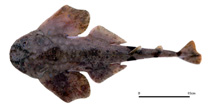 Squatina formosa
Female 拍攝者 Kochi University, Lab. Of Marine Biology, Faculty of Science (BSKU)
照片 | Google 影像
Female 拍攝者 Kochi University, Lab. Of Marine Biology, Faculty of Science (BSKU)
分類 / 名稱 俗名 | 同種異名 | Catalog of Fishes(屬, 種) | ITIS | CoL | WoRMS | Cloffa
Elasmobranchii 板鰓亞綱 (鯊魚與魟魚) (sharks and rays) > Squatiniformes (Angel sharks) 扁鯊目 (Angel sharks) > Squatinidae (Angel sharks) 琵琶鮫科 (Angel sharks)
Etymology: Squatina: Latin for skate, which angel sharks superficially resemble, presumably tautonymous with Squalus squatina Linnaeus 1758 (no species mentioned) (See ETYFish); formosa: Named for Formosa (Taiwan), type locality (See ETYFish).
Etymology: Squatina: Latin for skate, which angel sharks superficially resemble, presumably tautonymous with Squalus squatina Linnaeus 1758 (no species mentioned) (See ETYFish); formosa: Named for Formosa (Taiwan), type locality (See ETYFish).
環境: 環境 / 氣候帶 / 深度上下限 / 配送範圍 生態學
分布 領土 | FAO區域 | 生態系 | 發現紀錄 | 分布圖 | 簡介 | Faunafri
North Western Pacific: East coast of Taiwan and Ryuku Islands to SE Japan to Izu Peninsula (Ref. 84150); misidentifiction of S. caillieti in the Philippines (Ref. 86399).
西太平洋: 台灣與菲律賓的東北與西南海岸。
西太平洋: 台灣與菲律賓的東北與西南海岸。
大小 / 重量 / 年齡
簡短描述 檢索表 | 型態特徵 | 形態測量圖
背棘 (總數) : 0. Taiwan angelshark Squatina formosa has broad pectoral fins with outer corner more obtuse and free rear tips narrowly subangular; nasal barbels apparently simple, narrow and tapered. Anterior nasal flaps smooth to weakly fringed; dermal folds on sides of head possibly with a triangular lobe. Rear tip of inner margin of pelvic fins reaching little beyond origin of first dorsal. Very short hypocercal tail. Rows of small spines on midline of back and tail, and on snout and between eyes. Color: no ocelli (eye-like spot) on body (Ref. 247, 31369).
Body shape (shape guide): other.
台灣琵琶鮫 Squatina formosa 寬的胸鰭有外部的角落更圓頭的與鰭游離後端狹窄子有角; 鼻骨觸鬚顯然單一, 狹窄的而且成錐形。 前鼻瓣平滑的到微弱地邊緣了; 在頭側上的表皮的摺層可能有一個三角形的葉。 超過第一背鰭的起源一點點的腹鰭的內緣的後頂端。 非常短的 hypocercal 尾部。 在背面與尾部的中線上的列的小棘, 與在吻上與在眼之間。 顏色: 沒有在身體上的假眼斑 (眼狀的斑點).(參考文獻 247,31369)
Body shape (shape guide): other.
台灣琵琶鮫 Squatina formosa 寬的胸鰭有外部的角落更圓頭的與鰭游離後端狹窄子有角; 鼻骨觸鬚顯然單一, 狹窄的而且成錐形。 前鼻瓣平滑的到微弱地邊緣了; 在頭側上的表皮的摺層可能有一個三角形的葉。 超過第一背鰭的起源一點點的腹鰭的內緣的後頂端。 非常短的 hypocercal 尾部。 在背面與尾部的中線上的列的小棘, 與在吻上與在眼之間。 顏色: 沒有在身體上的假眼斑 (眼狀的斑點).(參考文獻 247,31369)
A little-known angelshark found on the outer continental shelf. Possibly larger. Ovoviviparous (Ref. 50449).
所知極少的琵琶鮫發現於大陸棚外緣了。 可能比較大的。 卵胎生的.(參考文獻 50449)
所知極少的琵琶鮫發現於大陸棚外緣了。 可能比較大的。 卵胎生的.(參考文獻 50449)
生命週期和交配行為 成熟度 | 繁殖 | 產卵場 | 卵 | 孕卵數 | 仔魚
Ovoviviparous, embryos feed solely on yolk (Ref. 50449).西太平洋: 台灣與菲律賓的東北與西南海岸。
主要參考資料
上傳您的推薦信 | 參考文獻 | 合作者 : Compagno, Leonard J.V. | 合作者
Compagno, L.J.V., 1984. FAO Species Catalogue. Vol. 4. Sharks of the world. An annotated and illustrated catalogue of shark species known to date. Part 1 - Hexanchiformes to Lamniformes. FAO Fish. Synop. 125(4/1):1-249. Rome, FAO. (Ref. 247)
CITES
Not Evaluated
對人類具威脅
引起創傷的
人類使用
漁業: 沒有興趣
FAO - 漁業: 魚種描繪; Publication: search | FishSource |
更多資訊
營養生態學
食物項目(獵物)
食性組成
食物消耗量
食物配給
捕食者
食物項目(獵物)
食性組成
食物消耗量
食物配給
捕食者
生態學
生態學
生態學
人口動態
成長參數
最大年齡/尺寸
長度重量比
長度關係
長度-頻率
質量轉換
入添量
豐度
成長參數
最大年齡/尺寸
長度重量比
長度關係
長度-頻率
質量轉換
入添量
豐度
解剖學
鰓區
腦部
耳石
鰓區
腦部
耳石
生理學
身體成分
營養素
耗氧量
游泳類型
游泳速度
視覺色素
魚聲
疾病與寄生蟲
毒性 (LC50s)
身體成分
營養素
耗氧量
游泳類型
游泳速度
視覺色素
魚聲
疾病與寄生蟲
毒性 (LC50s)
遺傳學
基因組
遺傳學
異種性
遺傳率
遺傳多樣性
基因組
遺傳學
異種性
遺傳率
遺傳多樣性
工具
特別的報告
下載 XML
網路資源
AFORO (otoliths) | Aquatic Commons | BHL | Cloffa | Websites from users | 檢查 FishWatcher | CISTI | Catalog of Fishes: 屬, 種 | DiscoverLife | ECOTOX | FAO - 漁業: 魚種描繪; Publication: search | Faunafri | Fishipedia | Fishtrace | GloBI | Google Books | Google Scholar | Google | IGFA World Record | 國家資料庫 | OneZoom | Open Tree of Life | Otolith Atlas of Taiwan Fishes | PubMed | Reef Life Survey | Socotra Atlas | TreeBase | 樹狀分類階層 | Wikipedia: 去, 搜尋 | World Records Freshwater Fishing | Zoobank | 動物學的記錄
基於模型的估計
系統發育多樣性指數 (參考文獻 82804): PD50 = 0.5000 [Uniqueness, from 0.5 = low to 2.0 = high].
Bayesian length-weight: a=0.00661 (0.00287 - 0.01523), b=3.07 (2.88 - 3.26), in cm total length, based on LWR estimates for this Genus-body shape (Ref. 93245).
營養階層 (參考文獻 69278): 3.8 ±0.5 se; based on size and trophs of closest relatives
回復力 (參考文獻 120179): 低的, 最小族群倍增時間4.5 - 14 年 (Fec assumed to be <100).