



ارفع صور و مقاطع فيديو
صور قوقل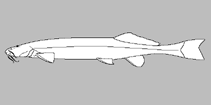 No image available for this species;
drawing shows typical species in Trichomycteridae.
صور قوقل
drawing shows typical species in Trichomycteridae.
التصنيف / الأسماء الأسماء الشائعة | مرادفات | Catalog of Fishes(جنس, الانواع) | ITIS | CoL | WoRMS | Cloffa
> Siluriformes (Catfishes) > Trichomycteridae (Pencil or parasitic catfishes) > Trichomycterinae
Etymology: Cambeva: Probably derived from the Tupi-Guarani, is a popular name for trichomycterid fishes in southern and south-eastern Brazil (Ref. 119381); perobana: Name 'perobana' from 'pero', an allusion to the conservation unit of Parana State named 'Reserva Biológica das Perobas' and '-ana', a feminine Latin suffix meaning 'pertaining to'.
Etymology: Cambeva: Probably derived from the Tupi-Guarani, is a popular name for trichomycterid fishes in southern and south-eastern Brazil (Ref. 119381); perobana: Name 'perobana' from 'pero', an allusion to the conservation unit of Parana State named 'Reserva Biológica das Perobas' and '-ana', a feminine Latin suffix meaning 'pertaining to'.
البيئة: الوسط / المنطقة المناخية / نطاق العمق / نطاق التوزيع البيئة
; المياه العذبة القاع. Tropical
التوزيع الأقاليم | مناطق الفاو | النظام البيئي | الظهور | نقطة علي الخريطة | مقدمة | Faunafri
South America: Brazil.
الحجم / وزن / العمر
وصف مختصر مفاتيح التعريف | الوصف الخارجي | قياسات المظهر الخارجي
الأشواك الظهرية (المجموع) : 2; الأشعة الظهرية الناعمة (المجموع) : 7; شوكة شرجية: 2; أشعه شرجية لينه: 5 - 6; فقرات: 34 - 37. This species is distinguished by the following set of characters: six branched pectoral-fin rays; interopercular odontodes 28-29; vertebrae 34-37; opercular odontodes 13; branchiostegal rays 9; absence of conspicuous papillae on ventral region of head; presence of pelvic girdle and fin; long rictal barbel, 40.0-73.0% of HL; pelvic fins not reaching the urogenital opening; caudal fin truncate to rounded; first pectoral-fin ray not prolonged as a filament; color pattern of the caudal fin, presenting blotches, spots, or a homogeneous dark-brown or gray pattern in the proximal region; presence of a narrow mid-lateral stripe in some specimens; head, 17.2-20.6% of SL; pelvic fins 10.3-16.0%, pectoral fins 7.5-9.8% of SL; color pattern of some specimens, consisting in a dark-gray to dark-brown, becoming lighter towards ventral portion of the body and head, and absence of chromatophores, or some specimens with irregular dark-brown blotches on the inner skin layer, larger than two or three times the diameter of the orbit, sometimes coalescing and forming larger blotches, and an interrupted stripe in the mid-lateral region of the flank, over a plain yellowish to brown background; branchiostegal rays 9 (Ref. 137457).
Body shape (shape guide): elongated; Cross section: oval.
Body shape (shape guide): elongated; Cross section: oval.
This species is found in streams with sandy, rocky, and pebbly substrates, bordered by marginal vegetation consisting of bushes and grassy banks (Ref. 137457).
دورة الحياة وسلوك التزاوج النضج | التكاثر | وضع البيض | بيض | الخصوبة | اليرقات
المرجع الرئيسي
قم بتحميل مراجعك | مراجع | المنظم : Pinna, Mário de | المتعاونين
Martins, I.C., R.B. dos Reis, B.H.M Stabile and W.J. da Graça, 2024. Iterative taxonomy reveals a new species of Cambeva (Siluriformes: Trichomycteridae) with intraspecific variation from the rio Piquiri and Ivaí basin, upper rio Paraná basin, Brazil. Neotropical Ichthyology 22(3):e230140. (Ref. 137457)
حالة القائمة الحمراء للاتحاد الدولي لحفظ الطبيعة والموارد الطبيعية (Ref. 130435: Version 2025-2 (Global))
CITES
Not Evaluated
خطر للأنسان
Harmless
استخدامات بشرية
مصائد: غير ذات اهمية
FAO - Publication: search | FishSource |
مزيد من المعلومات
علم البيئة الغذائية
المواد الغذائية (الفرائس)
التركيبة الغذائية
استهلاك الأغذية
الحصص الغذائية
مفتريسات
المواد الغذائية (الفرائس)
التركيبة الغذائية
استهلاك الأغذية
الحصص الغذائية
مفتريسات
الديناميكيات السكانية
معاملات النمو
الحد الأقصى للأعمار/الأحجام
علاقة الطول بالوزن.
علاقة الطول بالطول.
الطول- الترددات
التحويل الجماعي
توظيف
الوفرة
معاملات النمو
الحد الأقصى للأعمار/الأحجام
علاقة الطول بالوزن.
علاقة الطول بالطول.
الطول- الترددات
التحويل الجماعي
توظيف
الوفرة
دورة الحياة
التكاثر
النضج
النضج/الخياشيم المتعلقة.
الخصوبة
وضع البيض
تجمعات التفريخ
بيض
تطور البيضة
اليرقات
حركة انتقال اليرقات
التكاثر
النضج
النضج/الخياشيم المتعلقة.
الخصوبة
وضع البيض
تجمعات التفريخ
بيض
تطور البيضة
اليرقات
حركة انتقال اليرقات
التشريح
منطقة الخياشيم
الدماغ
الأوتوليث
منطقة الخياشيم
الدماغ
الأوتوليث
علم وظائف الأعضاء
تكوين الجسم
المغذيات
استهلاك الأوكسجين
نوع السباحة
سرعة السباحة
الأصباغ البصرية
صوت السمك
الأمراض والطفيليات
السمية (LC50s)
تكوين الجسم
المغذيات
استهلاك الأوكسجين
نوع السباحة
سرعة السباحة
الأصباغ البصرية
صوت السمك
الأمراض والطفيليات
السمية (LC50s)
جيني
الوراثة
جيني
التغاير
التوريث
التنوع الوراثي
الوراثة
جيني
التغاير
التوريث
التنوع الوراثي
ذات الصلة بالبشر
أنظمة الاستزراع المائي
ملامح تربية الأحياء المائية
سلالات
حالات سيغواتيرا
طوابع بريدية وعملات معدنية ومتنوعة
أنظمة الاستزراع المائي
ملامح تربية الأحياء المائية
سلالات
حالات سيغواتيرا
طوابع بريدية وعملات معدنية ومتنوعة
أدوات
كتاب إلكتروني | دليل الميدان | معالج تردد الطول-التردد | أداة تاريخ الحياة | نقطة علي الخريطة |
Catch-MSY |
تقارير خاصة
البحث عن صيانت الأحواض المائيه | التحقق من وجود صفحات حقائق الأنواع | البحث عنا حقائق حول الأحواض المائيه
تنزيل XML
مصادر علي الأنترنت
AFORO (otoliths) | Aquatic Commons | BHL | Cloffa | Websites from users | البحث في مراقبي الأسماك | CISTI | Catalog of Fishes: جنس, الانواع | DiscoverLife | ECOTOX | FAO - Publication: search | Faunafri | Fishipedia | Fishtrace | GloBI | Google Books | Google Scholar | Google | IGFA World Record | OneZoom | Open Tree of Life | Otolith Atlas of Taiwan Fishes | PubMed | Reef Life Survey | Socotra Atlas | TreeBase | شجرة الحياة | Wikipedia: ذهب, بحث | World Records Freshwater Fishing | Zoobank | سجلات علم الحيوانات
تقديرات تستند إلى النماذج
مؤشر التنوع الشُعبي الوراثي (مرجع 82804): PD50 = 0.5000 [Uniqueness, from 0.5 = low to 2.0 = high].
Bayesian length-weight: a=0.00759 (0.00337 - 0.01709), b=3.00 (2.81 - 3.19), in cm total length, based on LWR estimates for this (Sub)family-body shape (Ref. 93245).
مستوى غذائي (مرجع 69278): 3.2 ±0.4 se; based on size and trophs of closest relatives