



Enteromius oraniensis (Barnard, 1943)
Orange River chubbyhead
Sube tu fotos y Vídeos
Google image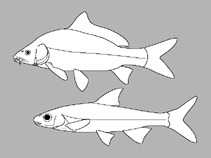 No image available for this species;
drawing shows typical species in Cyprinidae.
Google image
drawing shows typical species in Cyprinidae.
Clasificación / Nombres Nombres comunes | Sinónimos | Catalog of Fishes(Género, Especie) | ITIS | CoL | WoRMS | Cloffa
> Cypriniformes (Carps) > Cyprinidae (Minnows or carps) > Smiliogastrinae
Etymology: Enteromius: Greek, enteron = intestine + Greek, myo, mys = muscle (Ref. 45335); oraniensis: Named for its type locality, the Orange River system to which the species is endemic; noun in apposition,.
Etymology: Enteromius: Greek, enteron = intestine + Greek, myo, mys = muscle (Ref. 45335); oraniensis: Named for its type locality, the Orange River system to which the species is endemic; noun in apposition,.
Entorno: milieu / zona climática / rango de profundidad / gama de distribución Ecología
; agua dulce bentopelágico. Subtropical
Distribución Territorios | Áreas FAO | Ecosistemas | Ocurrencias, apariciones | Mapa de puntos | Introducciones | Faunafri
Africa: South Africa (Orange River system).
Tamaño / Peso / Edad
Descripción breve Claves de identificación | Morfología | Morfometría
This species is distinguished by a lateral line that is incomplete (2-33; mode 15) and oral barbels that are inconspicuous (Ref. 124213).
Cross section: compressed.
Cross section: compressed.
Reports on extensive studies of the biology and ecology of this species, were mainly focused on populations from Lake Le Roux in the Orange River system. The species occurs in a number of habitats ranging from tributaries to mainstem sections of rivers and man-made impoundments where it is usually associated with vegetated areas. Observed early maturation in the first year of life, high reproductive effort, having multiple clutches per year and rapid growth rate are important traits that makes this species highly adaptable to habitats that are prone to regular input of high silt loads and experience extreme variation in flow regimes, ranging from devastating floods to erratic flows. Reported spawning events occur following the onset of rainfall in summer, where fish spawn locally, although spawning migration has been occasionally observed, with adhesive eggs laid in flooded marginal vegetation, This species has early maturity (attains 4.0 cm FL in first year), high reproductive rate (a female of 6.3 cm can have up to 3250 eggs) and a protracted reproductive season (up to 6 months) with individuals able to have multiple clutches. These traits allow survival in the dryland southern tributaries of the Orange River system that drain the Great Karoo (Ref. 124213).
Ciclo vital y comportamiento de apareamiento Madurez | Reproducción | Puesta | Huevos | Fecundidad | Larva
Referencia principal
Suba sus referencias | Referencias | Coordinador | Colaboradores
Kambikambi, M.J., W.T. Kadye and A. Chakona, 2021. Allopatric differentiation in the Enteromius anoplus complex in South Africa, with the revalidation of E. cernuus and E. oraniensis, and description of a new species, E. mandelai (Teleostei: Cyprinidae). J. Fish Biol. 99(3):931-954. (Ref. 124213)
CITES
Not Evaluated
Amenaza para el ser humano
Harmless
Usos humanos
Pesquerías: sin interés
FAO - Publication: search | FishSource |
Más información
Ecología Trófica
Alimentos (presas)
Composición de la dieta
consumo de alimento
Raciones de comida
Despredadores
Alimentos (presas)
Composición de la dieta
consumo de alimento
Raciones de comida
Despredadores
Ecología
Ecología
Ecología
Dinámica de la población
Coeficiente del crecimiento para
Edades / tallas máximas
Longitud-peso rel.
Longitud-longitud rel.
Longitud-frecuencias
Conversión de masas
Reclutamiento
Abundancia
Coeficiente del crecimiento para
Edades / tallas máximas
Longitud-peso rel.
Longitud-longitud rel.
Longitud-frecuencias
Conversión de masas
Reclutamiento
Abundancia
Ciclo de vida
Reproducción
Madurez
Madurez/Gills rel.
Fecundidad
Puesta
Agregaciones de desove
Huevos
Desarrollo de los huevos
Larva
Dinámica larvaria
Reproducción
Madurez
Madurez/Gills rel.
Fecundidad
Puesta
Agregaciones de desove
Huevos
Desarrollo de los huevos
Larva
Dinámica larvaria
Distribución
Territorios
Áreas FAO
Ecosistemas
Ocurrencias, apariciones
Introducciones
BRUVS - Vídeos
Territorios
Áreas FAO
Ecosistemas
Ocurrencias, apariciones
Introducciones
BRUVS - Vídeos
Anatomía
Superficie branquial
Cerebro
Otolito
Superficie branquial
Cerebro
Otolito
Fisiología
Composición corporal
Nutrientes
Consumo del oxígeno
Tipo de natación
Velocidad de natación
Pigmentos visuales
Sonido de peces
Enfermedades y parásitos
Toxicidad (CL50)
Composición corporal
Nutrientes
Consumo del oxígeno
Tipo de natación
Velocidad de natación
Pigmentos visuales
Sonido de peces
Enfermedades y parásitos
Toxicidad (CL50)
Genética
Genoma
Genética
Heterocigosidad
heritabilidad
Diversidad genética
Genoma
Genética
Heterocigosidad
heritabilidad
Diversidad genética
Relacionados con el ser humano
Sistemas de acuicultura
Perfiles de acuicultura
Razas
Ciguatera cases
Sellos, monedas, varios
Sistemas de acuicultura
Perfiles de acuicultura
Razas
Ciguatera cases
Sellos, monedas, varios
Herramientas
Libro electrónico | Guía de campo | Asistente para frecuencias de tallas | Herramienta de ciclo de vida | Mapa de puntos |
Catch-MSY |
Informes especiales
Comprobar el mantenimiento del acuario | Buscar fichas sobre especies | Consulte las hojas informativas sobre acuicultura
Descargar XML
Fuentes de Internet
AFORO (otoliths) | Aquatic Commons | BHL | Cloffa | Websites from users | Check FishWatcher | CISTI | Catalog of Fishes: Género, Especie | DiscoverLife | ECOTOX | FAO - Publication: search | Faunafri | Fishipedia | Fishtrace | GloBI | Google Books | Google Scholar | Google | IGFA World Record | OneZoom | Open Tree of Life | Otolith Atlas of Taiwan Fishes | PubMed | Reef Life Survey | Socotra Atlas | TreeBase | Árbol de la vida | Wikipedia: Go, búsqueda | World Records Freshwater Fishing | Expediente Zoológico
Estimaciones basadas en modelos
Índice de diversidad filogenética (Referencia 82804): PD50 = 0.5000 [Uniqueness, from 0.5 = low to 2.0 = high].
Bayesian length-weight: a=0.01122 (0.00521 - 0.02417), b=3.01 (2.84 - 3.18), in cm total length, based on LWR estimates for this Genus-body shape (Ref. 93245).
Nivel trófico (Referencia 69278): 3.0 ±0.3 se; based on size and trophs of closest relatives
Resiliencia (Referencia 120179): Alto, población duplicada en un tiempo mínimo inferior a 15 meses (Preliminary K or Fecundity.).