



Polyacanthonotus challengeri (Vaillant, 1888)
Longnose tapirfish
Beobachtung melden im Fish Watcher
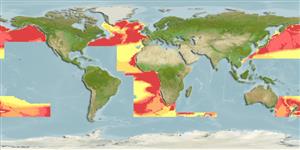
| Native range | All suitable habitat | Point map | Year 2050 |
|
| This map was computer-generated and has not yet been reviewed. |
| Polyacanthonotus challengeri AquaMaps Data sources: GBIF OBIS |
Hochladen Photos und videos
Bilder | Google Bild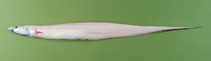 Polyacanthonotus challengeri
Photo von Orlov, A.
Bilder | Google Bild
Photo von Orlov, A.
Klassifizierung / Names Namen | Synonyme | Catalog of Fishes(Gattung, Arten) | ITIS | CoL | WoRMS | Cloffa
> Notacanthiformes (Halosaurs and deep-sea spiny eels) > Notacanthidae (Deep-sea spiny eels)
Etymology: Polyacanthonotus: Greek, poly = a lot of + Greek, akantha = thorn + Greek,noton = back (Ref. 45335); challengeri: Named after the H.M.S. Challenger (Ref. 6885).
Eponymy: ‘HMS Challenger’ was a deep-sea research vessel, famous for the Challenger Expedition (1872–1876) which contributed hugely to oceanography and led to the discovery of over 4,000 previously unknown species. (Ref. 128868), visit book page.
More on author: Vaillant.
Etymology: Polyacanthonotus: Greek, poly = a lot of + Greek, akantha = thorn + Greek,noton = back (Ref. 45335); challengeri: Named after the H.M.S. Challenger (Ref. 6885).
Eponymy: ‘HMS Challenger’ was a deep-sea research vessel, famous for the Challenger Expedition (1872–1876) which contributed hugely to oceanography and led to the discovery of over 4,000 previously unknown species. (Ref. 128868), visit book page.
More on author: Vaillant.
Umwelt: Milieu / Klimazone / Tiefenbereich / Verbreitungsgebiet Ökologie
seewasser bathypelagisch; tiefenbereich 777 - 4560 m (Ref. 50610), usually 2000 - 3000 m (Ref. 6728). Deep-water; - 50°S
Verbreitung Territorien | FAO Gebiete | Ökosysteme | Vorkommen | Punkt Karte | Einführungen | Faunafri
North Pacific: Japan, Bering Sea and British Columbia, Canada (Ref. 6885), also south to Oregon, USA (Ref. 35578). South Pacific: known form one specimen collected near New Zealand. Southeast Atlantic: South Africa. Southern Ocean: known from one specimen collected near the Kerguelen Islands. Mainly antitropical (Ref. 5165) but reported from Azores, Canary Islands and Morocco (Ref. 6728).
Größe / Gewicht / Alter
Geschlechtsreife: Lm ? range ? - ? cm
Max length : 60.0 cm TL Männchen/unbestimmt; (Ref. )
Max length : 60.0 cm TL Männchen/unbestimmt; (Ref. )
Kurzbeschreibung Bestimmungsschlüssel | Morphologie | Morphometrie
Rückenflossenstacheln (insgesamt) : 32 - 35; Rückenflossenweichstrahlen (insgesamt) : 0; Wirbelzahl: 242 - 244. Caudal fin very small; anal fin with 161-162 rays altogether, 26-35 of which are spines, long, low, confluent with caudal; pectorals with a fleshy base (Ref. 6885). Cream to faintly pink, possibly with light brown markings; black on posterior margins of anal and caudal fins; black on posterior edge of gill cover, lining of mouth and gill chamber, and parts of peritoneum (Ref. 6885).
Body shape (shape guide): eel-like.
Body shape (shape guide): eel-like.
Feeds on benthic invertebrates, especially amphipods, polychaetes and mysids (Ref. 6728).
Lebenszyklus und Paarungsverhalten Geschlechtsreife | Fortpflanzung | Ablaichen | Eier | Fruchtbarkeit | Larven
Hauptreferenz
Laden Sie Ihre Referenzen hoch | Referenzen | Koordinator | Partner
Gon, O., 1990. Notacanthidae. p. 100-101. In O. Gon and P.C. Heemstra (eds.) Fishes of the Southern Ocean. J.L.B. Smith Institute of Ichthyology, Grahamstown, South Africa. (Ref. 5165)
IUCN Rote Liste Status (Ref. 130435: Version 2025-2 (Global))
nicht bedroht (LC) ; Date assessed: 08 March 2012
CITES
Not Evaluated
Bedrohung für Menschen
Harmless
Nutzung durch Menschen
FAO - Publication: search | FishSource |
Mehr Information
Trophische Ökologie
Lebensmittel (Beutetiere)
Nahrungszusammensetzung
Nahrungsaufnahme
Lebensmittelrationen
Räuber
Lebensmittel (Beutetiere)
Nahrungszusammensetzung
Nahrungsaufnahme
Lebensmittelrationen
Räuber
Populationsdynamik
Wachstumsparameter
Max. Alter/Größen
Länge-Gewicht-Rel.
Länge-Länge-Verhältnis.
Längenhäufigkeiten
Massenkonvertierung
Rekrutierung
Dichte
Wachstumsparameter
Max. Alter/Größen
Länge-Gewicht-Rel.
Länge-Länge-Verhältnis.
Längenhäufigkeiten
Massenkonvertierung
Rekrutierung
Dichte
Lebenszyklus
Fortpflanzung
Geschlechtsreife
Reifung/Kiemen rel.
Fruchtbarkeit
Ablaichen
Laichaggregationen
Eier
Eientwicklung
Larven
Larven Pop.Dyn.
Fortpflanzung
Geschlechtsreife
Reifung/Kiemen rel.
Fruchtbarkeit
Ablaichen
Laichaggregationen
Eier
Eientwicklung
Larven
Larven Pop.Dyn.
Anatomie
Kiemenoberfläche
Gehirn
Otolith
Kiemenoberfläche
Gehirn
Otolith
Physiologie
Körperliche Zusammensetzung
Nährstoffe
Sauerstoffverbrauch
Schwimmart
Schwimmgeschwindigkeit
Visuelle Pigmente
Fischgeräusche
Krankheiten und Parasiten
Toxizität (LC50s)
Körperliche Zusammensetzung
Nährstoffe
Sauerstoffverbrauch
Schwimmart
Schwimmgeschwindigkeit
Visuelle Pigmente
Fischgeräusche
Krankheiten und Parasiten
Toxizität (LC50s)
Genetik
Genom
Genetik
Heterozygotie
Vererbbarkeit
Genetische Vielfalt
Genom
Genetik
Heterozygotie
Vererbbarkeit
Genetische Vielfalt
Menschenbezogen
Aquakultur-Systeme
Aquakultur Profile
Zuchtlinien
Ciguatera-Fälle
Briefmarken, Münzen, Verschiedenes.
Aquakultur-Systeme
Aquakultur Profile
Zuchtlinien
Ciguatera-Fälle
Briefmarken, Münzen, Verschiedenes.
Tools
E-Book | Feldführer | Bestimmungsschlüssel | Längenhäufigkeits Tool | Lebensdaten Tool | Punkt Karte |
Catch-MSY |
Zusatzinformationen
Download XML
Zusammenfassung | Punktdaten | Namen | Photos
Internet Quellen
AFORO (otoliths) | Aquatic Commons | BHL | Cloffa | Websites from users | FishWatcher Einträge suchen | CISTI | Catalog of Fishes: Gattung, Arten | DiscoverLife | ECOTOX | FAO - Publication: search | Faunafri | Fishipedia | Fishtrace | GloBI | Google Books | Google Scholar | Google | IGFA World Record | Nationale Datenbanken | OneZoom | Open Tree of Life | Otolith Atlas of Taiwan Fishes | PubMed | Reef Life Survey | Socotra Atlas | TreeBase | Tree of Life | Wikipedia: Gehe zu, Suchen | World Records Freshwater Fishing | Zoologischer Rekord
Schätzungen auf der Grundlage von Modellen
Bevorzugte Temperatur (Ref. 123201): 1.5 - 3.4, mean 2.4 °C (based on 2854 cells).
Phylogenetischer Diversitätsindex (Ref. 82804): PD50 = 0.5626 [Uniqueness, from 0.5 = low to 2.0 = high].
Bayesian length-weight: a=0.00102 (0.00046 - 0.00225), b=3.06 (2.88 - 3.24), in cm total length, based on all LWR estimates for this body shape (Ref. 93245).
Trophische Ebene (Ref. 69278): 3.2 ±0.42 se; based on food items.
Widerstandsfähigkeit (Ref. 120179): niedrig, Verdopplung der Population dauert 4,5 - 14 Jahre. (Assuming tmax>10).