



Distichodus ingae Moelants & Snoeks, 2018
muatnaik fotos/gambar dan video
imej Google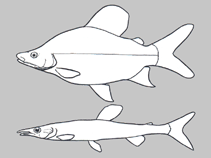 No image available for this species;
drawing shows typical species in Distichodontidae.
imej Google
drawing shows typical species in Distichodontidae.
klasifikasi / Nama Nama-nama umum | Sinonim (persamaan) | Catalog of Fishes(Marga, Jenis) | ITIS | CoL | WoRMS | Cloffa
> Characiformes (Characins) > Distichodontidae (Distichodus)
Etymology: Distichodus: Greek, di = two + Greek, stix, stichos = line, row (Ref. 45335); ingae: The species is named after its type locality close to Inga, Lower Congo; a noun in genitive (Ref. 122092).
Etymology: Distichodus: Greek, di = two + Greek, stix, stichos = line, row (Ref. 45335); ingae: The species is named after its type locality close to Inga, Lower Congo; a noun in genitive (Ref. 122092).
Lingkungan: lingkungan / zona iklim / kisaran kedalaman / jangkauan distribusi Ekologi
; air tawar bentopelagis. Tropical
Penyebaran Wilayah | Daerah-daerah FAO | Ekosistem | Kemunculan | peta titik | Introduksi | Faunafri
Africa: Lower Congo River near Inga in Democratic Republic of the Congo (Ref. 122092).
Ukuran / Berat / umur
deskripsi pendek Kunci identifiaksi (pengenalan) | Morfologi | Morfometrik
Duri punggung (Keseluruhan (total)) : 0; duri punggung lunak (Keseluruhan (total)) : 26; Duri dubur: 0; Sirip dubur lunak: 12 - 13. Diagnosis: Distichodus ingae is distinguished from D. affinis, D. altus, D. decemmaculatus, D. noboli, D. notospilus and D. teugelsi by the higher number of lateral line scales, 69-73 vs. 37-46; from D. antonii by the inferior mouth vs. terminal, and the higher number of dorsal-fin rays, 26 vs. 21-25; from D. fasciolatus by the lower number of dark vertical bars, 6-8 vs. 13-20; from D. langi by the lower number of scales between the lateral line and the pelvic-fin base, 10 vs. 12, the lower number of pectoral-fin rays, 19 vs. 21, and the lower number of vertical bars, 9 vs. 13; from D. lusosso by the inferior mouth vs. terminal, and the short snout vs. elongated; from D. maculatus by the absence of dark blotches all over the body; and from D. sexfasciatus by the higher number of dorsal-fin rays, 26 vs. 24-25, the higher number of teeth in the outer row of the upper and lower jaw, 17-18 and 20-21 vs. 12-14 on both jaws, and the greenish body colouration vs. orange-reddish (Ref. 122092). It is distinguished from its most similar species D. atroventralis by having more dorsal-fin rays, 26 vs. 22-24, and longer dorsal fin, 12.0-21.9% of standard length vs. 23.6-24.2%, anal fin, 9.9-15.7% of standard length vs. 16.9-17.5%, and pectoral fin, 14.2-20.5% of standard length vs. 21.6-22.7%; and from D. kasaiensis by having more lateral line scales, 69-73 vs. 57-65, fewer dorsal-fin rays, 26 vs. 27-29, and a longer prepectoral distance, 29.1-30.2% of standard length vs. 21.4-30.0% (overlap due to negative allometry) (Ref. 122092).
Body shape (shape guide): short and / or deep; Cross section: compressed.
Body shape (shape guide): short and / or deep; Cross section: compressed.
Siklus hidup dan perilaku kawin Kematangan | Reproduksi, perkembang biakan | Pemijahan | telur-telur | Fekunditas | Larva
rujukan utama
Unggah referensi Anda | Acuan | Koordinator | mitra
Moelants, T., J. Snoeks and E. Vreven, 2018. Distichodus kasaiensis and D. ingae, two new distichodontid species (Characiformes: Distichodontidae) from the Congo basin. Ichthyol. Explor. Freshwat. 28(2):177-192. (Ref. 122092)
CITES
Not Evaluated
ancaman kepada manusia
Harmless
penggunaan manusia
FAO - Publication: search | FishSource |
informasi lanjut
Ekologi trofik
Item makanan (mangsa)
Komposisi makanan
Konsumsi makanan
Ransum makanan
Pemangsa
Item makanan (mangsa)
Komposisi makanan
Konsumsi makanan
Ransum makanan
Pemangsa
Ekologi
Ekologi
Ekologi
Dinamika populasi
Parameter pertumbuhan
Maks. usia / ukuran
Panjang-berat rel.
Panjang-panjang rel.
ukuran frekuensi
Konversi massa
pemulihan
Kelimpahan
Parameter pertumbuhan
Maks. usia / ukuran
Panjang-berat rel.
Panjang-panjang rel.
ukuran frekuensi
Konversi massa
pemulihan
Kelimpahan
Siklus hidup
Reproduksi, perkembang biakan
Kematangan
Kedewasaan / insang rel.
Fekunditas
Pemijahan
Agregasi pemijahan
telur-telur
pekembangan telor
Larva
Dinamika larva
Reproduksi, perkembang biakan
Kematangan
Kedewasaan / insang rel.
Fekunditas
Pemijahan
Agregasi pemijahan
telur-telur
pekembangan telor
Larva
Dinamika larva
Anatomi
Area insang
Otak
Otolith
Area insang
Otak
Otolith
Fisiologi
Komposisi tubuh
Nutrisi
Konsumsi oksigen
Jenis renang
Kecepatan berenang
Pigmen visual
Suara ikan
Penyakit & Parasit
Toksisitas (LC50)
Komposisi tubuh
Nutrisi
Konsumsi oksigen
Jenis renang
Kecepatan berenang
Pigmen visual
Suara ikan
Penyakit & Parasit
Toksisitas (LC50)
Genetika
genom
Genetika
Heterozigositas
Diturunkan
Keanekaragaman Genetik
genom
Genetika
Heterozigositas
Diturunkan
Keanekaragaman Genetik
Yang berhubungan dengan manusia
Sistem akuakultur
profil budidaya air
Strain
Kasus Ciguatera
Perangko, koin, dll.
Sistem akuakultur
profil budidaya air
Strain
Kasus Ciguatera
Perangko, koin, dll.
Alat, peralatan
E-book | Penuntun lapangan | tanda freqkuenci panjang | peringkat sejarah hidup | peta titik |
Tangkap-MSY |
laporan khas
muat turun XML
Sumber internet
AFORO (otoliths) | Aquatic Commons | BHL | Cloffa | Websites from users | semak peneliti ikan | CISTI | Catalog of Fishes: Marga, Jenis | DiscoverLife | ECOTOX | FAO - Publication: search | Faunafri | Fishipedia | Fishtrace | GloBI | Google Books | Google Scholar | Google | IGFA World Record | OneZoom | Open Tree of Life | Otolith Atlas of Taiwan Fishes | PubMed | Reef Life Survey | Socotra Atlas | TreeBase | Tree of Life | Wikipedia: pergi, Cari | World Records Freshwater Fishing | Zoobank | Catatan Zoologi