This website uses cookies to enhance your browsing experience and ensure the functionality of our site. For more detailed information about the types of cookies we use and how we protect your privacy, please visit our Privacy Information page.
×
Cookie Settings
This website uses different types of cookies to enhance your experience. Please select your preferences below:
> Gobiiformes (Gobies) > Gobiidae (Gobies) > Gobiinae
Etymology: Acentrogobius:Greek, a = without + Greek, kentron = sting + Latin gobius = gudgeon (Ref. 45335); limarius:Name from Latin 'limarius' meaning 'off mud'; referring to its mud-bottom habitat.
Umwelt: Milieu / Klimazone / Tiefenbereich / Verbreitungsgebiet Ökologie
seewasser demersal; tiefenbereich ? - 26 m (Ref. 101679), usually 1 - 4 m (Ref. 101679). Tropical
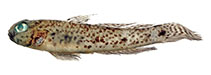
Rückenflossenstacheln (insgesamt) : 7; Rückenflossenweichstrahlen (insgesamt) : 10; Afterflossenstacheln: 1; Afterflossenweichstrahlen: 10. This species is distinguished by the following characters: D VI + I,10, where dorsal spines are thin and flexible, the third occasionally with long filamentous tip, reaching as far as sixth or seventh segmented ray of second dorsal fin when adpressed; A I,10; pectoral-fin rays 18-19 (rarely 18); lanceolate caudal fin, about equal to head length or slightly longer; scales in longitudinal scales 27-28, 9 transverse-scales; 8-9 predorsal-scales; finely ctenoid scales cover the body, becoming cycloid on breast (prepelvic), the pectoral-fin base, nape, and head; opercle and cheek are fully scaled; anterior extent of gill opening is below middle of opercle; transverse pattern of cheek papillae; single transverse row of papillae on chin; when alive, colour brown, grading to tan ventrally with scattered dark-edged, orange spots midlaterally on the side of the body, midlateral row of four, large squarish black spots from behind pectoral fin to caudal-fin base, pair of orange-brown stripes across cheek, and brown spotting on dorsal and caudal fins (Ref. 101679). Body shape (shape guide): elongated; Cross section: compressed.
Allen, G.R., M.V. Erdmann and R.K. Hadiaty, 2015. Acentrogobius limarius, a new species of goby (Pisces: Gocbiidae) from West Papua Province, Indonesia. J. Ocean Sci. Found. 15:33-40. (Ref. 101679)
IUCN Rote Liste Status (Ref. 130435: Version 2025-2 (Global))
Phylogenetischer Diversitätsindex (Ref. 82804): PD50 = 0.5000 [Uniqueness, from 0.5 = low to 2.0 = high].
Bayesian length-weight: a=0.00794 (0.00340 - 0.01856), b=3.09 (2.91 - 3.27), in cm total length, based on LWR estimates for this Genus-body shape (Ref. 93245).
Trophische Ebene (Ref. 69278): 3.2 ±0.4 se; based on size and trophs of closest relatives
Widerstandsfähigkeit (Ref. 120179): hoch, Verdopplung der Population dauert weniger als 15 Monate. (Preliminary K or Fecundity.).
Anfälligkeit der Fischerei (Ref. 59153): Low vulnerability (10 of 100). 🛈