



อัพโหลดของคุณ ภาพถ่าย และ วิดีโอ
Google image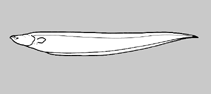 No image available for this species;
drawing shows typical species in Gymnotidae.
Google image
drawing shows typical species in Gymnotidae.
การจำแนกประเภท / ชื่อ ชื่อสามัญ | ชื่อพ้อง | Catalog of Fishes(สกุล, ชนิด) | ITIS | CoL | WoRMS | Cloffa
> Gymnotiformes (Knifefishes) > Gymnotidae (Naked-back knifefishes) > Gymnotinae
Etymology: Gymnotus: Greek, gymnos = naked (Ref. 45335).
Etymology: Gymnotus: Greek, gymnos = naked (Ref. 45335).
สิ่งแวดล้อม : สิ่งแวดล้อม / เขตภูมิอากาศ / ระดับความลึก / ระยะการกระจายสินค้า นิเวศวิทยา
; น้ำจืด กลุ่มสัตว์หน้าดิน,กลุ่มสัตว์พื้นท้องน้ำ. Subtropical
การแพร่กระจาย อาณาเขต | พื้นที่จำแนกตาม FAO | ระบบนิเวศหลายระบบ | การปรากฏขึ้น,การเกิดขึ้น,พบ | ตำแหน่งบนแผนที่ | การแนะนำ | Faunafri
South America: Paraná River and Uruguay River basins.
ขนาด / น้ำหนัก / อายุ
คำอธิบายสั้นๆ เครื่องมือที่ใช้ในการแยกชนิดสัตว์,สิ่งมีชีวิตออกจากกัน | สัณฐานวิทยา | ความยาวต่างๆ
ก้านครีบอ่อนที่ก้น: 141 - 259. Gymnotus cuia differs from the most similar sympatric G. c. australis by the following characters: shorter head length (8%-12.2% TL, mean 10.9% TL, vs. 11.7%-14.0% TL, mean 12.9% TL); deeper body (body depth 85.4%-133.3% HL, mean 110.6% HL vs. 67.0%-98.8% HL, mean 87.9% HL); and deeper head (head depth 61.9%-80.2% HL, mean 68.5% HL vs. 51.2%-64.6% HL, mean 59.7% HL). It can be distinguished from another similar sympatric species G. omarorum by having more anal-fin pterygiophore scales (6-10, mode 8 vs. 5-6, mode 6); more pored lateral-line scales anterior to the first ventral lateral-line ramus (32-47, mode 37 vs. 23-30, mode 27); and fewer ventral lateral-line rami (14-28, mode 22 vs. 28-30, mode 29). It further differs from all other members of the G. carapo clade in having a color patter consisting of 21-29 (mode 28) obliquely-oriented, chocolate-colored bands with wavy, irregular margins and pale interbands less than one-third width of dark bands at mid-body (vs. bands interrupted into patches anterodorsally, with silver, blue or green metallic countershading on dorsum of adults of G. arapaima, dark bands lost in large adults (>25.0 cm) of G. ardilai, small, rounded dark spots over entire body except posterior 20% of some specimens of G. bahianus, bands faint or absent in all specimens of G. chimarrao, one to three inverted Y-shaped dark bands posteriorly and pale bands not reaching above lateral line in anterior two thirds of body of G. choco, bands broken into speckles throughout in G. diamantinensis, narrow pale bands (<20% width of dark bands) with sharp margins, and pale bands extending fully to dorsal mid-line in G. mamiraua, bands faint or absent from 80% of dorsum in all specimens, and narrow pale bands (<20% width of dark bands) which never extend above lateral line on anterior half of body in G. pantanal, pale bands wider than dark bands in G. sylvius, narrow pale interbands (<33% width of dark bands) extending above lateral line and often to dorsal midline in G. ucamara. It can be further diagnosed from all members of the G. varzea clade (G. chaviro, G. curupira, G. mamiraua, G. obscurus, and G. varzea) by the following characters: relatively more arrowhead-shaped dentary teeth (6 vs. 2-4 in the G. varzea clade except in G. chaviro, G. curupira and G. mamiraua, with 4-7); anterior 80% of anal fin membrane pigmented, posterior 20% translucent (vs. wholly clear or evenly pigmented in the G. varzea clade); and large adult total length (30.5 cm TL vs. 21.5 cm-27.5 cm TL in the G. varzea clade) (Ref. 118108).
Body shape (shape guide): elongated.
Body shape (shape guide): elongated.
Facultative air-breathing in the genus (Ref. 126274); Occurs in lakes and small streams with dense vegetation. Found in abundance in a shallow lake with depth of less than 1 m. dense emergent vegetation, and abundant grass in the shores. Usually abundant in the roots of dense beds of floating water hyacinth Eichornia crassipes throughout its range. Reproductive cycle occurs in November-March (Ref. 118108).
วงจรชีวิตและพฤติกรรมการผสมพันธุ์ วัยเจริญพันธุ์ | การสืบพันธุ์ | การวางไข่ | เซลสืบพันธ์ของเพศเมีย(ไข่) | ความดกของไข่ | ตัวอ่อน
อ้างอิงหลัก
อัพโหลดข้อมูลอ้างอิงของคุณ | อ้างอิง | ผู้ประสานงาน : Campos-da-Paz, Ricardo | ผู้ร่วมมือ
Craig, J.M., L.R. Malabarba, W.G.R. Crampton and J.S. Albert, 2018. Revision of banded knifefishes of the Gymnotus carapo and G. tigre clades (Gymnotidae Gymnotiformes) from the Southern Neotropics. Zootaxa 4379(1):47-73. (Ref. 118108)
CITES
Not Evaluated
ภัยคุกคามต่อมนุษย์
Harmless
การใช้ของมนุษย์
FAO - Publication: search | FishSource |
ข้อมูลเพิ่มเติม
นิเวศวิทยาเขตร้อน
รายการอาหาร (เหยื่อ)
องค์ประอบของอาหาร
การบริโภคอาหาร
การจัดสรรอาหาร
ผู้ล่า
รายการอาหาร (เหยื่อ)
องค์ประอบของอาหาร
การบริโภคอาหาร
การจัดสรรอาหาร
ผู้ล่า
พลวัตของประชากร
พารามิเตอร์การเจริญเติบโต
อายุสูงสุด / ขนาด
ความยาว-น้ำหนักสัมพันธ์
ความยาว-ความยาวสัมพันธ์
ความยาว-ความถี่
การแปลงมวล
การทดแทนที่
อุดมสมบรูณ์
พารามิเตอร์การเจริญเติบโต
อายุสูงสุด / ขนาด
ความยาว-น้ำหนักสัมพันธ์
ความยาว-ความยาวสัมพันธ์
ความยาว-ความถี่
การแปลงมวล
การทดแทนที่
อุดมสมบรูณ์
วงจรชีวิต
การสืบพันธุ์
วัยเจริญพันธุ์
ความสมบูรณ์พันธุ์/เหงือกที่เกี่ยวข้อง
ความดกของไข่
การวางไข่
การรวมตัวของสปอน
เซลสืบพันธ์ของเพศเมีย(ไข่)
การพัฒนาไข่
ตัวอ่อน
พลวัตของสัตว์น้ำวัยอ่อน
การสืบพันธุ์
วัยเจริญพันธุ์
ความสมบูรณ์พันธุ์/เหงือกที่เกี่ยวข้อง
ความดกของไข่
การวางไข่
การรวมตัวของสปอน
เซลสืบพันธ์ของเพศเมีย(ไข่)
การพัฒนาไข่
ตัวอ่อน
พลวัตของสัตว์น้ำวัยอ่อน
การแพร่กระจาย
อาณาเขต
พื้นที่จำแนกตาม FAO
ระบบนิเวศหลายระบบ
การปรากฏขึ้น,การเกิดขึ้น,พบ
การแนะนำ
BRUVS - วิดีโอ
อาณาเขต
พื้นที่จำแนกตาม FAO
ระบบนิเวศหลายระบบ
การปรากฏขึ้น,การเกิดขึ้น,พบ
การแนะนำ
BRUVS - วิดีโอ
กายวิภาคศาสตร์
พื้นที่เหงือก
สมอง
หินโสต
พื้นที่เหงือก
สมอง
หินโสต
สรีรวิทยา
องค์ประกอบของร่างกาย
สารอาหาร
การใช้ออกซิเจน
ประเภทการว่ายน้ำ
ระดับความเร็วในการว่ายน้ำ
เม็ดสีที่มองเห็นได้
เสียงปลา
โรคและปรสิต
ความเป็นพิษ (LC50s)
องค์ประกอบของร่างกาย
สารอาหาร
การใช้ออกซิเจน
ประเภทการว่ายน้ำ
ระดับความเร็วในการว่ายน้ำ
เม็ดสีที่มองเห็นได้
เสียงปลา
โรคและปรสิต
ความเป็นพิษ (LC50s)
พันธุศาสตร์
จีโนม
พันธุศาสตร์
ความไม่สมดุลทางเชื้อชาติ
อัตราพันธุกรรม
ความหลากหลายทางพันธุกรรม
จีโนม
พันธุศาสตร์
ความไม่สมดุลทางเชื้อชาติ
อัตราพันธุกรรม
ความหลากหลายทางพันธุกรรม
เกี่ยวข้องกับมนุษย์
ระบบการเพาะเลี้ยงสัตว์น้ำ
ประวัติการเพาะเลี้ยงสัตว์น้ำ
สายพันธุ์
กรณีซิเกวเทอรา
แสตมป์ เหรียญ อื่นๆ
ระบบการเพาะเลี้ยงสัตว์น้ำ
ประวัติการเพาะเลี้ยงสัตว์น้ำ
สายพันธุ์
กรณีซิเกวเทอรา
แสตมป์ เหรียญ อื่นๆ
เครื่องมือ
หนังสืออิเล็กทรอนิกส์ | คู่มือภาคสนาม | ผู้มีความชำนาญในเรื่องความถี่ของความยาว | เครื่องมือในการศึกษาชีวประวัติ | ตำแหน่งบนแผนที่ |
จับ-MSY |
รายงานพิเศษ
ตรวจสอบการบำรุงรักษาตู้ปลา | ตรวจสอบเอกสารข้อเท็จจริงเกี่ยวกับสายพันธุ์ | ตรวจสอบเอกสารข้อเท็จจริงเกี่ยวกับการเพาะเลี้ยงสัตว์น้ำ
ดาวน์โหลด XML
หน้าสรุป | ข้อมูลสำคัญ | ชื่อสามัญ | ภาพถ่าย
แหล่งที่มาจากอินเตอร์เน็ต
AFORO (otoliths) | Aquatic Commons | BHL | Cloffa | Websites from users | Check FishWatcher | CISTI | Catalog of Fishes: สกุล, ชนิด | DiscoverLife | ECOTOX | FAO - Publication: search | Faunafri | Fishipedia | Fishtrace | GloBI | Google Books | Google Scholar | Google | IGFA World Record | ฐานข้อมูลแห่งชาติ | OneZoom | Open Tree of Life | Otolith Atlas of Taiwan Fishes | PubMed | Reef Life Survey | Socotra Atlas | TreeBase | แผนภูมิชีวิตแบบต้นไม้ | Wikipedia: Go, ค้นหา | World Records Freshwater Fishing | Zoobank | บันทึกทางด้านสัตววิทยา
การประมาณค่าตามแบบจำลอง
ดัชนีความหลากหลายทางวิวัฒนาการ (อ้างอิง 82804): PD50 = 0.5000 [Uniqueness, from 0.5 = low to 2.0 = high].
Bayesian length-weight: a=0.00437 (0.00209 - 0.00911), b=2.98 (2.79 - 3.17), in cm total length, based on LWR estimates for this (Sub)family-body shape (Ref. 93245).
ระดับชั้นอาหาร (อ้างอิง 69278): 3.3 ±0.4 se; based on size and trophs of closest relatives
ความสามารถในการกลับคืนสู่ปกติ (อ้างอิง 120179): ความสูง, เวลาต่ำสุดที่จะทำให้ประชากรเพิ่มขึ้นเป็น 2 เท่าใช้เวลาน้อยกว่า 15 เดือน (Preliminary K or Fecundity.).