



Uploaden van uw Foto's en video's
Afbeeldingen | Google afbeelding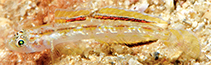 Grallenia dimorpha
Male Afbeelding van Allen, G.R. & M.V. Erdmann
Afbeeldingen | Google afbeelding
Male Afbeelding van Allen, G.R. & M.V. Erdmann
Classificatie / Namen Lokale namen | Synoniemen | Catalog of Fishes(Genus, Soort(en)) | ITIS | CoL | WoRMS | Cloffa
> Gobiiformes (Gobies) > Gobiidae (Gobies) > Gobiinae
Etymology: Grallenia: Named for Gerald R. Allen, (G+R+Allen+suffix '-ia'), in honor of his great contribution to our knowledge of the diversity of coral-reef fishes; dimorpha: Name from Latin 'dimorpha' meaning 'two shapes'; referring to the sexual dimorphism in relation to dorsal-fin shape; treated as a feminine singular adjective.
Eponymy: Dr Gerald Ray Allen (d: 1942) The genus was named to honour “…his great contribution to our knowledge of the diversity of coral-reef fishes.” (See Allen, GR) (Ref. 128868), visit book page.
Etymology: Grallenia: Named for Gerald R. Allen, (G+R+Allen+suffix '-ia'), in honor of his great contribution to our knowledge of the diversity of coral-reef fishes; dimorpha: Name from Latin 'dimorpha' meaning 'two shapes'; referring to the sexual dimorphism in relation to dorsal-fin shape; treated as a feminine singular adjective.
Eponymy: Dr Gerald Ray Allen (d: 1942) The genus was named to honour “…his great contribution to our knowledge of the diversity of coral-reef fishes.” (See Allen, GR) (Ref. 128868), visit book page.
Milieu: milieu / Klimaatzone / Diepte / verspreidingsgebied Ecologie
marien rifbewoner; diepte 8 - 18 m (Ref. 116128). Tropical
Verspreiding Gebieden | FAO regio's | Ecosystemen | Voorkomen | Verspreidingskaart | Introducties | Faunafri
Western Pacific: Papua New Guinea.
Grootte / Gewicht / Leeftijd
Maturiteit: Lm ? range ? - ? cm
Max length : 1.5 cm SL mannelijk / geslacht onbekend; (Ref. 116128); 1.6 cm SL (female)
Max length : 1.5 cm SL mannelijk / geslacht onbekend; (Ref. 116128); 1.6 cm SL (female)
Korte beschrijving Determinatiesleutels | Morfologie | Morfometrie
Dorsale stekels (totaal) : 7; Dorsale zachte stralen (totaal) : 8 - 11; Anale stekels: 1; Anale zachte stralen: 9 - 11; Wervels: 27. This species is distinguished by the following characters: D VI + I,8-11 (usually 10); A I,9-11 (usually10); fully erect first dorsal fin of male differs from female, male fin rectangular with fifth spine longest and female fin triangular with first spine forming elongate filament; no pelvic frenum nor head pores; longitudinal scales 25-30, often continuous from posterior pectoral-fin base to caudal-fin base, but anterior half of body mainly scaleless; body depth at pelvic-fin origin 13.4-15.6% SL; colour of male in life translucent with a mid-lateral row of five widely separated and progressively shorter posteriorly, horizontal, orange-brown lines, each surrounded by yellowish hue and with a faint, narrow, vertical, brown line extending ventrally, forming overall T-shaped marking; dorsal fins with a pair of prominent stripes, the outermost relatively broad and yellow-orange, inner stripe situated just above fin base, narrower and orange-red with black margin; anal fin yellowish with distinctive black margin; caudal fin is yellowish with irregular translucent areas mainly on upper part of basal half; female similar, but fins translucent without both the distinctive stripes on dorsal fins and black margin on anal fin; series of five ovate, progressively smaller, brown blotches along lower side interspersed with brilliant white markings, beginning at pectoral-fin base, continuing to posterior caudal peduncle (Ref. 116128).
Body shape (shape guide): elongated.
Body shape (shape guide): elongated.
Lives on sandy substrate (Ref. 116128).
Levenscyclus en paargedrag Maturiteit | Voortplanting | Paaien | Eieren | Fecunditeit | Larven
Hoofdreferentie
Upload uw referenties | Referenties | Coördinator | Medewerkers
Allen, G.R. and M.V. Erdmann, 2017. Descriptions of five new species of marine gobies (Teleostei: Gobiidae) of the genus Grallenia) from the tropical western Pacific Ocean. J. Ocean Sci. Found. 27:20-47. (Ref. 116128)
Status op de Rode Lijst van het IUCN (Ref. 130435: Version 2025-2 (Global))
Niet bedreigd (LC) ; Date assessed: 19 March 2024
CITES
Not Evaluated
Gevaar voor de mens
Harmless
Gebruik door de mens
FAO - Publication: search | FishSource |
Meer informatie
Trofische ecologie
Voedsel (prooien)
Dieetsamenstelling
Voedselconsumptie
Voedselrantsoenen
Predatoren
Voedsel (prooien)
Dieetsamenstelling
Voedselconsumptie
Voedselrantsoenen
Predatoren
Ecologie
Ecologie
Ecologie
Populatiedynamica
Groeiparameters
Max. leeftijden / maten
Lengte-gewicht rel.
Lengte-lengte rel.
Lengtefrequenties
Massaconversie
Rekrutering
Abundantie
Groeiparameters
Max. leeftijden / maten
Lengte-gewicht rel.
Lengte-lengte rel.
Lengtefrequenties
Massaconversie
Rekrutering
Abundantie
Levenscyclus
Voortplanting
Maturiteit
Rijpheid/kieuwen rel.
Fecunditeit
Paaien
Paaibestanden
Eieren
Ontwikkeling van de eieren
Larven
Larvale populatiedynamiek
Voortplanting
Maturiteit
Rijpheid/kieuwen rel.
Fecunditeit
Paaien
Paaibestanden
Eieren
Ontwikkeling van de eieren
Larven
Larvale populatiedynamiek
Anatomie
Kieuwoppervlak
Hersenen
Otoliet
Kieuwoppervlak
Hersenen
Otoliet
Fysiologie
Lichaamssamenstelling
Voedingsstoffen
Zuurstofverbruik
Type zwemmen
Zwemsnelheid
Visuele pigmenten
Vis geluid
Ziekten en parasieten
Toxiciteit (LC50)
Lichaamssamenstelling
Voedingsstoffen
Zuurstofverbruik
Type zwemmen
Zwemsnelheid
Visuele pigmenten
Vis geluid
Ziekten en parasieten
Toxiciteit (LC50)
Genetica
genoom
Genetica
Heterozygositeit
Erfelijkheid
Genetische diversiteit
genoom
Genetica
Heterozygositeit
Erfelijkheid
Genetische diversiteit
Menselijk gerelateerd
Aquacultuursystemen
Aquacultuurprofielen
Kweeklijnen
Ciguatera gevallen
Postzegels, munten, diversen.
Aquacultuursystemen
Aquacultuurprofielen
Kweeklijnen
Ciguatera gevallen
Postzegels, munten, diversen.
Tools
Speciale rapporten
Bekijk gegevens voor het houden in een aquarium | Bekijk Fact Sheets voor de soort | Bekijk Aquacultuur Fact Sheets
Download XML
Internetbronnen
AFORO (otoliths) | Aquatic Commons | BHL | Cloffa | Websites from users | Bekijk FishWatcher | CISTI | Catalog of Fishes: Genus, Soort(en) | DiscoverLife | ECOTOX | FAO - Publication: search | Faunafri | Fishipedia | Fishtrace | GloBI | Google Books | Google Scholar | Google | IGFA World Record | OneZoom | Open Tree of Life | Otolith Atlas of Taiwan Fishes | PubMed | Reef Life Survey | Socotra Atlas | TreeBase | Tree of Life | Wikipedia: ga naar, zoek | World Records Freshwater Fishing | Zoobank | Zoological Record
Schattingen op basis van modellen
Fylogenetische diversiteitsindex (Ref. 82804): PD50 = 0.5020 [Uniqueness, from 0.5 = low to 2.0 = high].
Bayesian length-weight: a=0.00741 (0.00347 - 0.01582), b=3.09 (2.91 - 3.27), in cm total length, based on LWR estimates for this (Sub)family-body shape (Ref. 93245).
Trofisch niveau (Ref. 69278): 3.0 ±0.3 se; based on size and trophs of closest relatives
Weerstandsvermogen (Ref. 120179): Hoog, minimale populatieverdubbelingstijd minder dan 15 maanden (Preliminary K or Fecundity.).