



Enteromius validus (Stiassny, Liyandja & Monsembula Iyaba, 2016)
Ανεβάστε το φωτογραφίες και Βίντεο
Google image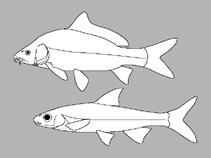 No image available for this species;
drawing shows typical species in Cyprinidae.
Google image
drawing shows typical species in Cyprinidae.
Ταξινόμηση / Ονόματα Κοινά ονόματα | Συνώνυμα | Catalog of Fishes(Γένος, Είδη) | ITIS | CoL | WoRMS | Cloffa
> Cypriniformes (Carps) > Cyprinidae (Minnows or carps) > Smiliogastrinae
Etymology: Enteromius: Greek, enteron = intestine + Greek, myo, mys = muscle (Ref. 45335); validus: Specific name, validus, from the Latin meaning strong or powerful, in reference to the robust appearance of the species (Ref. 106731).
Etymology: Enteromius: Greek, enteron = intestine + Greek, myo, mys = muscle (Ref. 45335); validus: Specific name, validus, from the Latin meaning strong or powerful, in reference to the robust appearance of the species (Ref. 106731).
Περιβάλλον: περιβάλλον / κλιματική ζώνη / εύρος βάθους / εύρος διανομής Οικολογία
; Γλυκού νερού βενθοπελαγικό. Tropical
Κατανομή Εδάφη | Περιοχές FAO | Οικοσυστήματα | Παρουσίες | Σημειακός χάρτης | Εισαγωγές | Faunafri
Africa: N’sele River and Mayi Ndombe River, Congo River basin in Democratic Republic of the Congo (Ref. 106731), and Léfini River in Congo Republic (Ref. 122753).
Μέγεθος / Βάρος / Ηλικία
Γεννητική Ωρίμανση: Lm ? range ? - ? cm
Max length : 9.6 cm SL αρσενικό/απροσδιόριστο; (Ref. 106731)
Max length : 9.6 cm SL αρσενικό/απροσδιόριστο; (Ref. 106731)
Σύντομη περιγραφή Κλείδες προσδιορισμού | Μορφολογία | Μορφομετρία
Ραχιαίες άκανθες (συνολικά) : 0; Μαλακές ραχιαίες ακτίνες (συνολικά) : 11; Εδρικές άκανθες: 0; Μαλακές εδρικές ακτίνες: 8; Σπόνδυλοι: 34 - 35. Diagnosis: It is distinguished from all other African smiliogastrin species by the following features that, in combination, uniquely diagnose the species: scales in midlateral series not enlarged relative to impinging rows above and below; barbels well developed, maxillary pair extending beyond level of mideye, mandibular pair reaching level of midopercle; numerous conical tubercles over snout and cheek, and dorsum of head; small circular occipital fontanel often present and located medially at parietal suture; gill rakers well developed, 8 or 9 on hypo- and ceratobranchial elements of first arch; last unbranched dorsal-fin ray weakly ossified, flexible, and lacking serrations along posterior edge; dorsal fin creamy white proximally, distal half to two thirds darkly pigmented (Ref. 106731).
Body shape (shape guide): fusiform / normal.
Body shape (shape guide): fusiform / normal.
This species is omnivorous and opportunistic (Ref. 106731). Gut contents contained disarticulated insect remains, woody debris, seeds, macerated grasses and terrestrial arthropod remains of spiders and ants (Ref. 106731). Specimens collected in June, July, and August showed no sign of maturation of ovaries or testes; most large individuals collected in March had enlarged testes or ovaries filled with numerous small, round eggs suggesting that peak breeding occurs at that time (Ref. 106731).
Κύκλος ζωής και συμπεριφορά ζευγαρώματος Γεννητική Ωρίμανση | Αναπαραγωγή | Γεννοβολία | Αβγά | Γονιμότητα | Προνύμφες
Κύρια αναφορά
Ανεβάστε τις αναφορές σας | Αναφορές | Συντονιστής | Συνεργάτες
Stiassny, M.L.J, T.L.D. Liyandja and R.J.C. Monsembula Iyaba, 2016. A new small barb (Cyprininae: Smiliogastrini) from the N’sele and Mayi Ndombe rivers in the lower reaches of the middle Congo basin (Democratic Republic of Congo, Central Africa). Am. Mus. Novit. 3848:1-15. (Ref. 106731)
CITES
Not Evaluated
Απειλή για τον άνθρωπο
Harmless
Ανθρώπινες χρήσεις
αλιεία: χωρίς ενδιαφέρον
FAO - Publication: search | FishSource |
Περισσότερες πληροφορίες
Οικολογία
Οικολογία
Οικολογία
Πληθυσμιακή δυναμική
Παράμετροι Αύξησης
Μέγιστες ηλικίες / μεγέθη
Μήκος-βάρος σχετ.
Μήκος-μήκος rel.
Μήκος-συχνότητες
Μετατροπή μάζας
Στρατολόγηση
Αφθονία
Παράμετροι Αύξησης
Μέγιστες ηλικίες / μεγέθη
Μήκος-βάρος σχετ.
Μήκος-μήκος rel.
Μήκος-συχνότητες
Μετατροπή μάζας
Στρατολόγηση
Αφθονία
Κύκλος ζωής
Αναπαραγωγή
Γεννητική Ωρίμανση
Ωριμότητα / Gills rel.
Γονιμότητα
Γεννοβολία
Συγκεντρώσεις αναπαραγωγής
Αβγά
Ανάπτυξη αυγών
Προνύμφες
Δυναμική προνυμφών
Αναπαραγωγή
Γεννητική Ωρίμανση
Ωριμότητα / Gills rel.
Γονιμότητα
Γεννοβολία
Συγκεντρώσεις αναπαραγωγής
Αβγά
Ανάπτυξη αυγών
Προνύμφες
Δυναμική προνυμφών
Ανατομία
Επιφάνεια βραγχίων
Εγκέφαλος
Ωτόλιθος
Επιφάνεια βραγχίων
Εγκέφαλος
Ωτόλιθος
Φυσιολογία
Σύνθεση σώματος
Θρεπτικά συστατικά
Κατανάλωση οξυγόνου
Τύπος κολύμβησης
Ταχύτητα κολύμβησης
Οπτικές χρωστικές ουσίες
Ήχος ψαριών
Ασθένειες & παράσιτα
Τοξικότητα (LC50)
Σύνθεση σώματος
Θρεπτικά συστατικά
Κατανάλωση οξυγόνου
Τύπος κολύμβησης
Ταχύτητα κολύμβησης
Οπτικές χρωστικές ουσίες
Ήχος ψαριών
Ασθένειες & παράσιτα
Τοξικότητα (LC50)
Γενετική
Γονιδίωμα
Γενετική
Ετεροζυγωτία
Κληρονομικότητα
Γενετική ποικιλομορφία
Γονιδίωμα
Γενετική
Ετεροζυγωτία
Κληρονομικότητα
Γενετική ποικιλομορφία
Ανθρώπινη σχέση
Συστήματα υδατοκαλλιέργειας
Προφίλ υδατοκαλλιεργειών
Στελέχοι
Περιπτώσεις Ciguatera
Γραμματόσημα, νομίσματα, διάφορα.
Συστήματα υδατοκαλλιέργειας
Προφίλ υδατοκαλλιεργειών
Στελέχοι
Περιπτώσεις Ciguatera
Γραμματόσημα, νομίσματα, διάφορα.
Εργαλεία
Ηλεκτρονικό βιβλίο | Οδηγός πεδίου | Ανάλυση κατά μήκος συνθέσεων | Εργαλείο ιστορίας ζωής | Σημειακός χάρτης |
Catch-MSY |
Ειδικές εκθέσεις
Έλεγχος για συντήρηση ενυδρείου | Ελέγξτε για ενημερωτικά δελτία ειδών | Ελέγξτε για ενημερωτικά δελτία υδατοκαλλιέργειας
Λήψη XML
Διαδικτυακές πηγές
AFORO (otoliths) | Aquatic Commons | BHL | Cloffa | Websites from users | Check FishWatcher | CISTI | Catalog of Fishes: Γένος, Είδη | DiscoverLife | ECOTOX | FAO - Publication: search | Faunafri | Fishipedia | Fishtrace | GloBI | Google Books | Google Scholar | Google | IGFA World Record | OneZoom | Open Tree of Life | Otolith Atlas of Taiwan Fishes | PubMed | Reef Life Survey | Socotra Atlas | TreeBase | Δέντρο Ζωής | Wikipedia: Go, αναζήτηση | | Zoological Record
Εκτιμήσεις βάσει μοντέλων
|
Δείκτης φυλογενετικής ποικιλότητας (Αναφ. 82804) |
PD50 = 0.5000 [Uniqueness, from 0.5 = low to 2.0 = high]. |
| Bayesian length-weight | a=0.00603 (0.00281 - 0.01292), b=3.06 (2.87 - 3.25), in cm total length, based on LWR estimates for this (Sub)family-body shape (Ref. 93245). |
|
Τροφικό Επίπεδο (Αναφ. 69278) |
3.0 ±0.3 se; based on size and trophs of closest relatives |
|
Ελαστικότητα (Αναφ. 120179) |
Υψηλό, ελάχιστος χρόνος για διπλασιασμό πληθυσμού < 15 μήνες (Preliminary K or Fecundity.). |
|
Ευπάθεια στην αλιεία (Ref. 59153) |
Low vulnerability (18 of 100). 🛈 |