



Centroscymnus owstonii Garman, 1906
Roughskin dogfish
個人による観察記録の追加 Fish Watcher
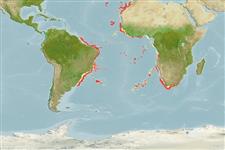
| Native range | All suitable habitat | Point map | Year 2050 |
|
| This map was computer-generated and has not yet been reviewed. |
| Centroscymnus owstonii AquaMaps Data sources: GBIF OBIS |
アップロード 写真 そして ビデオ
画像 | グーグルの画像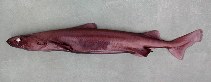 Centroscymnus owstonii
Male 画像によって Cambraia Duarte, P.M.N. (c)ImagDOP
画像 | グーグルの画像
Male 画像によって Cambraia Duarte, P.M.N. (c)ImagDOP
分類 / 名前 共通名の | 類義語 | Catalog of Fishes(部類, 種) | ITIS | CoL | WoRMS | Cloffa
板鰓亜鋼(サメとエイ類) (sharks and rays) > Squaliformes (Sleeper and dogfish sharks) > Somniosidae (Sleeper sharks)
Etymology: Centroscymnus: centr[um] (L.), prickle or sharp point, referring to spines on both dorsal fins; scymnus, an ancient name for some kind of shark, derived from a Greek word meaning young animal, cub or whelp (See ETYFish); owstonii: In honor of Alan Owston (1853-1915), English businessman, yachtsman, and collector of Asian wildlife, who obtained holotype (See ETYFish).
Eponymy: Alan Owston (1853–1915) was an English businessman who was a collector of Asian wildlife, as well as a yachtsman. [...] (Ref. 128868), visit book page.
More on author: Garman.
Etymology: Centroscymnus: centr[um] (L.), prickle or sharp point, referring to spines on both dorsal fins; scymnus, an ancient name for some kind of shark, derived from a Greek word meaning young animal, cub or whelp (See ETYFish); owstonii: In honor of Alan Owston (1853-1915), English businessman, yachtsman, and collector of Asian wildlife, who obtained holotype (See ETYFish).
Eponymy: Alan Owston (1853–1915) was an English businessman who was a collector of Asian wildlife, as well as a yachtsman. [...] (Ref. 128868), visit book page.
More on author: Garman.
環境:環境 / 気候帯 / 深さの範囲 / 分布範囲 生態学
海 深海魚; 深さの範囲 100 - 1500 m (Ref. 26346). Deep-water; 33°N - 38°S, 52°W - 30°E
分布 領土 | 国連食糧農業機関の区域 | エコシステム | 事件 | 目的のマップ | 導入 | Faunafri
Atlantic, Pacific and Indian oceans. Western Indian Ocean: from off the Seychelles to the Madagascar Ridge and South Africa. Eastern Indian Ocean off Indonesia and southwestern Australia. Southwestern Pacific: off Australia, New Caledonia and New Zealand. Northwestern Pacific: off Japan and from the Hawaiian-Emperor seamount chain. Southeastern Pacific: west of Chile. Southwestern Atlantic: off French Guiana, Brazil, and Uruguay. Northwestern Atlantic: Gulf of Mexico. Eastern Atlantic: from off the Azores in the North to off South Africa in the south.
初回成熟時の長さ / サイズ / 重さ / 年齢
成熟: Lm ?, range 100 - 104 cm
Max length : 148 cm TL オス/雌雄の選別がない; (Ref. 122636); 最大公表体重: 21.3 kg (Ref. 122636)
Max length : 148 cm TL オス/雌雄の選別がない; (Ref. 122636); 最大公表体重: 21.3 kg (Ref. 122636)
簡単な記述 検索表 | 形態学 | 形態計測学
肛門の骨: 0. Dark brown or black in color, dorsal fins with extreme tips of fin spines protruding from the fins, moderately long snout, lanceolate upper teeth and bladelike lower teeth with short, oblique cusps, fairly stocky body that does not taper abruptly from pectoral region, large lateral trunk denticles with mostly smooth, circular, cuspidate and acuspidate crowns in adults and subadults (Ref. 247).
Body shape (shape guide): elongated.
Body shape (shape guide): elongated.
Found on upper continental slopes, on or near the bottom (Ref. 247). Feeds on fish and cephalopods (Ref. 6871). Ovoviviparous (Ref. 205), with 16- 28 young born at 27-30 cm (Ref. 26346). Caught in trawls or longlines set at depths greater than 400 m (Ref. 55584). Flesh is high in mercury (Ref. 6871). Utilized as fishmeal and source of squalene (liver oil) (Ref. 6871). Maximum depth from Ref. 55584.
ライフサイクルと交尾行動 成熟 | 繁殖 | 放精 | 卵 | 生産力 | 幼生
Ovoviviparous (Ref. 6871). 16- 28 young born at 27-30 cm (Ref. 26346). Distinct pairing with embrace (Ref. 205).
主な参考文献
参考文献のアップロード | 参考文献 | コーディネーター | 協力者
Compagno, L.J.V., 1984. FAO Species Catalogue. Vol. 4. Sharks of the world. An annotated and illustrated catalogue of shark species known to date. Part 1 - Hexanchiformes to Lamniformes. FAO Fish. Synop. 125(4/1):1-249. Rome, FAO. (Ref. 247)
CITES
Not Evaluated
人間に対する脅威
Poisonous to eat (Ref. 6871)
人間の用途
水産業: 少数商業の
FAO - Publication: search | FishSource | 私達の周りの海
より多くの情報
生理学
体組成
栄養素
酸素消費
水泳タイプ
泳ぐ速さ
視覚色素
フィッシュ・サウンド
病気と寄生虫
毒性(LC50)
体組成
栄養素
酸素消費
水泳タイプ
泳ぐ速さ
視覚色素
フィッシュ・サウンド
病気と寄生虫
毒性(LC50)
用具
特記事項
XMLをダウンロードして下さい
インターネットの情報源
AFORO (otoliths) | Aquatic Commons | BHL | Cloffa | Websites from users | Check FishWatcher | CISTI | Catalog of Fishes: 部類, 種 | DiscoverLife | ECOTOX | FAO - Publication: search | Faunafri | Fishipedia | Fishtrace | GloBI | Google Books | Google Scholar | Google | IGFA World Record | 国のデーターベース | OneZoom | Open Tree of Life | Otolith Atlas of Taiwan Fishes | PubMed | Reef Life Survey | Socotra Atlas | TreeBase | 生命の木 | Wikipedia: 行く, 検索する | World Records Freshwater Fishing | Zoobank | 動物に関する記録
モデルに基づく推定値
好ましい温度 (参照 123201): 4.9 - 10.9, mean 6.4 °C (based on 66 cells).
系統多様性指数 (参照 82804): PD50 = 0.7500 [Uniqueness, from 0.5 = low to 2.0 = high].
Bayesian length-weight: a=0.00363 (0.00289 - 0.00456), b=3.11 (3.04 - 3.18), in cm total length, based on LWR estimates for this species (Ref. 93245).
栄養段階 (参照 69278): 4.5 ±0.62 se; based on food items.
回復力 (参照 120179): 低い, 4.5年~14年の倍増期間の最小個体群 (Fec=16-28).