



अपना अपलोड करें तस्वीरें और वीडियो
Google image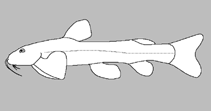 No image available for this species;
drawing shows typical species in Amphiliidae.
Google image
drawing shows typical species in Amphiliidae.
वर्गीकरण / नाम आम नाम | उपशब्द | Catalog of Fishes(वर्ग, प्रजाति) | ITIS | CoL | WoRMS | Cloffa
> Siluriformes (Catfishes) > Amphiliidae (Loach catfishes) > Amphiliinae
Etymology: Amphilius: Greek, amphi = on both sides + Greek, leios = fat; athiensis: The specific name athiensis refers to the Athi River system, where the species appears to be endemic; used as a noun in apposition (Ref. 85045).
Etymology: Amphilius: Greek, amphi = on both sides + Greek, leios = fat; athiensis: The specific name athiensis refers to the Athi River system, where the species appears to be endemic; used as a noun in apposition (Ref. 85045).
पर्यावरण: पर्यावरण / जलवायु क्षेत्र / गहराई सीमा / वितरण सीमा पारिस्थितिकी
; स्वच्छ जल, अलवण जल बेनथोपिलाजिक. Tropical
वितरण प्रदेशों | ऐफ ऐ ओ क्षेत्र | पारिस्थितिकी प्रणालियों | संयोग | बिन्दु नक्शा | भूमिका | Faunafri
Africa: known only from the Athi River system, Galana River basin in Kenya (Ref. 85045).
आकार / वज़न / आयु
संक्षिप्त वर्णन पहचान कुंजी | आकृति विज्ञान | मौरफोमैटरिक्स
पृष्ठीय रीढ़ (सम्पूर्ण) : 0; पृष्ठीय सौफट रेज़ (सम्पूर्ण) : 7; गुदा कांटा: 0; ऐनल सौफट रेज़: 8 - 10; जानवरों की रीड़ का जोड़: 38 - 40. Diagnosis: Amphilius athiensis is distinguished from all other species of the A. uranoscopus group by its distinctive colouration consisting of many small dark spots on its head, body, and fins, vs. head, body, and fins not finely spotted; it also differs from A. grandis by having longer inner mandibular barbels, 33.3-42.0% of head length vs. 20.2-33.6%, from A. chalei, A. cryptobullatus, A. krefftii, and A. uranoscopus by the absence of distinct pale patches at the origin and insertion of the dorsal fin, and from A. cryptobullatus and A. krefftii by its forked caudal fin vs. emarginate; it also differs from A. krefftii by its more elongate body with 38-40 total vertebrae, vs. short body with usually 36 total vertebrae; it also differs from A. chalei by having a deeper body, body depth at anus 11.1-15.3% of standard length vs. 8.9-10.8%, a deeper caudal peduncle, caudal peduncle depth 10.1-12.6% of standard length vs. 7.1-9.7%, and shorter caudal peduncle, caudal peduncle length 14.6-18.3% of standard length vs. 19.0-21.9%; it also differs from A. cryptobullatus by having normally developed bilateral bony swimbladder capsules, vs. bilateral bony swimbladder capsules extremely large (Ref. 85045).
Body shape (shape guide): elongated.
Body shape (shape guide): elongated.
जीवन चक्र और संभोग व्यवहार परिपक्व अवधि | पुनरुत्पत्ति | मछलीऔ का अंडे देना | अंडे | उपजाऊपन | लार्वा
मुख्य संदर्भ
अपने संदर्भ अपलोड करें | संदर्भ | संयोजक | सहयोगीयो
Thomson, A.W. and L.M. Page, 2010. Taxonomic revision of the Amphilius uranoscopus group (Teleostei: Siluriformes) in Kenya, with the description of a new species from the Athi River. Bull. Flor. Mus. Nat. Hist. 49(2):45-66. (Ref. 85045)
आईयूसीएन रेड लिस्ट स्थिति (Ref. 130435: Version 2025-2 (Global))
असुरक्षित (VU) (B1ab(i,ii,iii,iv)); Date assessed: 16 June 2022
CITES
Not Evaluated
मनुष्यों के लिए ख़तरा
Harmless
मानव उपयोग
FAO - Publication: search | FishSource |
अधिक जानकारी
ट्रॉफिक पारिस्थितिकी
खाद्य पदार्थ (शिकार)
संघटक आहार
आहार खपत
खाद्यान्न राशन
परभक्षी
खाद्य पदार्थ (शिकार)
संघटक आहार
आहार खपत
खाद्यान्न राशन
परभक्षी
पारिस्थितिकी
पारिस्थितिकी
पारिस्थितिकी
जनसंख्या गतिशीलता
विकास मापदंड
अधिकतम आयु/आकार
लंबाई-वजन संबंध
लंबाई-लंबाई संबंध
लंबाई-आवृत्तियाँ
सामूहिक रूपांतरण
भर्ती
बहुतायत
विकास मापदंड
अधिकतम आयु/आकार
लंबाई-वजन संबंध
लंबाई-लंबाई संबंध
लंबाई-आवृत्तियाँ
सामूहिक रूपांतरण
भर्ती
बहुतायत
जीवन चक्र
पुनरुत्पत्ति
परिपक्व अवधि
परिपक्वता/गिल्स संबंध
उपजाऊपन
मछलीऔ का अंडे देना
स्पॉनिंग एकत्रीकरण
अंडे
अंडे का विकास
लार्वा
लारवल गतिकी
पुनरुत्पत्ति
परिपक्व अवधि
परिपक्वता/गिल्स संबंध
उपजाऊपन
मछलीऔ का अंडे देना
स्पॉनिंग एकत्रीकरण
अंडे
अंडे का विकास
लार्वा
लारवल गतिकी
शरीर रचना
गिल क्षेत्र
दिमाग
ओटोलिथ
गिल क्षेत्र
दिमाग
ओटोलिथ
फिजियोलॉजी
शारीरिक संरचना
पोषक तत्व
प्राणवायु की खपत
तैराकी का प्रकार
तैराकी की गति
दृश्य वर्णक
मछली की आवाज
रोग एवं परजीवी
विषाक्तता (LC50s)
शारीरिक संरचना
पोषक तत्व
प्राणवायु की खपत
तैराकी का प्रकार
तैराकी की गति
दृश्य वर्णक
मछली की आवाज
रोग एवं परजीवी
विषाक्तता (LC50s)
आनुवंशिकी
जीनोम
आनुवंशिकी
विषमयुग्मजी
हैरेटिबिलटी
आनुवंशिक विविधता
जीनोम
आनुवंशिकी
विषमयुग्मजी
हैरेटिबिलटी
आनुवंशिक विविधता
मानव संबंधी
जलकृषि प्रणालियाँ
जलीयकृषि रूपरेखाऐ
खींच
सिगुएटेरा के मामले
टिकट, सिक्के, विविध.
जलकृषि प्रणालियाँ
जलीयकृषि रूपरेखाऐ
खींच
सिगुएटेरा के मामले
टिकट, सिक्के, विविध.
साधन
ई-पुस्तक | कार्यक्षेत्र पथप्रदर्शक | लंबाई आवृति इंद्रजालिक | जीवन-इतिहास उपकरण | बिन्दु नक्शा |
कैच-एमएसवाई |
विशेष रिपोर्ट
एक्वेरियम के रखरखाव की जांच करें | प्रजातियों के तथ्य पत्रक की जाँच करें | जलीय कृषि तथ्य पत्रक की जाँच करें
XML डाउनलोड करें
सारांश पृष्ठ | बिंदु डेटा | आम नाम | तस्वीरें
इंटरनेट स्रोत
AFORO (otoliths) | Aquatic Commons | BHL | Cloffa | Websites from users | Check FishWatcher | CISTI | Catalog of Fishes: वर्ग, प्रजाति | DiscoverLife | ECOTOX | FAO - Publication: search | Faunafri | Fishipedia | Fishtrace | GloBI | Google Books | Google Scholar | Google | IGFA World Record | OneZoom | Open Tree of Life | Otolith Atlas of Taiwan Fishes | PubMed | Reef Life Survey | Socotra Atlas | TreeBase | Tree of Life | Wikipedia: Go, खोज | World Records Freshwater Fishing | Zoobank | प्राणीशास्त्रीय अभिलेख
मॉडल पर आधारित अनुमान
जातिवृति विविधता सूचकांक (संदर्भ 82804): PD50 = 0.5000 [Uniqueness, from 0.5 = low to 2.0 = high].
Bayesian length-weight: a=0.00490 (0.00203 - 0.01181), b=3.15 (2.94 - 3.36), in cm total length, based on LWR estimates for this (Sub)family-body shape (Ref. 93245).
ट्रॉफिक स्तर (संदर्भ 69278): 3.0 ±0.3 se; based on size and trophs of closest relatives
लौटाव (संदर्भ 120179): माध्यम, न्यूनतम जनसंख्या दुगनी होने का समय 1.4 - 4.4 वर्ष। (Preliminary K or Fecundity.).