



Загрузить свой Фото и Видео
Изображение на Google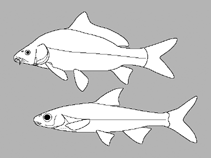 No image available for this species;
drawing shows typical species in Cyprinidae.
Изображение на Google
drawing shows typical species in Cyprinidae.
Классификация / Имена народные названия | синонимы | Catalog of Fishes(род, виды) | ITIS | CoL | WoRMS | Cloffa
> Cypriniformes (Carps) > Cyprinidae (Minnows or carps) > Barbinae
Etymology: Barbus: Latin, barbus = barbel (Ref. 45335).
Eponymy: Sir Charles Alfred Payton (1843–1926) was a British adventurer, writer, fisherman and diplomat who was British Consul to Morocco, where this barb is found. [...] Antoni Bazyli Wałecki (1815–1897) was a Polish zoologist who was Dybowski’s colleague, and who became Assistant Director of the Cabinet of the Warsaw Zoo (1860–1862). [...] (Ref. 128868), visit book page.
Etymology: Barbus: Latin, barbus = barbel (Ref. 45335).
Eponymy: Sir Charles Alfred Payton (1843–1926) was a British adventurer, writer, fisherman and diplomat who was British Consul to Morocco, where this barb is found. [...] Antoni Bazyli Wałecki (1815–1897) was a Polish zoologist who was Dybowski’s colleague, and who became Assistant Director of the Cabinet of the Warsaw Zoo (1860–1862). [...] (Ref. 128868), visit book page.
Taxonomic Remarks
Has been regarded as a hybrid of female Barbus barbus and male Barbus carpathicus. Based on available data, individuals of Barbus waleckii are not considered first generation hybrids. They possess their own biological and reproductive characteristics, and might represent a species of hybrid origin. Recognized as a valid species pending evidence that this is not a distinct reproductive lineage according to Kottelat & Freyhof, 2009 (Ref. 59043).
Окружающая среда: среда / климатическая зона / пределы глубины / диапазон распространения экология
; пресноводный донно-пелагический. Temperate
распространение Территории | регионы FAO | Экосистемы | места находок | карта точек | интродукции | Faunafri
Europe: Vistula drainage (mainly San and Wisloka systems) downstream to Wilga (about 50 km from Warsaw), upper Dniestr basin in Poland and Ukraine. Similar barbels from the upper Tisza system (Danube drainage) may represent this species.
Размер / Вес / Возраст
Краткое описание определительные ключи | морфология | морфометрия
Diagnosed from its congeners n Baltic and Black Sea basins by having following characters: last simple dorsal ray slightly thickened, with 0-30 small serrae posteriorly along median third; flexible segmented part of last simple dorsal ray about 50% of ray length; lower lip thick, with a pendulous median lobe; lateral line with 52-70 scales (usually 59-62); 11-12 scale rows between lateral line and dorsal fin origin; pelvic fin origin slightly to clearly behind dorsal fin origin; scales with free posterior part rounded; and scales without epithelial crests (Ref. 59043).
Body shape (shape guide): elongated.
Body shape (shape guide): elongated.
Inhabits small rivers with moderate to fast flowing water in piedmont and montane zones at 200-600 m above sea level, preferring stone, gravel, pebble or sand bottom and river stretches with rapids and deep holes. Undergoes upriver migration to shallow, smaller tributaries during the start of the spawning season. Does not migrate for long distances, usually moving along main course of stream during feeding season. Preys on benthic invertebrates. Breeds in shallow areas over pebble bottom with fast current and clear water with high oxygen concentration. Spawns mainly at night during sunset. Slow decline of population is expected to continue due to on-going economic development (Ref. 59043).
Жизненный цикл и брачное поведение половая зрелость | размножение | нерест | икра | Плодовитость | личинки
Eggs are released in holes dug by females with their anal fins. Probably spawning takes place in 2-3 batches during a spawning season (Ref. 59043).
Основная ссылка
Загрузите свои рекомендации | ссылки | координатор | соавторы
Kottelat, M. and J. Freyhof, 2007. Handbook of European freshwater fishes. Publications Kottelat, Cornol and Freyhof, Berlin. 646 pp. (Ref. 59043)
CITES
Not Evaluated
Угроза для людей
Harmless
Использование человеком
FAO - Publication: search | FishSource |
дополнительная информация
Трофическая экология
Пищевые предметы (добыча)
состав пищи
потребление пищи
Продовольственные пайки
хищники
Пищевые предметы (добыча)
состав пищи
потребление пищи
Продовольственные пайки
хищники
экология
экология
экология
Динамика численности населения
Параметры роста
Макс. возраст / размер
Отношение длины к весу.
Отношение длины к длине.
Размерный состав
Преобразование массы
пополнение
численность
Параметры роста
Макс. возраст / размер
Отношение длины к весу.
Отношение длины к длине.
Размерный состав
Преобразование массы
пополнение
численность
Жизненный цикл
размножение
половая зрелость
Зрелость/Жиры относительно.
Плодовитость
нерест
Нерестовые скопления
икра
Развитие икры
личинки
динамика численности личинок
размножение
половая зрелость
Зрелость/Жиры относительно.
Плодовитость
нерест
Нерестовые скопления
икра
Развитие икры
личинки
динамика численности личинок
Анатомия
жаберная область
Мозг
Отолит
жаберная область
Мозг
Отолит
Физиология
Состав тела
Питательные вещества
Потребление кислорода
Тип плавания
Скорость плавания
Зрительные пигменты
Звук рыбы
Болезни и паразиты
Токсичность (LC50s)
Состав тела
Питательные вещества
Потребление кислорода
Тип плавания
Скорость плавания
Зрительные пигменты
Звук рыбы
Болезни и паразиты
Токсичность (LC50s)
генетика
Геном
генетика
Гетерозиготность
наследуемость
Генетическое разнообразие
Геном
генетика
Гетерозиготность
наследуемость
Генетическое разнообразие
Связанные с человеком
Системы аквакультуры
особенности рыбоводства
степень растяжения
Случаи заболевания сигуатерой
Марки, монеты и прочее.
Системы аквакультуры
особенности рыбоводства
степень растяжения
Случаи заболевания сигуатерой
Марки, монеты и прочее.
инструменты
Специальные отчеты
Проверить содержание в аквариумах | Проверить опубликованные видовые данные | Проверить опубликованные данные по аквакультуре
Скачать в формате XML
ресурсы в Интернет
AFORO (otoliths) | Aquatic Commons | BHL | Cloffa | Websites from users | Проверить FishWatcher | CISTI | Catalog of Fishes: род, виды | DiscoverLife | ECOTOX | FAO - Publication: search | Faunafri | Fishipedia | Fishtrace | GloBI | Google Books | Google Scholar | Google | IGFA World Record | OneZoom | Open Tree of Life | Otolith Atlas of Taiwan Fishes | PubMed | Reef Life Survey | Socotra Atlas | TreeBase | Tree of Life | Wikipedia: Вперёд, поиск | World Records Freshwater Fishing | Зоологическая летопись
Оценки, основанные на моделях
Индекс филогенетического разнообразия (ссылка 82804): PD50 = 0.5000 [Uniqueness, from 0.5 = low to 2.0 = high].
Bayesian length-weight: a=0.00794 (0.00367 - 0.01719), b=3.05 (2.88 - 3.22), in cm total length, based on LWR estimates for this Genus-body shape (Ref. 93245).
Трофический уровень (ссылка 69278): 3.1 ±0.4 se; based on size and trophs of closest relatives
устойчивость к внешним воздействиям (ссылка 120179): средний (среднего размера), минимальное время удвоения популяции 1.4-4.4 года (tm=2-4).