



Lethenteron ninae Naseka, Tuniyev & Renaud, 2009
Western Transcaucasian lamprey
Загрузить свой Фото и Видео
изображения | Изображение на Google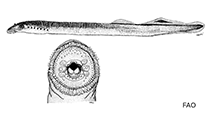 Lethenteron ninae
Изображение сделано FAO
изображения | Изображение на Google
Изображение сделано FAO
Классификация / Имена народные названия | синонимы | Catalog of Fishes(род, виды) | ITIS | CoL | WoRMS | Cloffa
> Petromyzontiformes (Lampreys) > Petromyzontidae (Northern lampreys) > Lampetrinae
Etymology: Lethenteron: Etymology not explained, perhaps lethalis (L.), lethal, or lethe (Gr.), forgetting or forgetfulness; enteron (Gr.) intestine, presumably referring to “degenerate and non-functional” intestine of adult L. appendix (See ETYFish); ninae: In honor of ichthyologist Nina G. Bogutskaya (b. 1958), Russian Academy of Sciences, for her contribution to the knowledge of Eurasian freshwater fishes [placed in Lampetra and by some workers] (See ETYFish).
Eponymy: Dr Nina Gidalevna Bogutskaya (d: 1958) is a Russian ichthyologist who has chiefly focused on cypriniform fish. [...] (Ref. 128868), visit book page.
Etymology: Lethenteron: Etymology not explained, perhaps lethalis (L.), lethal, or lethe (Gr.), forgetting or forgetfulness; enteron (Gr.) intestine, presumably referring to “degenerate and non-functional” intestine of adult L. appendix (See ETYFish); ninae: In honor of ichthyologist Nina G. Bogutskaya (b. 1958), Russian Academy of Sciences, for her contribution to the knowledge of Eurasian freshwater fishes [placed in Lampetra and by some workers] (See ETYFish).
Eponymy: Dr Nina Gidalevna Bogutskaya (d: 1958) is a Russian ichthyologist who has chiefly focused on cypriniform fish. [...] (Ref. 128868), visit book page.
Окружающая среда: среда / климатическая зона / пределы глубины / диапазон распространения экология
; пресноводный демерсальный; пределы глубины 0 - ? m (Ref. 89241). Temperate
распространение Территории | регионы FAO | Экосистемы | места находок | карта точек | интродукции | Faunafri
Eurasia: rivers of the Black Sea coast in Russia and Abkhazia in Georgia (from west to east): Psezuapse, Shakhe, Mzymta, Psou (Chakhtsutsyr Stream), Bzyb’, and Mokva. Berg (1948) reports ammocoetes from near Novorossiysk that he assigns to E. mariae, but these may belong to L. ninae.
Размер / Вес / Возраст
Краткое описание определительные ключи | морфология | морфометрия
Adults: 13.06-16.6 cm TL. Body proportions, as percentage of TL (based on 12 recently metamorphosed specimens measuring 13.06-16.6 cm TL): prebranchial length, 8.7-13.1; branchial length, 9.6-10.9; trunk length, 50.1-53.6; tail length, 25.7-29.2; eye length, 1.4-2.0; disc length, 3.8-5.2; prenostril length, 4.0-6.0; snout length, 4.8-6.9; postocular length, 2.7-3.6. Trunk myomeres, 58-62. Dentition: supraoral lamina, 2 unicuspid teeth; infraoral lamina, 5-7 mostly unicuspid teeth, but 1-2 may be bicuspid; 3 endolateral teeth on each side; endolateral formula, typically 2-2-2, but 2-3-2 (20% of cases) and 2-2-3 (15%) also occur; 1-2 rows of anterials; first row of anterials, 5-7 unicuspid teeth; exolaterals absent; first posterial row absent (27% of cases) or present in a single incomplete row consisting of 3-7 mostly unicuspid teeth, but 1-2 may be bicuspid; transverse lingual lamina, 9-15 unicuspid teeth, the median one greatly enlarged; longitudinal lingual laminae straight, each with 5-9 unicuspid teeth. Velar tentacles, 7; the median one shorter than the adjacent lateral ones and the tentacles have tubercles on their dorsal aspect. There are no velar wings. Body coloration (live and freshly preserved) is gray on the dorsal aspect and lighter on the ventral aspect and without mottling. Dark blotch near apex of second dorsal fin. Lateral line neuromasts darkly pigmented on the ventral surface and prebranchial region in some individuals but unpigmented in others. Extent of caudal fin pigmentation, 1% to <75%. Caudal fin shape, rounded or spade-like. Oral fimbriae, 69-99 (Ref. 89241). Also Ref. 82201..
Body shape (shape guide): eel-like.
Body shape (shape guide): eel-like.
Freshwater. Ammocoetes live in silt, sand or fine pebble substrate in the middle and lower sections of rivers where the current is absent or slow, at water depths of 10-50 cm, among submerged plants (Rumex acetosella, Polygonum sp., Juncus sp.). Adults are also found in the same general habitat as both life stages are commonly caught together. Metamorphosis is believed to occur prior to mid-September when fully metamorphosed individuals were first caught. Adults are nonparasitic. The spawning period is undetermined (Ref. 89241)..
Жизненный цикл и брачное поведение половая зрелость | размножение | нерест | икра | Плодовитость | личинки
Основная ссылка
Загрузите свои рекомендации | ссылки | координатор | соавторы
Naseka, A.M., S.B. Tuniyev and C.B. Renaud, 2009. Lethenteron ninae, a new nonparasitic lamprey species from the north-eastern Black Sea basin (Petromyzontiformes: Petromyzontidae). Zootaxa 2198:16-26. (Ref. 82201)
Статус Красного Списка МСОП (Ref. 130435: Version 2025-2 (Global))
Близок к исчезновению (NT) ; Date assessed: 18 March 2013
CITES
Not Evaluated
Угроза для людей
Harmless
Использование человеком
FAO - Publication: search | FishSource |
дополнительная информация
Трофическая экология
Пищевые предметы (добыча)
состав пищи
потребление пищи
Продовольственные пайки
хищники
Пищевые предметы (добыча)
состав пищи
потребление пищи
Продовольственные пайки
хищники
Динамика численности населения
Параметры роста
Макс. возраст / размер
Отношение длины к весу.
Отношение длины к длине.
Размерный состав
Преобразование массы
пополнение
численность
Параметры роста
Макс. возраст / размер
Отношение длины к весу.
Отношение длины к длине.
Размерный состав
Преобразование массы
пополнение
численность
Жизненный цикл
размножение
половая зрелость
Зрелость/Жиры относительно.
Плодовитость
нерест
Нерестовые скопления
икра
Развитие икры
личинки
динамика численности личинок
размножение
половая зрелость
Зрелость/Жиры относительно.
Плодовитость
нерест
Нерестовые скопления
икра
Развитие икры
личинки
динамика численности личинок
Анатомия
жаберная область
Мозг
Отолит
жаберная область
Мозг
Отолит
Физиология
Состав тела
Питательные вещества
Потребление кислорода
Тип плавания
Скорость плавания
Зрительные пигменты
Звук рыбы
Болезни и паразиты
Токсичность (LC50s)
Состав тела
Питательные вещества
Потребление кислорода
Тип плавания
Скорость плавания
Зрительные пигменты
Звук рыбы
Болезни и паразиты
Токсичность (LC50s)
генетика
Геном
генетика
Гетерозиготность
наследуемость
Генетическое разнообразие
Геном
генетика
Гетерозиготность
наследуемость
Генетическое разнообразие
Связанные с человеком
Системы аквакультуры
особенности рыбоводства
степень растяжения
Случаи заболевания сигуатерой
Марки, монеты и прочее.
Системы аквакультуры
особенности рыбоводства
степень растяжения
Случаи заболевания сигуатерой
Марки, монеты и прочее.
инструменты
Электронная книга | полевой определитель | определительные ключи | Длина-Частота | онтогенез | карта точек |
Catch-MSY |
Специальные отчеты
Проверить содержание в аквариумах | Проверить опубликованные видовые данные | Проверить опубликованные данные по аквакультуре
Скачать в формате XML
ресурсы в Интернет
AFORO (otoliths) | Aquatic Commons | BHL | Cloffa | Websites from users | Проверить FishWatcher | CISTI | Catalog of Fishes: род, виды | DiscoverLife | ECOTOX | FAO - Publication: search | Faunafri | Fishipedia | Fishtrace | GloBI | Google Books | Google Scholar | Google | IGFA World Record | OneZoom | Open Tree of Life | Otolith Atlas of Taiwan Fishes | PubMed | Reef Life Survey | Socotra Atlas | TreeBase | Tree of Life | Wikipedia: Вперёд, поиск | World Records Freshwater Fishing | Zoobank | Зоологическая летопись
Оценки, основанные на моделях
Индекс филогенетического разнообразия (ссылка 82804): PD50 = 0.5020 [Uniqueness, from 0.5 = low to 2.0 = high].
Bayesian length-weight: a=0.00132 (0.00060 - 0.00290), b=2.99 (2.80 - 3.18), in cm total length, based on LWR estimates for this (Sub)family-body shape (Ref. 93245).
Трофический уровень (ссылка 69278): 3.1 ±0.4 se; based on size and trophs of closest relatives
устойчивость к внешним воздействиям (ссылка 120179): низкий, минимальное время удвоения популяции 4.5-14 лет (Semelparous species, assuming tm (= tmax) > 4).