



Uploaden van uw Foto's en video's
Afbeeldingen | Google afbeelding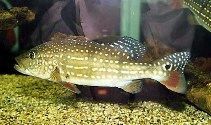 Cichla temensis
Afbeelding van Fürderer, H.
Afbeeldingen | Google afbeelding
Afbeelding van Fürderer, H.
Classificatie / Namen Lokale namen | Synoniemen | Catalog of Fishes(Genus, Soort(en)) | ITIS | CoL | WoRMS | Cloffa
> Cichliformes (Cichlids, convict blennies) > Cichlidae (Cichlids) > Cichlinae
Etymology: Cichla: Greek, kichle = wrasse (Ref. 45335).
Etymology: Cichla: Greek, kichle = wrasse (Ref. 45335).
Taxonomic Remarks
Redescription based on Venezuelan material in Machado-Allison (1971), as C. ocellaris.
Milieu: milieu / Klimaatzone / Diepte / verspreidingsgebied Ecologie
; zoet water benthopelagisch; pH range: 5.5 - 6.5; standvastig (Ref. 126106). Tropical; 27°C - 29°C (Ref. 13614)
Verspreiding Gebieden | FAO regio's | Ecosystemen | Voorkomen | Verspreidingskaart | Introducties | Faunafri
South America: Amazon River basin in the Negro and Uatumã River drainages; Orinoco River basin in tributaries of the Orinoco River in Venezuela and Colombia.
Lengte bij maturiteit / Grootte / Gewicht / Leeftijd
Maturiteit: Lm 33.5, range 31 - 36 cm
Max length : 99.0 cm TL mannelijk / geslacht onbekend; (Ref. 40637); max. gepubliceerd gewicht: 12.2 kg (Ref. 40637)
Max length : 99.0 cm TL mannelijk / geslacht onbekend; (Ref. 40637); max. gepubliceerd gewicht: 12.2 kg (Ref. 40637)
Korte beschrijving Determinatiesleutels | Morfologie | Morfometrie
Diagnosis: A large, elongate species with small scales (E1 row scales 98-128, usually more than 110, vs. usually less than 110 in other species of Cichla). Postorbital band is present, entire, may be irregular but does not consist of scattered spots, vs. absent or present as scattered spots in other species of Cichla species. Lateral line is usually continuous. It is most similar to C. pinima and C. vazzoleri, sharing subadult to young adult color pattern including dark midlateral band and four rows of regularly arranged light spots along side, but light spots slightly elongate instead of round. It is different from C. pinima and C. vazzoleri in lacking dark lateral blotches with intensified light margins; vertical bars when expressed entire, never forming round blotches; ocellated blotches on dorsal side absent at all sizes; postorbital band entire (vs. expressed as scattered dark blotches); dark blotch associated with preopercle absent (present in C. vazzoleri); lateral line nearly always continuous (vs. usually discontinuous in C. vazzoleri) (Ref. 57716).
Body shape (shape guide): fusiform / normal.
Body shape (shape guide): fusiform / normal.
Adults occupy deeper littoral areas in lagoons and sandy and rocky banks of the main river channel. They feed mainly on small fish (especially characids measuring <10 cm SL) (Ref. 26329, 27531). Oviparous (Ref. 205). Has been introduced to Florida and Texas, but is considered not established yet.
Levenscyclus en paargedrag Maturiteit | Voortplanting | Paaien | Eieren | Fecunditeit | Larven
Oviparous (Ref. 205).
Hoofdreferentie
Upload uw referenties | Referenties | Coördinator : Kullander, Sven O. | Medewerkers
Kullander, S.O., 2003. Cichlidae (Cichlids). p. 605-654. In R.E. Reis, S.O. Kullander and C.J. Ferraris, Jr. (eds.) Checklist of the Freshwater Fishes of South and Central America. Porto Alegre: EDIPUCRS, Brasil. (Ref. 36377)
Status op de Rode Lijst van het IUCN (Ref. 130435: Version 2025-2 (Global))
Niet bedreigd (LC) ; Date assessed: 05 November 2020
CITES
Not Evaluated
Gevaar voor de mens
Harmless
Gebruik door de mens
Visserij: commercieel; Aquacultuur: commercieel; sportvis: ja; Aquarium: Commercieel
FAO - Publication: search | FishSource |
Meer informatie
Trofische ecologie
Voedsel (prooien)
Dieetsamenstelling
Voedselconsumptie
Voedselrantsoenen
Predatoren
Voedsel (prooien)
Dieetsamenstelling
Voedselconsumptie
Voedselrantsoenen
Predatoren
Populatiedynamica
Groeiparameters
Max. leeftijden / maten
Lengte-gewicht rel.
Lengte-lengte rel.
Lengtefrequenties
Massaconversie
Rekrutering
Abundantie
Groeiparameters
Max. leeftijden / maten
Lengte-gewicht rel.
Lengte-lengte rel.
Lengtefrequenties
Massaconversie
Rekrutering
Abundantie
Levenscyclus
Voortplanting
Maturiteit
Rijpheid/kieuwen rel.
Fecunditeit
Paaien
Paaibestanden
Eieren
Ontwikkeling van de eieren
Larven
Larvale populatiedynamiek
Voortplanting
Maturiteit
Rijpheid/kieuwen rel.
Fecunditeit
Paaien
Paaibestanden
Eieren
Ontwikkeling van de eieren
Larven
Larvale populatiedynamiek
Anatomie
Kieuwoppervlak
Hersenen
Otoliet
Kieuwoppervlak
Hersenen
Otoliet
Fysiologie
Lichaamssamenstelling
Voedingsstoffen
Zuurstofverbruik
Type zwemmen
Zwemsnelheid
Visuele pigmenten
Vis geluid
Ziekten en parasieten
Toxiciteit (LC50)
Lichaamssamenstelling
Voedingsstoffen
Zuurstofverbruik
Type zwemmen
Zwemsnelheid
Visuele pigmenten
Vis geluid
Ziekten en parasieten
Toxiciteit (LC50)
Menselijk gerelateerd
Aquacultuursystemen
Aquacultuurprofielen
Kweeklijnen
Ciguatera gevallen
Postzegels, munten, diversen.
Aquacultuursystemen
Aquacultuurprofielen
Kweeklijnen
Ciguatera gevallen
Postzegels, munten, diversen.
Tools
Biologische quiz | E-boek | Veldgids | Lengtefrequentie Tool | Levenscyclus tool | Verspreidingskaart |
Vangst-MSY |
Speciale rapporten
Bekijk gegevens voor het houden in een aquarium | Bekijk Fact Sheets voor de soort | Bekijk Aquacultuur Fact Sheets
Download XML
Internetbronnen
AFORO (otoliths) | Exoten/Invasieve soorten database | Aquatic Commons | BHL | Cloffa | Websites from users | Bekijk FishWatcher | CISTI | Catalog of Fishes: Genus, Soort(en) | DiscoverLife | ECOTOX | FAO - Publication: search | Faunafri | Fishipedia | Fishtrace | GloBI | Google Books | Google Scholar | Google | IGFA World Record | OneZoom | Open Tree of Life | Otolith Atlas of Taiwan Fishes | Publieke aquaria | PubMed | Reef Life Survey | Socotra Atlas | TreeBase | Tree of Life | Wikipedia: ga naar, zoek | World Records Freshwater Fishing | Zoobank | Zoological Record
Schattingen op basis van modellen
Fylogenetische diversiteitsindex (Ref. 82804): PD50 = 0.5000 [Uniqueness, from 0.5 = low to 2.0 = high].
Bayesian length-weight: a=0.01122 (0.00512 - 0.02461), b=3.08 (2.91 - 3.25), in cm total length, based on LWR estimates for this Genus-body shape (Ref. 93245).
Trofisch niveau (Ref. 69278): 4.5 ±0.5 se; based on diet studies.
Weerstandsvermogen (Ref. 120179): Gemiddeld, minimale populatieverdubbelingstijd 1,4-4,4 jaar (K=0.16).