



Aseraggodes cheni Randall & Senou, 2007
Waarneming toevoegen in Fish Watcher
| Native range | All suitable habitat | Point map | Year 2050 |

|
| This map was computer-generated and has not yet been reviewed. |
| Aseraggodes cheni AquaMaps Data sources: GBIF OBIS |
Uploaden van uw Foto's en video's
Afbeeldingen | Google afbeelding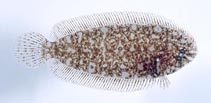 Aseraggodes cheni
Afbeelding van Senou, H.
Afbeeldingen | Google afbeelding
Afbeelding van Senou, H.
Classificatie / Namen Lokale namen | Synoniemen | Catalog of Fishes(Genus, Soort(en)) | ITIS | CoL | WoRMS | Cloffa
> Pleuronectiformes (Flatfishes) > Soleidae (Soles)
Etymology: Aseraggodes: Greek, aggos, -eos, -ous = vessel, uterus, carapace of a crab + Greek, aseros, -a, -on = to remove the appetite (Ref. 45335); cheni: Named for Dr. Jeng-Ping Chen of the National Museum of Marine Biology and Aquarium (southern Taiwan), who collected and photographed the holotype (Ref. 74405).
Eponymy: Dr Jen-Ping Chen is an ichthyologist who works at the National Taiwan University, Taipei, where he is a Full Professor and at the Institute of Zoology of Academia Sinica, National Museum of Marine Biology and Aquarium, Taiwan. [...] (Ref. 128868), visit book page.
More on authors: Randall & Senou.
Etymology: Aseraggodes: Greek, aggos, -eos, -ous = vessel, uterus, carapace of a crab + Greek, aseros, -a, -on = to remove the appetite (Ref. 45335); cheni: Named for Dr. Jeng-Ping Chen of the National Museum of Marine Biology and Aquarium (southern Taiwan), who collected and photographed the holotype (Ref. 74405).
Eponymy: Dr Jen-Ping Chen is an ichthyologist who works at the National Taiwan University, Taipei, where he is a Full Professor and at the Institute of Zoology of Academia Sinica, National Museum of Marine Biology and Aquarium, Taiwan. [...] (Ref. 128868), visit book page.
More on authors: Randall & Senou.
Milieu: milieu / Klimaatzone / Diepte / verspreidingsgebied Ecologie
marien rifbewoner; diepte 14 - 48 m (Ref. 74405). Subtropical
Verspreiding Gebieden | FAO regio's | Ecosystemen | Voorkomen | Verspreidingskaart | Introducties | Faunafri
Northwest Pacific: Taiwan and Japan
Grootte / Gewicht / Leeftijd
Korte beschrijving Determinatiesleutels | Morfologie | Morfometrie
Dorsale zachte stralen (totaal) : 68 - 75; Anale zachte stralen: 46 - 51. This species is distinguished by the following characters: D 68-75; A 46-51, all branched; 73-76 lateral-line scales; 36-38 vertebrae; dorsal pterygiophores anterior to 4th neural spine 13 or 14 (only 1 with 13); body depth 2.45-2.65 SL; head length 4.5-4.65 SL; caudal-peduncle length 7.7 8.2 in head length; snout length 2.4-2.65 in head length; preorbital length 2.4-2.5 in head length; eye diameter 4.65-5.25 in head length; interorbital space narrow, 11.1-14.4 in head length; tubular anterior nostril reaching edge of eye when depressed posteriorly; longest dorsal ray 1.6-1.9 in head length; caudal fin 3.15-3.55 SL; pelvic fins reaching or nearly reaching base of 4th anal ray, 1.65-1.75 in head length, 9-16 cteni on scales, not projecting very far beyond scale margins; front edge of snout and ventral edge of head with 2 rows of lappet-like cirri; color when fresh light brown with irregular white and dark brown markings, a few white ones forming broken circles, while dark brown ones may border or partly encircle the white; 2 prominent white bands on snout and 3 extending downward from lower eye; fin rays with small dark brown spots (Ref. 74405).
Body shape (shape guide): short and / or deep.
Body shape (shape guide): short and / or deep.
Levenscyclus en paargedrag Maturiteit | Voortplanting | Paaien | Eieren | Fecunditeit | Larven
Hoofdreferentie
Upload uw referenties | Referenties | Coördinator | Medewerkers
Randall, J.E. and H. Senou, 2007. Two new soles of the genus Aseraggodes (Pleuronectiformes: Soleidae) from Taiwan and Japan. Zool. Stud. 46(3):303-310. (Ref. 74405)
Status op de Rode Lijst van het IUCN (Ref. 130435: Version 2025-2 (Global))
Onvoldoende gegevens (DD) ; Date assessed: 28 July 2020
CITES
Not Evaluated
Gevaar voor de mens
Gebruik door de mens
FAO - Publication: search | FishSource |
Meer informatie
Trofische ecologie
Voedsel (prooien)
Dieetsamenstelling
Voedselconsumptie
Voedselrantsoenen
Predatoren
Voedsel (prooien)
Dieetsamenstelling
Voedselconsumptie
Voedselrantsoenen
Predatoren
Ecologie
Ecologie
Ecologie
Populatiedynamica
Groeiparameters
Max. leeftijden / maten
Lengte-gewicht rel.
Lengte-lengte rel.
Lengtefrequenties
Massaconversie
Rekrutering
Abundantie
Groeiparameters
Max. leeftijden / maten
Lengte-gewicht rel.
Lengte-lengte rel.
Lengtefrequenties
Massaconversie
Rekrutering
Abundantie
Levenscyclus
Voortplanting
Maturiteit
Rijpheid/kieuwen rel.
Fecunditeit
Paaien
Paaibestanden
Eieren
Ontwikkeling van de eieren
Larven
Larvale populatiedynamiek
Voortplanting
Maturiteit
Rijpheid/kieuwen rel.
Fecunditeit
Paaien
Paaibestanden
Eieren
Ontwikkeling van de eieren
Larven
Larvale populatiedynamiek
Anatomie
Kieuwoppervlak
Hersenen
Otoliet
Kieuwoppervlak
Hersenen
Otoliet
Fysiologie
Lichaamssamenstelling
Voedingsstoffen
Zuurstofverbruik
Type zwemmen
Zwemsnelheid
Visuele pigmenten
Vis geluid
Ziekten en parasieten
Toxiciteit (LC50)
Lichaamssamenstelling
Voedingsstoffen
Zuurstofverbruik
Type zwemmen
Zwemsnelheid
Visuele pigmenten
Vis geluid
Ziekten en parasieten
Toxiciteit (LC50)
Genetica
genoom
Genetica
Heterozygositeit
Erfelijkheid
Genetische diversiteit
genoom
Genetica
Heterozygositeit
Erfelijkheid
Genetische diversiteit
Menselijk gerelateerd
Aquacultuursystemen
Aquacultuurprofielen
Kweeklijnen
Ciguatera gevallen
Postzegels, munten, diversen.
Aquacultuursystemen
Aquacultuurprofielen
Kweeklijnen
Ciguatera gevallen
Postzegels, munten, diversen.
Tools
Speciale rapporten
Bekijk gegevens voor het houden in een aquarium | Bekijk Fact Sheets voor de soort | Bekijk Aquacultuur Fact Sheets
Download XML
Internetbronnen
AFORO (otoliths) | Aquatic Commons | BHL | Cloffa | Websites from users | Bekijk FishWatcher | CISTI | Catalog of Fishes: Genus, Soort(en) | DiscoverLife | ECOTOX | FAO - Publication: search | Faunafri | Fishipedia | Fishtrace | GloBI | Google Books | Google Scholar | Google | IGFA World Record | Nationale databanken | OneZoom | Open Tree of Life | Otolith Atlas of Taiwan Fishes | PubMed | Reef Life Survey | Socotra Atlas | TreeBase | Tree of Life | Wikipedia: ga naar, zoek | World Records Freshwater Fishing | Zoobank | Zoological Record
Schattingen op basis van modellen
Gewenste temperatuur (Ref. 123201): 19.3 - 26.5, mean 24.4 °C (based on 30 cells).
Fylogenetische diversiteitsindex (Ref. 82804): PD50 = 0.5000 [Uniqueness, from 0.5 = low to 2.0 = high].
Bayesian length-weight: a=0.00955 (0.00454 - 0.02011), b=3.07 (2.90 - 3.24), in cm total length, based on LWR estimates for this (Sub)family-body shape (Ref. 93245).
Trofisch niveau (Ref. 69278): 3.5 ±0.5 se; based on size and trophs of closest relatives
Weerstandsvermogen (Ref. 120179): Hoog, minimale populatieverdubbelingstijd minder dan 15 maanden (Preliminary K or Fecundity.).