



Cottus tallapoosae Neely, Williams & Mayden, 2007
Uploaden van uw Foto's en video's
Afbeeldingen | Google afbeelding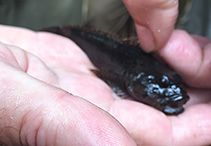 Cottus tallapoosae
Afbeelding van Drummond, J.
Afbeeldingen | Google afbeelding
Afbeelding van Drummond, J.
Classificatie / Namen Lokale namen | Synoniemen | Catalog of Fishes(Genus, Soort(en)) | ITIS | CoL | WoRMS | Cloffa
> Perciformes/Cottoidei (Sculpins) > Cottidae (Sculpins)
Etymology: Cottus: Greek, kottos = a fish (Ref. 45335); tallapoosae: The specific name is in reference to the Tallapoosa River, to which this species is endemic. Tallapoosa is an ancient Upper Creek American Indian settlement on the river; originally derived from the Choctaw 'pulverized rock'.
Etymology: Cottus: Greek, kottos = a fish (Ref. 45335); tallapoosae: The specific name is in reference to the Tallapoosa River, to which this species is endemic. Tallapoosa is an ancient Upper Creek American Indian settlement on the river; originally derived from the Choctaw 'pulverized rock'.
Milieu: milieu / Klimaatzone / Diepte / verspreidingsgebied Ecologie
; zoet water benthopelagisch. Subtropical
Verspreiding Gebieden | FAO regio's | Ecosystemen | Voorkomen | Verspreidingskaart | Introducties | Faunafri
North America: endemic to the Tallapoosa River drainage above the Fall Line in the east-central Alabama and west-central Georgia, USA.
Grootte / Gewicht / Leeftijd
Korte beschrijving Determinatiesleutels | Morfologie | Morfometrie
Dorsale stekels (totaal) : 6 - 8; Dorsale zachte stralen (totaal) : 14 - 18; Anale zachte stralen: 10 - 14; Wervels: 29 - 32. Diagnosed from all congeners except Cottus chattahoochee by the combination of the following characters: modally eight infraorbital canal pores; five bones in the suborbital series; reduced palatine teeth; a flexible spine and four rays in the pelvic fin; preoperculomandibular canals not fused at anterior rami of mandibles, with two pores at tip of chin; pectoral rays simple; preopercular armature well-developed with two or three spines; chin not mottled; and dorsal fins separate. Differs from Cottus chattahoochee by having the following features: usually incomplete lateral line (vs. complete); dermal prickling reduced or absent, when present generally restricted to a few scattered prickles in area along anterior part of lateral line (vs. a robust postpectoral patch in addition to prickles along the anterior lateral line); and narrow to moderately wide saddles (vs. moderate or wide) (Ref. 72414).
Inhabits clean gravel or rocky bottomed streams with moderate to swift current. Frequently found in streams 3-15 m wide and at depths of 0.5-0.7 m (Ref. 72414). Feeds on anything alive which fits into its mouth (Ref. 72414).
Levenscyclus en paargedrag Maturiteit | Voortplanting | Paaien | Eieren | Fecunditeit | Larven
Hoofdreferentie
Upload uw referenties | Referenties | Coördinator | Medewerkers
Neely, D.A., J.D. Williams and R.L. Mayden, 2007. Two new sculpins of the genus Cottus (Teleostei: Cottidae) from rivers of the eastern north America. Copeia 2007(3):641-655. (Ref. 72414)
Status op de Rode Lijst van het IUCN (Ref. 130435: Version 2025-2 (Global))
Niet bedreigd (LC) ; Date assessed: 11 November 2011
CITES
Not Evaluated
Gevaar voor de mens
Harmless
Gebruik door de mens
Visserij: van geen belang
FAO - Publication: search | FishSource |
Meer informatie
Trofische ecologie
Voedsel (prooien)
Dieetsamenstelling
Voedselconsumptie
Voedselrantsoenen
Predatoren
Voedsel (prooien)
Dieetsamenstelling
Voedselconsumptie
Voedselrantsoenen
Predatoren
Ecologie
Ecologie
Ecologie
Populatiedynamica
Groeiparameters
Max. leeftijden / maten
Lengte-gewicht rel.
Lengte-lengte rel.
Lengtefrequenties
Massaconversie
Rekrutering
Abundantie
Groeiparameters
Max. leeftijden / maten
Lengte-gewicht rel.
Lengte-lengte rel.
Lengtefrequenties
Massaconversie
Rekrutering
Abundantie
Levenscyclus
Voortplanting
Maturiteit
Rijpheid/kieuwen rel.
Fecunditeit
Paaien
Paaibestanden
Eieren
Ontwikkeling van de eieren
Larven
Larvale populatiedynamiek
Voortplanting
Maturiteit
Rijpheid/kieuwen rel.
Fecunditeit
Paaien
Paaibestanden
Eieren
Ontwikkeling van de eieren
Larven
Larvale populatiedynamiek
Anatomie
Kieuwoppervlak
Hersenen
Otoliet
Kieuwoppervlak
Hersenen
Otoliet
Fysiologie
Lichaamssamenstelling
Voedingsstoffen
Zuurstofverbruik
Type zwemmen
Zwemsnelheid
Visuele pigmenten
Vis geluid
Ziekten en parasieten
Toxiciteit (LC50)
Lichaamssamenstelling
Voedingsstoffen
Zuurstofverbruik
Type zwemmen
Zwemsnelheid
Visuele pigmenten
Vis geluid
Ziekten en parasieten
Toxiciteit (LC50)
Genetica
genoom
Genetica
Heterozygositeit
Erfelijkheid
Genetische diversiteit
genoom
Genetica
Heterozygositeit
Erfelijkheid
Genetische diversiteit
Menselijk gerelateerd
Aquacultuursystemen
Aquacultuurprofielen
Kweeklijnen
Ciguatera gevallen
Postzegels, munten, diversen.
Aquacultuursystemen
Aquacultuurprofielen
Kweeklijnen
Ciguatera gevallen
Postzegels, munten, diversen.
Tools
Speciale rapporten
Bekijk gegevens voor het houden in een aquarium | Bekijk Fact Sheets voor de soort | Bekijk Aquacultuur Fact Sheets
Download XML
Internetbronnen
AFORO (otoliths) | Aquatic Commons | BHL | Cloffa | Websites from users | Bekijk FishWatcher | CISTI | Catalog of Fishes: Genus, Soort(en) | DiscoverLife | ECOTOX | FAO - Publication: search | Faunafri | Fishipedia | Fishtrace | GloBI | Google Books | Google Scholar | Google | IGFA World Record | OneZoom | Open Tree of Life | Otolith Atlas of Taiwan Fishes | PubMed | Reef Life Survey | Socotra Atlas | TreeBase | Tree of Life | Wikipedia: ga naar, zoek | World Records Freshwater Fishing | Zoobank | Zoological Record
Schattingen op basis van modellen
Fylogenetische diversiteitsindex (Ref. 82804): PD50 = 0.5000 [Uniqueness, from 0.5 = low to 2.0 = high].
Bayesian length-weight: a=0.00832 (0.00345 - 0.02005), b=3.16 (2.98 - 3.34), in cm total length, based on LWR estimates for this Genus-body shape (Ref. 93245).
Trofisch niveau (Ref. 69278): 3.3 ±0.4 se; based on size and trophs of closest relatives
Weerstandsvermogen (Ref. 120179): Gemiddeld, minimale populatieverdubbelingstijd 1,4-4,4 jaar (Preliminary K or Fecundity.).