This website uses cookies to enhance your browsing experience and ensure the functionality of our site. For more detailed information about the types of cookies we use and how we protect your privacy, please visit our Privacy Information page.
×
Cookie Settings
This website uses different types of cookies to enhance your experience. Please select your preferences below:
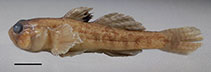
Knipowitschia montenegrina Male
Foto de
Kovacic, M.
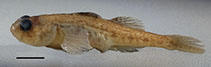
Knipowitschia montenegrina Female
Foto de
Kovacic, M.
Clasificación / Nombres Nombres comunes | Sinónimos | Catalog of Fishes(Género, Especie) | ITIS | CoL | WoRMS | Cloffa
> Gobiiformes (Gobies) > Gobiidae (Gobies) > Gobionellinae
Etymology: Knipowitschia:Because of N.M.Knipowitsch, a zoologist and Russian ichthyologist from the Academy of Sciences. Expeditions in "Pomor" and "Pervosvanniy" ships to Azov and Black sea (1898-1908); montenegrina:The specific epithet is derived from that of Montenegro, where the type material was collected. Eponymy: Nikolai Mikhailovich Knipovich (also given as Knipowitsch) (1862–1939) was a Russian oceanographer, marine zoologist and ichthyologist. [...] (Ref. 128868), visit book page.
Entorno: milieu / zona climática / rango de profundidad / gama de distribución Ecología
Madurez: Lm? range ? - ? cm Max length : 2.8 cm SL macho / no sexado; (Ref. 75974)
Descripción breve Claves de identificación | Morfología | Morfometría
Espinas dorsales (total) : 7; Radios blandos dorsales (total) : 7 - 8; Espinas anales: 1; Radios blandos anales: 6 - 7. Distinguished from all congeners, except Knipowitschia croatica, Knipowitschia ephesi and Knipowitschia punctatissima, by the body squamation reduced to axillary patch and head canals absent. Can be differentiated from Knipowitschia punctatissima, Knipowitschia ephesi and Knipowitschia croatica by the following combination of characters: D1 VI; P extends back approximately to below posterior end of D1; pelvic disc with midline depth of anterior membrane 1/3-1/2 length of pelvic spinous ray; neuromast suborbital row a reaching anteriorly at maximum to below middle of eye; suborbital row b reaching anteriorly at maximum to below rear border of eye; single suborbital transverse row cp situated below beginning of row b; anterior dorsal row g shorter than distance between row g and n; and preorbital row s ending anteriorly in front of anterior end of row r p not clearly separated (Ref. 75974).
Body shape (shape guide): fusiform / normal.
Occurs in river shallows with slow current and in pools remaining in gravel pits after river flooding. The substrate consists of gravel, covered with fine sediment and overgrown by dense filamentous algae (Ref. 75974).
Ciclo vital y comportamiento de apareamiento Madurez | Reproducción | Puesta | Huevos | Fecundidad | Larva
Kovačić, M. and R. Sanda, 2007. A new species of Knipowitschia (Perciformes: Gobiidae) from southern Montenegro. J. Natl. Mus. (Prague), Nat. Hist. Ser. 176(5):81-89. (Ref. 75974)
Situación en la Lista Roja de la UICN (Ref. 130435: Version 2025-2 (Global))
Ecología Trófica Alimentos (presas) Composición de la dieta consumo de alimento Raciones de comida Despredadores
Ecología Ecología
Dinámica de la población Coeficiente del crecimiento para Edades / tallas máximas Longitud-peso rel. Longitud-longitud rel. Longitud-frecuencias Conversión de masas Reclutamiento Abundancia
Ciclo de vida Reproducción Madurez Madurez/Gills rel. Fecundidad Puesta Agregaciones de desove Huevos Desarrollo de los huevos Larva Dinámica larvaria
Fisiología Composición corporal Nutrientes Consumo del oxígeno Tipo de natación Velocidad de natación Pigmentos visuales Sonido de peces Enfermedades y parásitos Toxicidad (CL50)
Índice de diversidad filogenética (Referencia 82804): PD50 = 0.5000 [Uniqueness, from 0.5 = low to 2.0 = high].
Bayesian length-weight: a=0.01023 (0.00452 - 0.02316), b=3.00 (2.81 - 3.19), in cm total length, based on LWR estimates for this (Sub)family-body shape (Ref. 93245).
Nivel trófico (Referencia 69278): 3.2 ±0.4 se; based on size and trophs of closest relatives
Resiliencia (Referencia 120179): Alto, población duplicada en un tiempo mínimo inferior a 15 meses (Preliminary K or Fecundity.).
Vulnerabilidad pesquera (Ref. 59153): Low vulnerability (10 of 100). 🛈