



Ανεβάστε το φωτογραφίες και Βίντεο
Φωτογραφίες | Google image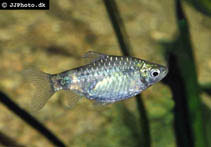 Pethia erythromycter
Εικόνα από JJPhoto
Φωτογραφίες | Google image
Εικόνα από JJPhoto
Ταξινόμηση / Ονόματα Κοινά ονόματα | Συνώνυμα | Catalog of Fishes(Γένος, Είδη) | ITIS | CoL | WoRMS | Cloffa
> Cypriniformes (Carps) > Cyprinidae (Minnows or carps) > Smiliogastrinae
Etymology: Pethia: Pethia is the generic vernacular name for small cyprinids in Sinhala; erythromycter: Derived from the Greek erythros (red), and mykter (nose), in reference to the red snout in males.
More on author: Kullander.
Etymology: Pethia: Pethia is the generic vernacular name for small cyprinids in Sinhala; erythromycter: Derived from the Greek erythros (red), and mykter (nose), in reference to the red snout in males.
More on author: Kullander.
Περιβάλλον: περιβάλλον / κλιματική ζώνη / εύρος βάθους / εύρος διανομής Οικολογία
; Γλυκού νερού βενθοπελαγικό. Tropical
Κατανομή Εδάφη | Περιοχές FAO | Οικοσυστήματα | Παρουσίες | Σημειακός χάρτης | Εισαγωγές | Faunafri
Asia: Myanmar in most of the smaller water bodies near Myitkyina and in Lake Indawgyi.
Μέγεθος / Βάρος / Ηλικία
Σύντομη περιγραφή Κλείδες προσδιορισμού | Μορφολογία | Μορφομετρία
Μαλακές ραχιαίες ακτίνες (συνολικά) : 11 - 12; Μαλακές εδρικές ακτίνες: 8. Belongs to the Puntius conchoniusspecies group, similar to Puntius yuensis, Puntius ornatus, and Puntius nankyweensis by having dark band encircling caudal peduncle well posterior to base of anal fin, the absence of humeral mark, and in
Puntius nankyweensis, 10 (rarely 11) circumpeduncular scales. Differs from
Puntius nankyweensis by the absence of barbels (vs. presence of maxillary barbels),
transverse scale count ½4/1/3½ (vs. ½3/1/4½), scales in lateral row 18-20 (vs. 20-23), lateral scale row running curved (vs. straight) from head to caudal fin, caudal peduncle blotch positioned on scales 16-17 or 16-18 (vs. 18-20 or 19-20), and longer anal fin (17.1-22.0 vs. 12.1-16.4 % of SL). Can be differentiated from Puntius yuensis by smaller size (largest known specimen 33.1 mm SL vs. 55 mm SL), fewer scales in lateral row (18-20 vs. 21-22), and caudal peduncle blotch on scales 16-17 or 16-18 (vs. 19-20); and from Puntius ornatus by smaller size (largest known specimen 33.1 mm SL vs. 42 mm SL), less scales in lateral row (18-20 vs. 21-22), deeper body (41.2-46.0 % SL vs. 35.9 -38.7 % SL), 10-11 vs. 12 circumpeduncular scales, and caudal peduncle blotch on scales 16-17 or 16-18 (vs. 18-19 or 19-20) (Ref. 75627).
Body shape (shape guide): short and / or deep.
Body shape (shape guide): short and / or deep.
Κύκλος ζωής και συμπεριφορά ζευγαρώματος Γεννητική Ωρίμανση | Αναπαραγωγή | Γεννοβολία | Αβγά | Γονιμότητα | Προνύμφες
Κύρια αναφορά
Ανεβάστε τις αναφορές σας | Αναφορές | Συντονιστής | Συνεργάτες
Pethiyagoda, R., M. Meegaskumbura and K. Maduwage, 2012. A synopsis of the South Asian fishes referred to Puntius (Pisces: Cyprinidae). Ichthyol. Explor. Freshwat. 23(1):69-95. (Ref. 91036)
Κατάσταση Κόκκινου Καταλόγου IUCN (Ref. 130435: Version 2025-2 (Global))
Least Concern (LC) ; Date assessed: 26 March 2010
CITES
Not Evaluated
Απειλή για τον άνθρωπο
Harmless
Ανθρώπινες χρήσεις
FAO - Publication: search | FishSource |
Περισσότερες πληροφορίες
Τροφική Οικολογία
Τρόφιμα (θηράματα)
Σύσταση δίαιτας
Κατανάλωση τροφής
Μερίδες τροφίμων
Θηρευτές
Τρόφιμα (θηράματα)
Σύσταση δίαιτας
Κατανάλωση τροφής
Μερίδες τροφίμων
Θηρευτές
Οικολογία
Οικολογία
Οικολογία
Πληθυσμιακή δυναμική
Παράμετροι Αύξησης
Μέγιστες ηλικίες / μεγέθη
Μήκος-βάρος σχετ.
Μήκος-μήκος rel.
Μήκος-συχνότητες
Μετατροπή μάζας
Στρατολόγηση
Αφθονία
Παράμετροι Αύξησης
Μέγιστες ηλικίες / μεγέθη
Μήκος-βάρος σχετ.
Μήκος-μήκος rel.
Μήκος-συχνότητες
Μετατροπή μάζας
Στρατολόγηση
Αφθονία
Κύκλος ζωής
Αναπαραγωγή
Γεννητική Ωρίμανση
Ωριμότητα / Gills rel.
Γονιμότητα
Γεννοβολία
Συγκεντρώσεις αναπαραγωγής
Αβγά
Ανάπτυξη αυγών
Προνύμφες
Δυναμική προνυμφών
Αναπαραγωγή
Γεννητική Ωρίμανση
Ωριμότητα / Gills rel.
Γονιμότητα
Γεννοβολία
Συγκεντρώσεις αναπαραγωγής
Αβγά
Ανάπτυξη αυγών
Προνύμφες
Δυναμική προνυμφών
Ανατομία
Επιφάνεια βραγχίων
Εγκέφαλος
Ωτόλιθος
Επιφάνεια βραγχίων
Εγκέφαλος
Ωτόλιθος
Φυσιολογία
Σύνθεση σώματος
Θρεπτικά συστατικά
Κατανάλωση οξυγόνου
Τύπος κολύμβησης
Ταχύτητα κολύμβησης
Οπτικές χρωστικές ουσίες
Ήχος ψαριών
Ασθένειες & παράσιτα
Τοξικότητα (LC50)
Σύνθεση σώματος
Θρεπτικά συστατικά
Κατανάλωση οξυγόνου
Τύπος κολύμβησης
Ταχύτητα κολύμβησης
Οπτικές χρωστικές ουσίες
Ήχος ψαριών
Ασθένειες & παράσιτα
Τοξικότητα (LC50)
Γενετική
Γονιδίωμα
Γενετική
Ετεροζυγωτία
Κληρονομικότητα
Γενετική ποικιλομορφία
Γονιδίωμα
Γενετική
Ετεροζυγωτία
Κληρονομικότητα
Γενετική ποικιλομορφία
Ανθρώπινη σχέση
Συστήματα υδατοκαλλιέργειας
Προφίλ υδατοκαλλιεργειών
Στελέχοι
Περιπτώσεις Ciguatera
Γραμματόσημα, νομίσματα, διάφορα.
Συστήματα υδατοκαλλιέργειας
Προφίλ υδατοκαλλιεργειών
Στελέχοι
Περιπτώσεις Ciguatera
Γραμματόσημα, νομίσματα, διάφορα.
Εργαλεία
Ηλεκτρονικό βιβλίο | Οδηγός πεδίου | Ανάλυση κατά μήκος συνθέσεων | Εργαλείο ιστορίας ζωής | Σημειακός χάρτης |
Catch-MSY |
Ειδικές εκθέσεις
Έλεγχος για συντήρηση ενυδρείου | Ελέγξτε για ενημερωτικά δελτία ειδών | Ελέγξτε για ενημερωτικά δελτία υδατοκαλλιέργειας
Λήψη XML
Διαδικτυακές πηγές
AFORO (otoliths) | Aquatic Commons | BHL | Cloffa | Websites from users | Check FishWatcher | CISTI | Catalog of Fishes: Γένος, Είδη | DiscoverLife | ECOTOX | FAO - Publication: search | Faunafri | Fishipedia | Fishtrace | GloBI | Google Books | Google Scholar | Google | IGFA World Record | OneZoom | Open Tree of Life | Otolith Atlas of Taiwan Fishes | PubMed | Reef Life Survey | Socotra Atlas | TreeBase | Δέντρο Ζωής | Wikipedia: Go, αναζήτηση | World Records Freshwater Fishing | Zoological Record
Εκτιμήσεις βάσει μοντέλων
Δείκτης φυλογενετικής ποικιλότητας (Αναφ. 82804): PD50 = 0.5000 [Uniqueness, from 0.5 = low to 2.0 = high].
Bayesian length-weight: a=0.01622 (0.00606 - 0.04338), b=2.94 (2.71 - 3.17), in cm total length, based on LWR estimates for this (Sub)family-body shape (Ref. 93245).
Τροφικό Επίπεδο (Αναφ. 69278): 2.8 ±0.2 se; based on size and trophs of closest relatives
Ελαστικότητα (Αναφ. 120179): Υψηλό, ελάχιστος χρόνος για διπλασιασμό πληθυσμού < 15 μήνες (Preliminary K or Fecundity.).