



Cathorops manglarensis Marceniuk, 2007
อัพโหลดของคุณ ภาพถ่าย และ วิดีโอ
Google image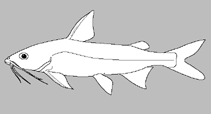 No image available for this species;
drawing shows typical species in Ariidae.
Google image
drawing shows typical species in Ariidae.
การจำแนกประเภท / ชื่อ ชื่อสามัญ | ชื่อพ้อง | Catalog of Fishes(สกุล, ชนิด) | ITIS | CoL | WoRMS | Cloffa
> Siluriformes (Catfishes) > Ariidae (Sea catfishes) > Ariinae
Etymology: Cathorops: Greek, kathorao = to observe, to watch + Greek, ops = appearance (Ref. 45335); manglarensis: The specific epithet manglarensis makes reference to type-locality and life habit of the species, common in mangrove regions and estuaries from the Colombian Pacific (Ref. 58753).
Etymology: Cathorops: Greek, kathorao = to observe, to watch + Greek, ops = appearance (Ref. 45335); manglarensis: The specific epithet manglarensis makes reference to type-locality and life habit of the species, common in mangrove regions and estuaries from the Colombian Pacific (Ref. 58753).
สิ่งแวดล้อม : สิ่งแวดล้อม / เขตภูมิอากาศ / ระดับความลึก / ระยะการกระจายสินค้า นิเวศวิทยา
; น้ำจืด; กร่อย กลุ่มสัตว์หน้าดิน,กลุ่มสัตว์พื้นท้องน้ำ. Tropical
การแพร่กระจาย อาณาเขต | พื้นที่จำแนกตาม FAO | ระบบนิเวศหลายระบบ | การปรากฏขึ้น,การเกิดขึ้น,พบ | ตำแหน่งบนแผนที่ | การแนะนำ | Faunafri
South America: Colombia.
ขนาด / น้ำหนัก / อายุ
วัยเจริญพันธุ์: Lm ? range ? - ? cm
Max length : 19.5 cm SL เพศผู้/กระเทย; (Ref. 58753); 19.5 cm SL (female)
Max length : 19.5 cm SL เพศผู้/กระเทย; (Ref. 58753); 19.5 cm SL (female)
คำอธิบายสั้นๆ เครื่องมือที่ใช้ในการแยกชนิดสัตว์,สิ่งมีชีวิตออกจากกัน | สัณฐานวิทยา | ความยาวต่างๆ
Cathorops manglarensis is distinguished from all congeners through the following combination of characters: 13-16 gill rakers on first arch; 24-27 anal fin rays; dorsal fin spine shorter than pectoral fin spine; posterior margin of pectoral fin spine with shorter serrations. This species can be further distinguished from each of the other species from the Pacific coast of Central and South America by additional characters. Cathorops manglarensis is distinguished from C. dasycephalus in lacking vomerine tooth plates (vs. vomerine tooth plates present) and an osseous bridge formed by the lateral ethmoid and frontal without granulation (vs. granulated along its entire extension). It differs from C. fuerthii by having a median groove of neurocranium deep and large, with lateral margins regular and progressively narrower posteriorly (vs. median groove narrow and shallow, with irregular margins along its entire extension), anterior nostrils closer to each other (3.6-4.8 vs. 4.9-6.0% SL), longer external mental barbel (19.7-24.4 vs. 15.9–19.7% SL), longer internal mental barbel (12.5–17.9 vs. 10.3–12.9% SL), and longer
anal fin base (21.0–24.5 vs. 17.8–19.4% SL). It differs from C. hypophthalmus in possessing a shorter distance between anterior nostrils (3.6–4.8 vs. 6.9–7.1% SL) and between posterior nostrils (5.2–7.1 vs. 8.2–8.5% SL), larger orbital diameter (3.7–4.8 vs. 3.0–3.5% SL), narrower mouth (8.8–10.5 vs. 13.1–13.2% SL) and with shorter external mental barbel (19.7–24.4 vs. 34.5–38.1% SL), internal mental barbel (12.5–17.9 vs.
26.1–31.2% SL), and dorsal fin spine (16.9–19.2 vs. 25.0–25.2% SL). Cathorops manglarensis differs from C. multiradiatus in possessing a longer maxillary barbel (28.4–38.2 vs. 22.9–27.7% SL) and pectoral fin spine (18.5–22.5 vs. 16.9–18.7% SL), and longer and wider accessory tooth plates with large and numerous molariform teeth (vs. shorter and narrow accessory tooth plates with small and few molariform teeth). Cathorops manglarensis differs from C. tuyra in possessing a longer internal mental barbel (12.5–17.9 vs. 8.20–12.4% SL) and pectoral fin spine (18.5–22.5 vs. 16.9–18.7% SL), shorter nuchal plate (5.0–6.8 vs. 6.8–7.5% SL), longer anal fin base (21.0–24.5 vs. 13.9–18.3% SL), deeper caudal peduncle (7.8–8.9 vs. 5.8–7.8% SL), and accessory tooth plates and dentary with moderately large molariform teeth (vs. accessory
tooth plates and dentary with very large molariform teeth) (Ref. 58753).
วงจรชีวิตและพฤติกรรมการผสมพันธุ์ วัยเจริญพันธุ์ | การสืบพันธุ์ | การวางไข่ | เซลสืบพันธ์ของเพศเมีย(ไข่) | ความดกของไข่ | ตัวอ่อน
อ้างอิงหลัก
อัพโหลดข้อมูลอ้างอิงของคุณ | อ้างอิง | ผู้ประสานงาน : Ferraris, Jr., Carl J. | ผู้ร่วมมือ
Marceniuk, A.P., 2007. Description of Cathorops manglarensis, a new species from the Colombian Pacific, with redescription of Cathorops multiradiatus (Siluriformes; Ariidae). Zootaxa 1529:33-48. (Ref. 58753)
CITES
Not Evaluated
ภัยคุกคามต่อมนุษย์
Traumatogenic (Ref. 58010)
การใช้ของมนุษย์
การประมง: การค้า
FAO - Publication: search | FishSource |
ข้อมูลเพิ่มเติม
นิเวศวิทยาเขตร้อน
รายการอาหาร (เหยื่อ)
องค์ประอบของอาหาร
การบริโภคอาหาร
การจัดสรรอาหาร
ผู้ล่า
รายการอาหาร (เหยื่อ)
องค์ประอบของอาหาร
การบริโภคอาหาร
การจัดสรรอาหาร
ผู้ล่า
นิเวศวิทยา
นิเวศวิทยา
นิเวศวิทยา
พลวัตของประชากร
พารามิเตอร์การเจริญเติบโต
อายุสูงสุด / ขนาด
ความยาว-น้ำหนักสัมพันธ์
ความยาว-ความยาวสัมพันธ์
ความยาว-ความถี่
การแปลงมวล
การทดแทนที่
อุดมสมบรูณ์
พารามิเตอร์การเจริญเติบโต
อายุสูงสุด / ขนาด
ความยาว-น้ำหนักสัมพันธ์
ความยาว-ความยาวสัมพันธ์
ความยาว-ความถี่
การแปลงมวล
การทดแทนที่
อุดมสมบรูณ์
วงจรชีวิต
การสืบพันธุ์
วัยเจริญพันธุ์
ความสมบูรณ์พันธุ์/เหงือกที่เกี่ยวข้อง
ความดกของไข่
การวางไข่
การรวมตัวของสปอน
เซลสืบพันธ์ของเพศเมีย(ไข่)
การพัฒนาไข่
ตัวอ่อน
พลวัตของสัตว์น้ำวัยอ่อน
การสืบพันธุ์
วัยเจริญพันธุ์
ความสมบูรณ์พันธุ์/เหงือกที่เกี่ยวข้อง
ความดกของไข่
การวางไข่
การรวมตัวของสปอน
เซลสืบพันธ์ของเพศเมีย(ไข่)
การพัฒนาไข่
ตัวอ่อน
พลวัตของสัตว์น้ำวัยอ่อน
การแพร่กระจาย
อาณาเขต
พื้นที่จำแนกตาม FAO
ระบบนิเวศหลายระบบ
การปรากฏขึ้น,การเกิดขึ้น,พบ
การแนะนำ
BRUVS - วิดีโอ
อาณาเขต
พื้นที่จำแนกตาม FAO
ระบบนิเวศหลายระบบ
การปรากฏขึ้น,การเกิดขึ้น,พบ
การแนะนำ
BRUVS - วิดีโอ
กายวิภาคศาสตร์
พื้นที่เหงือก
สมอง
หินโสต
พื้นที่เหงือก
สมอง
หินโสต
สรีรวิทยา
องค์ประกอบของร่างกาย
สารอาหาร
การใช้ออกซิเจน
ประเภทการว่ายน้ำ
ระดับความเร็วในการว่ายน้ำ
เม็ดสีที่มองเห็นได้
เสียงปลา
โรคและปรสิต
ความเป็นพิษ (LC50s)
องค์ประกอบของร่างกาย
สารอาหาร
การใช้ออกซิเจน
ประเภทการว่ายน้ำ
ระดับความเร็วในการว่ายน้ำ
เม็ดสีที่มองเห็นได้
เสียงปลา
โรคและปรสิต
ความเป็นพิษ (LC50s)
พันธุศาสตร์
จีโนม
พันธุศาสตร์
ความไม่สมดุลทางเชื้อชาติ
อัตราพันธุกรรม
ความหลากหลายทางพันธุกรรม
จีโนม
พันธุศาสตร์
ความไม่สมดุลทางเชื้อชาติ
อัตราพันธุกรรม
ความหลากหลายทางพันธุกรรม
เกี่ยวข้องกับมนุษย์
ระบบการเพาะเลี้ยงสัตว์น้ำ
ประวัติการเพาะเลี้ยงสัตว์น้ำ
สายพันธุ์
กรณีซิเกวเทอรา
แสตมป์ เหรียญ อื่นๆ
ระบบการเพาะเลี้ยงสัตว์น้ำ
ประวัติการเพาะเลี้ยงสัตว์น้ำ
สายพันธุ์
กรณีซิเกวเทอรา
แสตมป์ เหรียญ อื่นๆ
เครื่องมือ
หนังสืออิเล็กทรอนิกส์ | คู่มือภาคสนาม | ผู้มีความชำนาญในเรื่องความถี่ของความยาว | เครื่องมือในการศึกษาชีวประวัติ | ตำแหน่งบนแผนที่ |
จับ-MSY |
รายงานพิเศษ
ตรวจสอบการบำรุงรักษาตู้ปลา | ตรวจสอบเอกสารข้อเท็จจริงเกี่ยวกับสายพันธุ์ | ตรวจสอบเอกสารข้อเท็จจริงเกี่ยวกับการเพาะเลี้ยงสัตว์น้ำ
ดาวน์โหลด XML
หน้าสรุป | ข้อมูลสำคัญ | ชื่อสามัญ | ภาพถ่าย
แหล่งที่มาจากอินเตอร์เน็ต
AFORO (otoliths) | Aquatic Commons | BHL | Cloffa | Websites from users | Check FishWatcher | CISTI | Catalog of Fishes: สกุล, ชนิด | DiscoverLife | ECOTOX | FAO - Publication: search | Faunafri | Fishipedia | Fishtrace | GloBI | Google Books | Google Scholar | Google | IGFA World Record | OneZoom | Open Tree of Life | Otolith Atlas of Taiwan Fishes | PubMed | Reef Life Survey | Socotra Atlas | TreeBase | แผนภูมิชีวิตแบบต้นไม้ | Wikipedia: Go, ค้นหา | World Records Freshwater Fishing | Zoobank | บันทึกทางด้านสัตววิทยา
การประมาณค่าตามแบบจำลอง
ดัชนีความหลากหลายทางวิวัฒนาการ (อ้างอิง 82804): PD50 = 0.5000 [Uniqueness, from 0.5 = low to 2.0 = high].
Bayesian length-weight: a=0.00468 (0.00245 - 0.00892), b=3.13 (2.96 - 3.30), in cm total length, based on LWR estimates for this (Sub)family-body shape (Ref. 93245).
ระดับชั้นอาหาร (อ้างอิง 69278): 4.2 ±0.8 se; based on size and trophs of closest relatives