



Trimma flavatrum Hagiwara & Winterbottom, 2007
Wasp pygmygoby
إضافة ملاحظاتك Fish Watcher
| Native range | All suitable habitat | Point map | Year 2050 |

|
| This map was computer-generated and has not yet been reviewed. |
| Trimma flavatrum AquaMaps Data sources: GBIF OBIS |
ارفع صور و مقاطع فيديو
صور | مقاطع فيديو | صور قوقل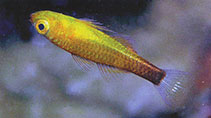 Trimma flavatrum
صورة بواسطة Allen, G.R.
صور | مقاطع فيديو | صور قوقل
صورة بواسطة Allen, G.R.
التصنيف / الأسماء الأسماء الشائعة | مرادفات | Catalog of Fishes(جنس, الانواع) | ITIS | CoL | WoRMS | Cloffa
> Gobiiformes (Gobies) > Gobiidae (Gobies) > Gobiinae
Etymology: Trimma: Greek, trimma, -atos = something crushed (Ref. 45335); flavatrum: Name from Latin 'flavus' meaning yellow and 'atrum' for black, referring to the unusual yellow and black coloration of the new species.
More on authors: Hagiwara & Winterbottom.
Etymology: Trimma: Greek, trimma, -atos = something crushed (Ref. 45335); flavatrum: Name from Latin 'flavus' meaning yellow and 'atrum' for black, referring to the unusual yellow and black coloration of the new species.
More on authors: Hagiwara & Winterbottom.
البيئة: الوسط / المنطقة المناخية / نطاق العمق / نطاق التوزيع البيئة
بحري قاعية التغذية و المعيشة; نطاق العمق 10 - 30 m (Ref. 90102). Subtropical
التوزيع الأقاليم | مناطق الفاو | النظام البيئي | الظهور | نقطة علي الخريطة | مقدمة | Faunafri
Western Pacific. Japan to Australia.
الحجم / وزن / العمر
وصف مختصر مفاتيح التعريف | الوصف الخارجي | قياسات المظهر الخارجي
الأشواك الظهرية (المجموع) : 7; الأشعة الظهرية الناعمة (المجموع) : 7 - 8; شوكة شرجية: 1; أشعه شرجية لينه: 7 - 8. This species is characterized by the following: presence of scales in the predorsal midline and on the cheek and opercle; no elongate dorsal spines; a broad and somewhat concave interorbital region with a bony interorbital equal to about half or more of the width of the pupil with no raised, longitudinal, fleshy ridge in the midline; no postorbital trench; fifth pelvic fin ray usually unbranched (may be branched once sequentially); preserved specimens with a dusky body with densely scattered melanophores and chromatophores, the shade intensifying posteriorly to almost black in the peduncular region; body of alive or freshly collected specimens have yellow to dirty yellow-orange with scattered melanophores intensifying to a blackish or dark brown caudal peduncle, with median fins reddish-orange to yellow with a dark basal stripe, except for the caudal fin, which varies from almost translucent to yellow with whitish margins (Ref. 58123); characterized further by having longitudinal scale series 22-26; predorsal scales 7-8; depth of body about 4.4-4.6 in SL (Ref. 90102).
Body shape (shape guide): fusiform / normal; Cross section: compressed.
Body shape (shape guide): fusiform / normal; Cross section: compressed.
This species forms small schools which are sometimes mixed with T. tevegae. The fishes hover in caves, recesses or under the overhangs of coral reefs. When hovering, the ventral side faces the nearest substrate surface (e.g. the wall or roof of a cave) the same as with T. tevegae. However, T. flavatrum tends to be found more towards the back of the caves and recesses (Ref. 58123).
دورة الحياة وسلوك التزاوج النضج | التكاثر | وضع البيض | بيض | الخصوبة | اليرقات
المرجع الرئيسي
قم بتحميل مراجعك | مراجع | المنظم | المتعاونين
Hagiwara, K. and R. Winterbottom, 2007. Two new species of Trimma (Gobiidae) from the Western Pacific. Bull. Natl. Mus. Nat. Sci., Ser. A, Suppl. 1:163-174. (Ref. 58123)
حالة القائمة الحمراء للاتحاد الدولي لحفظ الطبيعة والموارد الطبيعية (Ref. 130435: Version 2025-2 (Global))
Least Concern (LC) ; Date assessed: 11 March 2015
CITES
Not Evaluated
خطر للأنسان
Harmless
استخدامات بشرية
مصائد: غير ذات اهمية
FAO - Publication: search | FishSource |
مزيد من المعلومات
علم البيئة الغذائية
المواد الغذائية (الفرائس)
التركيبة الغذائية
استهلاك الأغذية
الحصص الغذائية
مفتريسات
المواد الغذائية (الفرائس)
التركيبة الغذائية
استهلاك الأغذية
الحصص الغذائية
مفتريسات
الديناميكيات السكانية
معاملات النمو
الحد الأقصى للأعمار/الأحجام
علاقة الطول بالوزن.
علاقة الطول بالطول.
الطول- الترددات
التحويل الجماعي
توظيف
الوفرة
معاملات النمو
الحد الأقصى للأعمار/الأحجام
علاقة الطول بالوزن.
علاقة الطول بالطول.
الطول- الترددات
التحويل الجماعي
توظيف
الوفرة
دورة الحياة
التكاثر
النضج
النضج/الخياشيم المتعلقة.
الخصوبة
وضع البيض
تجمعات التفريخ
بيض
تطور البيضة
اليرقات
حركة انتقال اليرقات
التكاثر
النضج
النضج/الخياشيم المتعلقة.
الخصوبة
وضع البيض
تجمعات التفريخ
بيض
تطور البيضة
اليرقات
حركة انتقال اليرقات
التشريح
منطقة الخياشيم
الدماغ
الأوتوليث
منطقة الخياشيم
الدماغ
الأوتوليث
علم وظائف الأعضاء
تكوين الجسم
المغذيات
استهلاك الأوكسجين
نوع السباحة
سرعة السباحة
الأصباغ البصرية
صوت السمك
الأمراض والطفيليات
السمية (LC50s)
تكوين الجسم
المغذيات
استهلاك الأوكسجين
نوع السباحة
سرعة السباحة
الأصباغ البصرية
صوت السمك
الأمراض والطفيليات
السمية (LC50s)
جيني
الوراثة
جيني
التغاير
التوريث
التنوع الوراثي
الوراثة
جيني
التغاير
التوريث
التنوع الوراثي
ذات الصلة بالبشر
أنظمة الاستزراع المائي
ملامح تربية الأحياء المائية
سلالات
حالات سيغواتيرا
طوابع بريدية وعملات معدنية ومتنوعة
أنظمة الاستزراع المائي
ملامح تربية الأحياء المائية
سلالات
حالات سيغواتيرا
طوابع بريدية وعملات معدنية ومتنوعة
أدوات
كتاب إلكتروني | دليل الميدان | معالج تردد الطول-التردد | أداة تاريخ الحياة | نقطة علي الخريطة |
Catch-MSY |
تقارير خاصة
البحث عن صيانت الأحواض المائيه | التحقق من وجود صفحات حقائق الأنواع | البحث عنا حقائق حول الأحواض المائيه
تنزيل XML
مصادر علي الأنترنت
AFORO (otoliths) | Aquatic Commons | BHL | Cloffa | Websites from users | البحث في مراقبي الأسماك | CISTI | Catalog of Fishes: جنس, الانواع | DiscoverLife | ECOTOX | FAO - Publication: search | Faunafri | Fishipedia | Fishtrace | GloBI | Google Books | Google Scholar | Google | IGFA World Record | OneZoom | Open Tree of Life | Otolith Atlas of Taiwan Fishes | PubMed | Reef Life Survey | Socotra Atlas | TreeBase | شجرة الحياة | Wikipedia: ذهب, بحث | World Records Freshwater Fishing | Zoobank | سجلات علم الحيوانات
تقديرات تستند إلى النماذج
درجة الحرارة المفضلة (مرجع 123201): 24.9 - 28.8, mean 27.7 °C (based on 160 cells).
مؤشر التنوع الشُعبي الوراثي (مرجع 82804): PD50 = 0.5000 [Uniqueness, from 0.5 = low to 2.0 = high].
Bayesian length-weight: a=0.01023 (0.00477 - 0.02194), b=3.01 (2.83 - 3.19), in cm total length, based on LWR estimates for this (Sub)family-body shape (Ref. 93245).
المرونه (مرجع 120179): عالي, الحد الزمني الأدني لتضاعف عدد أفراد المجتمع أقل من 15 شهر (Preliminary K or Fecundity.).