



Achondrostoma occidentale (Robalo, Almada, Sousa Santos, Moreira & Doadrio, 2005)
Sube tu fotos y Vídeos
Google image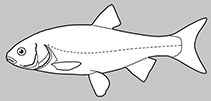 No image available for this species;
drawing shows typical species in Leuciscidae.
Google image
drawing shows typical species in Leuciscidae.
Clasificación / Nombres Nombres comunes | Sinónimos | Catalog of Fishes(Género, Especie) | ITIS | CoL | WoRMS | Cloffa
> Cypriniformes (Carps) > Leuciscidae (Minnows) > Leuciscinae
Etymology: Achondrostoma: Name refers to the absence of horny plate on the mouth; occidentale: From the Latin name occidentale, in reference to the occurrence of this species in Portugal area known as Oeste, meaning west in English.
Etymology: Achondrostoma: Name refers to the absence of horny plate on the mouth; occidentale: From the Latin name occidentale, in reference to the occurrence of this species in Portugal area known as Oeste, meaning west in English.
Entorno: milieu / zona climática / rango de profundidad / gama de distribución Ecología
; agua dulce bentopelágico; potamodromo (Ref. 138297). Temperate
Distribución Territorios | Áreas FAO | Ecosistemas | Ocurrencias, apariciones | Mapa de puntos | Introducciones | Faunafri
Europe: Alcabrichel, Sizandro and Safarujo drainages in Estremadura, Portugal (Ref. 55625). Reported from Iberian Peninsula, Spain (Ref. 119049).
Tamaño / Peso / Edad
Descripción breve Claves de identificación | Morfología | Morfometría
Belongs to the Chondrostoma arcasii - C. oligolepis species group characterized by lack of horny blade on the lower lip and having a lateral line scale which is much lower than other bladeless species of Chondrostoma. Distinguished from C. arcasii and C. oligolepis by the following combination of characters: 40-43 canaliculate scales on the lateral line; 6-7 scales above the lateral line; 2-3 scales below the lateral line. Axillary pelvic scale shorter than or equal to the insertion of the pelvic fin; and the coronoid process of the dentary is very thick (Ref. 55625). Diagnosed from its congeners by the possession of the following characters: lateral line usually with 37-41 + 2-3 scales; 3-4 (modally 3) scale rows between lateral line and pelvic fin origin; 14 circumpeduncular scale rows; eye diameter greater than snout length; snout usually pointed, conical; and ventral profile of head without marked angle at articulation of lower jaw (Ref. 59043).
Body shape (shape guide): fusiform / normal.
Body shape (shape guide): fusiform / normal.
Found in small coastal streams that have a greatly reduced water flow in the dry summer period (Ref. 55625). During dry summer time, fish become concentrated in a few pools seeking shelter in shady areas under the cover of vegetation (Ref. 55625). They occur in lower stretches of rivers. Threatened due to pollution, intensive agriculture and water abstraction. Size reaches up to at least 9.5 cm SL (Ref. 59043). Migration pattern is inferred from the behavior of other species in the same genus (Ref. 138297).
Ciclo vital y comportamiento de apareamiento Madurez | Reproducción | Puesta | Huevos | Fecundidad | Larva
Referencia principal
Suba sus referencias | Referencias | Coordinador | Colaboradores
Kottelat, M. and J. Freyhof, 2007. Handbook of European freshwater fishes. Publications Kottelat, Cornol and Freyhof, Berlin. 646 pp. (Ref. 59043)
Situación en la Lista Roja de la UICN (Ref. 130435: Version 2025-2 (Global))
Critically Endangered (CR) (A4ce); Date assessed: 02 November 2023
CITES
Not Evaluated
Amenaza para el ser humano
Harmless
Usos humanos
Pesquerías: sin interés
FAO - Publication: search | FishSource |
Más información
Ecología Trófica
Alimentos (presas)
Composición de la dieta
consumo de alimento
Raciones de comida
Despredadores
Alimentos (presas)
Composición de la dieta
consumo de alimento
Raciones de comida
Despredadores
Ecología
Ecología
Ecología
Dinámica de la población
Coeficiente del crecimiento para
Edades / tallas máximas
Longitud-peso rel.
Longitud-longitud rel.
Longitud-frecuencias
Conversión de masas
Reclutamiento
Abundancia
Coeficiente del crecimiento para
Edades / tallas máximas
Longitud-peso rel.
Longitud-longitud rel.
Longitud-frecuencias
Conversión de masas
Reclutamiento
Abundancia
Ciclo de vida
Reproducción
Madurez
Madurez/Gills rel.
Fecundidad
Puesta
Agregaciones de desove
Huevos
Desarrollo de los huevos
Larva
Dinámica larvaria
Reproducción
Madurez
Madurez/Gills rel.
Fecundidad
Puesta
Agregaciones de desove
Huevos
Desarrollo de los huevos
Larva
Dinámica larvaria
Distribución
Territorios
Áreas FAO
Ecosistemas
Ocurrencias, apariciones
Introducciones
BRUVS - Vídeos
Territorios
Áreas FAO
Ecosistemas
Ocurrencias, apariciones
Introducciones
BRUVS - Vídeos
Anatomía
Superficie branquial
Cerebro
Otolito
Superficie branquial
Cerebro
Otolito
Fisiología
Composición corporal
Nutrientes
Consumo del oxígeno
Tipo de natación
Velocidad de natación
Pigmentos visuales
Sonido de peces
Enfermedades y parásitos
Toxicidad (CL50)
Composición corporal
Nutrientes
Consumo del oxígeno
Tipo de natación
Velocidad de natación
Pigmentos visuales
Sonido de peces
Enfermedades y parásitos
Toxicidad (CL50)
Genética
Genoma
Genética
Heterocigosidad
heritabilidad
Diversidad genética
Genoma
Genética
Heterocigosidad
heritabilidad
Diversidad genética
Relacionados con el ser humano
Sistemas de acuicultura
Perfiles de acuicultura
Razas
Ciguatera cases
Sellos, monedas, varios
Sistemas de acuicultura
Perfiles de acuicultura
Razas
Ciguatera cases
Sellos, monedas, varios
Herramientas
Libro electrónico | Guía de campo | Asistente para frecuencias de tallas | Herramienta de ciclo de vida | Mapa de puntos |
Catch-MSY |
Informes especiales
Comprobar el mantenimiento del acuario | Buscar fichas sobre especies | Consulte las hojas informativas sobre acuicultura
Descargar XML
Fuentes de Internet
AFORO (otoliths) | Aquatic Commons | BHL | Cloffa | Websites from users | Check FishWatcher | CISTI | Catalog of Fishes: Género, Especie | DiscoverLife | ECOTOX | FAO - Publication: search | Faunafri | Fishipedia | Fishtrace | GloBI | Google Books | Google Scholar | Google | IGFA World Record | Bases de datos nacionales | OneZoom | Open Tree of Life | Otolith Atlas of Taiwan Fishes | PubMed | Reef Life Survey | Socotra Atlas | TreeBase | Árbol de la vida | Wikipedia: Go, búsqueda | World Records Freshwater Fishing | Expediente Zoológico
Estimaciones basadas en modelos
Índice de diversidad filogenética (Referencia 82804): PD50 = 0.5078 [Uniqueness, from 0.5 = low to 2.0 = high].
Bayesian length-weight: a=0.00724 (0.00353 - 0.01485), b=3.14 (2.97 - 3.31), in cm total length, based on LWR estimates for this (Sub)family-body shape (Ref. 93245).
Nivel trófico (Referencia 69278): 2.9 ±0.4 se; based on size and trophs of closest relatives
Resiliencia (Referencia 120179): Alto, población duplicada en un tiempo mínimo inferior a 15 meses (Preliminary K or Fecundity.).