



Cheilobarbus capensis (Smith, 1841)
Cape whitefish
อัพโหลดของคุณ ภาพถ่าย และ วิดีโอ
Google image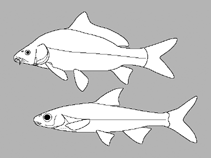 No image available for this species;
drawing shows typical species in Cyprinidae.
Google image
drawing shows typical species in Cyprinidae.
การจำแนกประเภท / ชื่อ ชื่อสามัญ | ชื่อพ้อง | Catalog of Fishes(สกุล, ชนิด) | ITIS | CoL | WoRMS | Cloffa
> Cypriniformes (Carps) > Cyprinidae (Minnows or carps) > Smiliogastrinae
Etymology: Cheilobarbus: The name Cheilobarbus is derived from the Greek ‘cheilos’ meaning a margin, lip or brim, and the Latin ‘barba’ meaning a beard and referring to the oral barbels. Smith (1841) mentioned the “lips” of these species as being “full and firm”.
Etymology: Cheilobarbus: The name Cheilobarbus is derived from the Greek ‘cheilos’ meaning a margin, lip or brim, and the Latin ‘barba’ meaning a beard and referring to the oral barbels. Smith (1841) mentioned the “lips” of these species as being “full and firm”.
Taxonomic Remarks
Re-examination of the holotype of Barbus capensis revealed it to be a senior synonym of Pseudobarbus andrewi; the correct name for previous identifications of Barbus capensis should be Labeobarbus seeberi, the southern African clanwilliam yellowfish, while Pseudobarbus capensis is the correct name for previous identifications as Barbus andrewi (Ref. 108777).
สิ่งแวดล้อม : สิ่งแวดล้อม / เขตภูมิอากาศ / ระดับความลึก / ระยะการกระจายสินค้า นิเวศวิทยา
; น้ำจืด กลุ่มสัตว์หน้าดิน,กลุ่มสัตว์พื้นท้องน้ำ. Subtropical; 31°S - 34°S
การแพร่กระจาย อาณาเขต | พื้นที่จำแนกตาม FAO | ระบบนิเวศหลายระบบ | การปรากฏขึ้น,การเกิดขึ้น,พบ | ตำแหน่งบนแผนที่ | การแนะนำ | Faunafri
Africa: Berg and Breede River systems, south-western Cape Province in South Africa (Ref. 7248, 119402); also Clanwilliam Olifants River in South Africa (Ref. 111087).
ขนาด / น้ำหนัก / อายุ
วัยเจริญพันธุ์: Lm ? range ? - ? cm
Max length : 60.0 cm SL เพศผู้/กระเทย; (Ref. 7248); น้ำหนักสูงสุดที่มีการรายงาน: 3.4 kg (Ref. 7248)
Max length : 60.0 cm SL เพศผู้/กระเทย; (Ref. 7248); น้ำหนักสูงสุดที่มีการรายงาน: 3.4 kg (Ref. 7248)
Prefers deep, rocky pools of larger tributaries and mainstreams and does well in dams such as Voëlvlei and Brandvlei. Feeds on bottom-dwelling invertebrates and algae. Breeds in summer, congregating at the head of large, stony pools or at the base of rapids. Eggs are laid in gravel in flowing water and hatch after about 5 days. Has been artificially bred and restocked by conservation authorities (Ref. 7248).
วงจรชีวิตและพฤติกรรมการผสมพันธุ์ วัยเจริญพันธุ์ | การสืบพันธุ์ | การวางไข่ | เซลสืบพันธ์ของเพศเมีย(ไข่) | ความดกของไข่ | ตัวอ่อน
อ้างอิงหลัก
อัพโหลดข้อมูลอ้างอิงของคุณ | อ้างอิง | ผู้ประสานงาน | ผู้ร่วมมือ
Skelton, P.H., E.R. Swartz and E.J. Vreven, 2018. The identity of Barbus capensis Smith, 1841 and the generic status of southern African tetraploid cyprinids (Teleostei, Cyprinidae). European Journal of Taxonomy 410:1-29. (Ref. 119402)
สถานะบัญชีแดงของ IUCN (Ref. 130435: Version 2025-2 (Global))
Endangered (EN) (B1ab(iii,iv,v)+2ab(iii,iv,v)); Date assessed: 30 November 2016
CITES
Not Evaluated
ภัยคุกคามต่อมนุษย์
Harmless
การใช้ของมนุษย์
การเพาะเลี้ยงสัตว์น้ำ: การทดลอง; การตกปลาเป็นกีฬา: ใช่
FAO - Publication: search | FishSource |
ข้อมูลเพิ่มเติม
พลวัตของประชากร
พารามิเตอร์การเจริญเติบโต
อายุสูงสุด / ขนาด
ความยาว-น้ำหนักสัมพันธ์
ความยาว-ความยาวสัมพันธ์
ความยาว-ความถี่
การแปลงมวล
การทดแทนที่
อุดมสมบรูณ์
พารามิเตอร์การเจริญเติบโต
อายุสูงสุด / ขนาด
ความยาว-น้ำหนักสัมพันธ์
ความยาว-ความยาวสัมพันธ์
ความยาว-ความถี่
การแปลงมวล
การทดแทนที่
อุดมสมบรูณ์
วงจรชีวิต
การสืบพันธุ์
วัยเจริญพันธุ์
ความสมบูรณ์พันธุ์/เหงือกที่เกี่ยวข้อง
ความดกของไข่
การวางไข่
การรวมตัวของสปอน
เซลสืบพันธ์ของเพศเมีย(ไข่)
การพัฒนาไข่
ตัวอ่อน
พลวัตของสัตว์น้ำวัยอ่อน
การสืบพันธุ์
วัยเจริญพันธุ์
ความสมบูรณ์พันธุ์/เหงือกที่เกี่ยวข้อง
ความดกของไข่
การวางไข่
การรวมตัวของสปอน
เซลสืบพันธ์ของเพศเมีย(ไข่)
การพัฒนาไข่
ตัวอ่อน
พลวัตของสัตว์น้ำวัยอ่อน
การแพร่กระจาย
อาณาเขต
พื้นที่จำแนกตาม FAO
ระบบนิเวศหลายระบบ
การปรากฏขึ้น,การเกิดขึ้น,พบ
การแนะนำ
BRUVS - วิดีโอ
อาณาเขต
พื้นที่จำแนกตาม FAO
ระบบนิเวศหลายระบบ
การปรากฏขึ้น,การเกิดขึ้น,พบ
การแนะนำ
BRUVS - วิดีโอ
กายวิภาคศาสตร์
พื้นที่เหงือก
สมอง
หินโสต
พื้นที่เหงือก
สมอง
หินโสต
สรีรวิทยา
องค์ประกอบของร่างกาย
สารอาหาร
การใช้ออกซิเจน
ประเภทการว่ายน้ำ
ระดับความเร็วในการว่ายน้ำ
เม็ดสีที่มองเห็นได้
เสียงปลา
โรคและปรสิต
ความเป็นพิษ (LC50s)
องค์ประกอบของร่างกาย
สารอาหาร
การใช้ออกซิเจน
ประเภทการว่ายน้ำ
ระดับความเร็วในการว่ายน้ำ
เม็ดสีที่มองเห็นได้
เสียงปลา
โรคและปรสิต
ความเป็นพิษ (LC50s)
เกี่ยวข้องกับมนุษย์
ระบบการเพาะเลี้ยงสัตว์น้ำ
ประวัติการเพาะเลี้ยงสัตว์น้ำ
สายพันธุ์
กรณีซิเกวเทอรา
แสตมป์ เหรียญ อื่นๆ
ระบบการเพาะเลี้ยงสัตว์น้ำ
ประวัติการเพาะเลี้ยงสัตว์น้ำ
สายพันธุ์
กรณีซิเกวเทอรา
แสตมป์ เหรียญ อื่นๆ
เครื่องมือ
หนังสืออิเล็กทรอนิกส์ | คู่มือภาคสนาม | เครื่องมือที่ใช้ในการแยกชนิดสัตว์,สิ่งมีชีวิตออกจากกัน | ผู้มีความชำนาญในเรื่องความถี่ของความยาว | เครื่องมือในการศึกษาชีวประวัติ | ตำแหน่งบนแผนที่ |
จับ-MSY |
รายงานพิเศษ
ตรวจสอบการบำรุงรักษาตู้ปลา | ตรวจสอบเอกสารข้อเท็จจริงเกี่ยวกับสายพันธุ์ | ตรวจสอบเอกสารข้อเท็จจริงเกี่ยวกับการเพาะเลี้ยงสัตว์น้ำ
ดาวน์โหลด XML
หน้าสรุป | ข้อมูลสำคัญ | ชื่อสามัญ | ภาพถ่าย
แหล่งที่มาจากอินเตอร์เน็ต
AFORO (otoliths) | Aquatic Commons | BHL | Cloffa | Websites from users | Check FishWatcher | CISTI | Catalog of Fishes: สกุล, ชนิด | DiscoverLife | ECOTOX | FAO - Publication: search | Faunafri | Fishipedia | Fishtrace | GloBI | Google Books | Google Scholar | Google | IGFA World Record | OneZoom | Open Tree of Life | Otolith Atlas of Taiwan Fishes | PubMed | Reef Life Survey | Socotra Atlas | TreeBase | แผนภูมิชีวิตแบบต้นไม้ | Wikipedia: Go, ค้นหา | | บันทึกทางด้านสัตววิทยา
การประมาณค่าตามแบบจำลอง
|
ดัชนีความหลากหลายทางวิวัฒนาการ (อ้างอิง 82804) |
PD50 = 0.7500 [Uniqueness, from 0.5 = low to 2.0 = high]. |
| Bayesian length-weight | a=0.00603 (0.00281 - 0.01292), b=3.06 (2.87 - 3.25), in cm total length, based on LWR estimates for this (Sub)family-body shape (Ref. 93245). |
|
ระดับชั้นอาหาร (อ้างอิง 69278) |
2.8 ±0.26 se; based on food items. |
|
ความสามารถในการกลับคืนสู่ปกติ (อ้างอิง 120179) |
ต่ำ, เวลาต่ำสุดที่จะทำให้ประชากรเพิ่มขึ้นเป็น 2 เท่าใช้เวลา 4.5 - 14 ปี (Preliminary K or Fecundity.). |
|
ความเสี่ยงต่อการตกปลา (Ref. 59153) |
High vulnerability (60 of 100). 🛈 |