



Envoyez vos Photos et vidéos
Images | Timbres, pièces de monnaie, divers | Images Google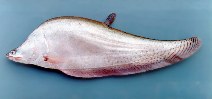 Chitala blanci
Photo de Warren, T.
Images | Timbres, pièces de monnaie, divers | Images Google
Photo de Warren, T.
Classification / Noms Noms communs | Synonymes | Catalog of Fishes(Genre, Espèce) | ITIS | CoL | WoRMS | Cloffa
> Osteoglossiformes (Bony tongues) > Notopteridae (Featherbacks or knifefishes) > Notopterinae
Etymology: Chitala: Bangladesh local name.
Eponymy: Maurice Blanc (d: 1923) was d’Aubenton’s colleague. [...] (Ref. 128868), visit book page.
Etymology: Chitala: Bangladesh local name.
Eponymy: Maurice Blanc (d: 1923) was d’Aubenton’s colleague. [...] (Ref. 128868), visit book page.
Taxonomic Remarks
species doubtful, no other Ref.
Environnement : milieu / zone climatique / profondeur / gamme de distribution Écologie
; eau douce démersal; potamodrome (Ref. 138296). Tropical
Distribution Territoires | Zones FAO | Écosystèmes | Occurrences | Carte par point | Introductions | Faunafri
Asia: mainstream of the Mekong in Thailand, Laos and Cambodia and the lower course of some tributaries.
Taille / Poids / Âge
Description synthétique Clés d'identification | Morphologie | Morphométrie
Distinguishable by the presence of numerous small black spots (in the anterior half of the body), merging posteriorly into irregular oblique bands extending on the anal and caudal fins (Ref. 27732). Differs from all other species except C. lopis in having a large round black spot at base of pectoral fin. In C. blanci pectoral basal spot present in juveniles as small as 6 cm and retained throughout life (Ref. 7431).
Body shape (shape guide): fusiform / normal.
Body shape (shape guide): fusiform / normal.
Facultative air-breathing (Ref. 126274); Apparently restricted to areas with fast flowing waters, deep pools or rapids (Ref. 27732). Prefer habitats associated with rocky substrates (Ref. 37770). Occur in the mainstream of the Mekong River. Avoids tributaries and swamps (Ref. 7431). Reported to undertake short, local migrations (Ref. 37770). Active during twilight and night. Feed on fishes, crustaceans and insects. Also take smaller vertebrates (Ref. 58784). Spawning sites are found in inundated forests (Ref. 33813). Mature adults breed during the rainy season. Occasionally seen in the aquarium trade. (Ref. 12693). Has been bred for several years in Thailand (Ref. 7431).
Cycle de vie et comportement reproducteur Maturité | Reproduction | Frai | Œufs | Fécondité | Larves
Female guards the fry (to be verified).
Référence principale
Téléchargez vos références | Références | Coordinateur | Collaborateurs
Roberts, T.R., 1992. Systematic revision of the old world freshwater fish family Notopteridae. Ichthyol. Explor. Freshwat. 2(4):361-383. (Ref. 7431)
Statut dans la liste rouge de l'IUCN (Ref. 130435: Version 2025-2 (Global))
Quasi-menacé (NT) ; Date assessed: 23 February 2011
CITES
Not Evaluated
Menace pour l'homme
Harmless
Utilisations par l'homme
Pêcheries: commercial; Aquaculture: commercial; Aquarium: Commercial
FAO - Publication: search | FishSource |
Plus d'informations
Écologie trophique
Aliments (proies)
Composition du régime alimentaire
Consommation alimentaire
Rations alimentaires
Prédateurs
Aliments (proies)
Composition du régime alimentaire
Consommation alimentaire
Rations alimentaires
Prédateurs
Dynamique des populations
Paramètres de croissance
Âges / tailles maximales
Longueur-poids rel.
Rel. longueur-longueur.
Fréquences de longueurs
Conversion de masse
Recrutement
Abondance
Paramètres de croissance
Âges / tailles maximales
Longueur-poids rel.
Rel. longueur-longueur.
Fréquences de longueurs
Conversion de masse
Recrutement
Abondance
Cycle de vie
Reproduction
Maturité
Maturité/épines rel.
Fécondité
Frai
Agrégats de frai
Œufs
Développement de l'œuf
Larves
Dynamique des populations larvaires
Reproduction
Maturité
Maturité/épines rel.
Fécondité
Frai
Agrégats de frai
Œufs
Développement de l'œuf
Larves
Dynamique des populations larvaires
Anatomie
Surface branchiale
Cerveau
Otolithe
Surface branchiale
Cerveau
Otolithe
Physiologie
Composition corporelle
Nutriments
Consommation d'oxygène
Type de natation
Vitesse de nage
Pigments visuels
Son de poisson
Maladies et parasites
Toxicité (CL50)
Composition corporelle
Nutriments
Consommation d'oxygène
Type de natation
Vitesse de nage
Pigments visuels
Son de poisson
Maladies et parasites
Toxicité (CL50)
Génétique
génôme
Génétique
Hétérozygotie
Héritabilité
Diversité génétique
génôme
Génétique
Hétérozygotie
Héritabilité
Diversité génétique
Liées à l'homme
Systèmes d'aquaculture
Profils d'aquaculture
Souches
Cas de ciguatera
Timbres, pièces de monnaie, divers
Systèmes d'aquaculture
Profils d'aquaculture
Souches
Cas de ciguatera
Timbres, pièces de monnaie, divers
Outils
E-book | Guide de terrain | Générateur de fréquences de longueur | Outil de dynamique de population | Carte par point |
Capture-MSY |
Articles particuliers
Télécharger en XML
Sources Internet
AFORO (otoliths) | Alien/Invasive Species database | Aquatic Commons | BHL | Cloffa | Websites from users | FishWatcher | CISTI | Catalog of Fishes: Genre, Espèce | DiscoverLife | ECOTOX | FAO - Publication: search | Faunafri | Fishipedia | Fishtrace | GloBI | Google Books | Google Scholar | Google | IGFA World Record | OneZoom | Open Tree of Life | Otolith Atlas of Taiwan Fishes | PubMed | Reef Life Survey | Socotra Atlas | TreeBase | Arbre de Vie | Wikipedia: aller à, chercher | World Records Freshwater Fishing | Zoological Record
Estimations basées sur des modèles
Indice de diversité phylogénétique (Réf. 82804): PD50 = 0.5166 [Uniqueness, from 0.5 = low to 2.0 = high].
Bayesian length-weight: a=0.01122 (0.00514 - 0.02450), b=3.04 (2.87 - 3.21), in cm total length, based on all LWR estimates for this body shape (Ref. 93245).
Niveau trophique (Réf. 69278): 3.7 ±0.56 se; based on food items.
Résilience (Réf. 120179): Faible, temps minimum de doublement de population : 4,5 à 14 années (Preliminary K or Fecundity.).