



Sube tu fotos y Vídeos
Imágenes | Google image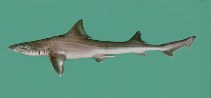 Mustelus mosis
Foto de Randall, J.E.
Imágenes | Google image
Foto de Randall, J.E.
Clasificación / Nombres Nombres comunes | Sinónimos | Catalog of Fishes(Género, Especie) | ITIS | CoL | WoRMS | Cloffa
Elasmobranquios (tiburones y rayas) (sharks and rays) > Carcharhiniformes (Ground sharks) > Triakidae (Houndsharks) > Triakinae
Etymology: Mustelus: Latin for weasel, an ancient name for sharks, possibly referring to the pointed snouts, swift movements and/or rapacious feeding behavior of smaller predatory sharks [strictly not tautonymous with Squalus mustelus Linnaeus 1758 since type was designated by the ICZN] (See ETYFish); mosis: Etymology not explained (no written description); since mosis is the Latin spelling of Moses, possibly an allusion to this shark’s type locality in the Red Sea (See ETYFish).
More on authors: Hemprich & Ehrenberg.
Etymology: Mustelus: Latin for weasel, an ancient name for sharks, possibly referring to the pointed snouts, swift movements and/or rapacious feeding behavior of smaller predatory sharks [strictly not tautonymous with Squalus mustelus Linnaeus 1758 since type was designated by the ICZN] (See ETYFish); mosis: Etymology not explained (no written description); since mosis is the Latin spelling of Moses, possibly an allusion to this shark’s type locality in the Red Sea (See ETYFish).
More on authors: Hemprich & Ehrenberg.
Entorno: milieu / zona climática / rango de profundidad / gama de distribución Ecología
marino demersal; rango de profundidad ? - 400 m (Ref. 100719). Tropical; 30°N - 7°N
Distribución Territorios | Áreas FAO | Ecosistemas | Ocurrencias, apariciones | Mapa de puntos | Introducciones | Faunafri
Indian Ocean: Red Sea, Arabian Sea and the Persian Gulf, southernmost confirmed records from off Somalia in the Gulf of Aden.
Longitud en la primera madurez / Tamaño / Peso / Edad
Descripción breve Claves de identificación | Morfología | Morfometría
Espinas dorsales (total) : 0; Espinas anales: 0. A smoothhound without spots and often with a white-tipped 1st dorsal fin; adults with a hard, bone-like growth embedded in snout, readily felt by pinching it (Ref. 5578). Grey or grey-brown dorsally, white ventrally (Ref. 5578). Pectoral fins with pale trailing edges (Ref. 5485).
Body shape (shape guide): elongated.
Body shape (shape guide): elongated.
Occurs in continental waters, both inshore and offshore (Ref. 244). Sometimes seen on coral reefs (Ref. 244). Feeds on small bottom fishes, mollusks, and crustaceans (Ref. 244). In the Gulf of Aqaba on cephalopods, decapods and terrestrial food items while off Al-Ghardaqar near the entrance of the Gulf of Suez, prawns, small crabs and small fish were found in the specimens (Ref. 124465). Viviparous (Ref. 244). Caught by shore anglers (Ref. 5578). Readily lives in captivity (Ref. 244). Utilized as a foodfish (Ref. 244).
Ciclo vital y comportamiento de apareamiento Madurez | Reproducción | Puesta | Huevos | Fecundidad | Larva
Viviparous, with 6 to 10 young in a litter; born at 26-28 cm (Ref. 5485). Distinct pairing with embrace (Ref. 205).
Referencia principal
Suba sus referencias | Referencias | Coordinador : Compagno, Leonard J.V. | Colaboradores
White, W.T., S. Arunrugstichai and G.J.P. Naylor, 2021. Revision of the genus Mustelus (Carcharhiniformes: Triakidae) in the northern Indian Ocean, with description of a new species and a discussion on the validity of M. walkeri and M. ravidus. Mar. Biodiversity 51(42):1-24. (Ref. 124465)
Situación en la Lista Roja de la UICN (Ref. 130435: Version 2025-2 (Global))
Near Threatened (NT) (A2d); Date assessed: 25 April 2018
CITES
Not Evaluated
Amenaza para el ser humano
Harmless
Usos humanos
Pesquerías: comercial; pesca deportiva: si
FAO - Publication: search | FishSource |
Más información
Ecología Trófica
Alimentos (presas)
Composición de la dieta
consumo de alimento
Raciones de comida
Despredadores
Alimentos (presas)
Composición de la dieta
consumo de alimento
Raciones de comida
Despredadores
Dinámica de la población
Coeficiente del crecimiento para
Edades / tallas máximas
Longitud-peso rel.
Longitud-longitud rel.
Longitud-frecuencias
Conversión de masas
Reclutamiento
Abundancia
Coeficiente del crecimiento para
Edades / tallas máximas
Longitud-peso rel.
Longitud-longitud rel.
Longitud-frecuencias
Conversión de masas
Reclutamiento
Abundancia
Ciclo de vida
Reproducción
Madurez
Madurez/Gills rel.
Fecundidad
Puesta
Agregaciones de desove
Huevos
Desarrollo de los huevos
Larva
Dinámica larvaria
Reproducción
Madurez
Madurez/Gills rel.
Fecundidad
Puesta
Agregaciones de desove
Huevos
Desarrollo de los huevos
Larva
Dinámica larvaria
Distribución
Territorios
Áreas FAO
Ecosistemas
Ocurrencias, apariciones
Introducciones
BRUVS - Vídeos
Territorios
Áreas FAO
Ecosistemas
Ocurrencias, apariciones
Introducciones
BRUVS - Vídeos
Anatomía
Superficie branquial
Cerebro
Otolito
Superficie branquial
Cerebro
Otolito
Fisiología
Composición corporal
Nutrientes
Consumo del oxígeno
Tipo de natación
Velocidad de natación
Pigmentos visuales
Sonido de peces
Enfermedades y parásitos
Toxicidad (CL50)
Composición corporal
Nutrientes
Consumo del oxígeno
Tipo de natación
Velocidad de natación
Pigmentos visuales
Sonido de peces
Enfermedades y parásitos
Toxicidad (CL50)
Relacionados con el ser humano
Sistemas de acuicultura
Perfiles de acuicultura
Razas
Ciguatera cases
Sellos, monedas, varios
Sistemas de acuicultura
Perfiles de acuicultura
Razas
Ciguatera cases
Sellos, monedas, varios
Herramientas
Libro electrónico | Guía de campo | Asistente para frecuencias de tallas | Herramienta de ciclo de vida | Mapa de puntos |
Catch-MSY |
Informes especiales
Comprobar el mantenimiento del acuario | Buscar fichas sobre especies | Consulte las hojas informativas sobre acuicultura
Descargar XML
Fuentes de Internet
AFORO (otoliths) | Aquatic Commons | BHL | Cloffa | Websites from users | Check FishWatcher | CISTI | Catalog of Fishes: Género, Especie | DiscoverLife | ECOTOX | FAO - Publication: search | Faunafri | Fishipedia | Fishtrace | GloBI | Google Books | Google Scholar | Google | IGFA World Record | OneZoom | Open Tree of Life | Otolith Atlas of Taiwan Fishes | PubMed | Reef Life Survey | Socotra Atlas | TreeBase | Árbol de la vida | Wikipedia: Go, búsqueda | World Records Freshwater Fishing | Zoobank | Expediente Zoológico
Estimaciones basadas en modelos
Índice de diversidad filogenética (Referencia 82804): PD50 = 0.5000 [Uniqueness, from 0.5 = low to 2.0 = high].
Bayesian length-weight: a=0.00229 (0.00107 - 0.00491), b=3.14 (2.97 - 3.31), in cm total length, based on LWR estimates for this Genus-body shape (Ref. 93245).
Nivel trófico (Referencia 69278): 4.0 ±0.52 se; based on food items.
Resiliencia (Referencia 120179): Muy bajo, población duplicada en un tiempo mínimo superior a 14 años (Fec=4).