



Pseudocarcharias kamoharai (Matsubara, 1936)
Crocodile shark
Lägg till din observation i Fish Watcher
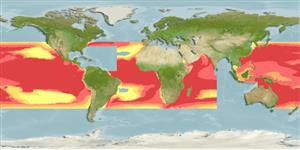
| Native range | All suitable habitat | Point map | Year 2050 |
|
| This map was computer-generated and has not yet been reviewed. |
| Pseudocarcharias kamoharai AquaMaps Data sources: GBIF OBIS |
Ladda upp din foton och Videor
Bilder | Google image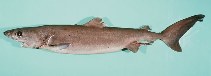 Pseudocarcharias kamoharai
Bild av Randall, J.E.
Bilder | Google image
Bild av Randall, J.E.
Klassificering / Namn Populärnamn | synonymer | Catalog of Fishes(Släkte, Arter) | ITIS | CoL | WoRMS | Cloffa
Elasmobranchii (hajar och rockor) (sharks and rays) > Lamniformes (Mackerel sharks) > Pseudocarchariidae (Crocodile sharks)
Etymology: Pseudocarcharias: pseudo-, from pseudes (Gr.), false, proposed as a subgenus of Carcharias (Odontaspididae) (See ETYFish); kamoharai: In honor of ichthyologist Toshiji Kamohara (1901-1972), Kochi University, who secured type at a fish market and presented it to Matsubara (See ETYFish).
Eponymy: Dr Toshiji Kamohara (1901–1972) was an ichthyologist who graduated from Tokyo Imperial University (1926). [...] (Ref. 128868), visit book page.
Etymology: Pseudocarcharias: pseudo-, from pseudes (Gr.), false, proposed as a subgenus of Carcharias (Odontaspididae) (See ETYFish); kamoharai: In honor of ichthyologist Toshiji Kamohara (1901-1972), Kochi University, who secured type at a fish market and presented it to Matsubara (See ETYFish).
Eponymy: Dr Toshiji Kamohara (1901–1972) was an ichthyologist who graduated from Tokyo Imperial University (1926). [...] (Ref. 128868), visit book page.
Miljö: miljö / Klimatzon / djupintervall / distributionsområde Ekologi
marina pelagic-oceanic; havsvandrande (Ref. 51243); djupintervall 0 - 590 m (Ref. 6871), usually 0 - 200 m (Ref. 54740). Subtropical; 40°N - 40°S, 180°W - 180°E
Utbredning Territorier | FAO områden | Ekosystem | Förekomster | Prickkarta | Utplanteringar | Faunafri
Tropical and subtropical waters of all oceans.
Längd vid första mognad / Storlek / Vikt / Ålder
Könsmognad: Lm 91.6, range 89 - ? cm
Max length : 110 cm TL hane/ej könsbestämd; (Ref. 43278); 122.0 cm TL (female); common length : 100.0 cm TL hane/ej könsbestämd; (Ref. 13569); publicerad maxvikt: 5.9 kg (Ref. 130455)
Max length : 110 cm TL hane/ej könsbestämd; (Ref. 43278); 122.0 cm TL (female); common length : 100.0 cm TL hane/ej könsbestämd; (Ref. 13569); publicerad maxvikt: 5.9 kg (Ref. 130455)
Kort beskrivning Bestämningsnycklar | Morfologi | Morfometri
Taggstrålar i ryggfenan (totalt) : 0; Taggstrålar i analfenan: 0. A medium-sized spindle-shaped shark with very large eyes lacking a nictitating membrane, long gill slits extending onto dorsal surface of head, lanceolate teeth, weak keel and precaudal pits on caudal peduncle (Ref. 6871, 43278). Small and low dorsal fins, with second dorsal fin less than half the size of the first but larger than the anal fin (Ref. 6871). Pectoral fin broad and rounded (Ref. 6871). Light or dark grey above, paler below, fins white-edged, sometimes with small white spots on body and a white blotch between mouth and gill slits (Ref. 13569).
Body shape (shape guide): elongated.
Body shape (shape guide): elongated.
An oceanic species usually found offshore and far from land but sometimes occurring inshore (Ref. 9993, 43278, 58302). Epi- and mesopelagic, with occasional near-bottom occurrences (Ref. 43278, 58302). Although considered not dangerous to people, its powerful jaws, jaw muscles and teeth invite respect. Flesh not appreciated and therefore the catch is usually discarded (Ref. 247); utilized for its large, squalene-rich liver (Ref. 9993). Feeds on small pelagic bony fishes, squids and shrimps (Ref. 5578). Ovoviviparous, embryos feeding on yolk sac and other ova produced by the mother (Ref. 50449). With 4 young in a litter, born at 40 to 43 cm TL (Ref. 12288). Maximum length for female given in Romanove et.al 1994 (Ref. 44781). Common bycatch of tuna longline fisheries, and occasionally tuna gillnet fisheries (Ref.58048).
Livscykel och parningsbeteende Könsmognad | Reproduktion | Lek | Ägg | Fekunditet | Larver
Exhibit ovoviparity (aplacental viviparity), with embryos feeding on other ova produced by the mother (oophagy) after the yolk sac is absorbed (Ref. 50449). With 4 young in a litter, born at 40-43 cm (Ref. 11228).
Huvudreferens
Ladda upp dina referenser | referenser | Koordinator | Medarbetare
Compagno, L.J.V., 1984. FAO Species Catalogue. Vol. 4. Sharks of the world. An annotated and illustrated catalogue of shark species known to date. Part 1 - Hexanchiformes to Lamniformes. FAO Fish. Synop. 125(4/1):1-249. Rome, FAO. (Ref. 247)
Status på IUCN:s rödlista (Ref. 130435: Version 2025-2 (Global))
Least Concern (LC) ; Date assessed: 09 November 2018
CITES
Not Evaluated
Hot mot människor
Harmless
Mänskliga användningsområden
Fiskeri: mindre kommeriell
FAO - fiskeri: landningar, artprofil; Publication: search | FishSource | Havet omkring oss
Ytterligare information
Populationsdynamik
Tillväxtparametrar
Max. åldrar / storlekar
Längd-vikt rel.
Längd-längd rel.
Längd-frekvenser
Massakonvertering
Rekrytering
Abundans
Tillväxtparametrar
Max. åldrar / storlekar
Längd-vikt rel.
Längd-längd rel.
Längd-frekvenser
Massakonvertering
Rekrytering
Abundans
Livscykel
Reproduktion
Könsmognad
Mognad/Gills rel.
Fekunditet
Lek
Lekande aggregat
Ägg
Utveckling av ägg
Larver
Larvdynamik
Reproduktion
Könsmognad
Mognad/Gills rel.
Fekunditet
Lek
Lekande aggregat
Ägg
Utveckling av ägg
Larver
Larvdynamik
Fysiologi
Kroppssammansättning
Näringsämnen
Syreförbrukning
Typ av simning
Simhastighet
Visuella pigment
Ljud från fisk
Sjukdomar & Parasiter
Toxicitet (LC50)
Kroppssammansättning
Näringsämnen
Syreförbrukning
Typ av simning
Simhastighet
Visuella pigment
Ljud från fisk
Sjukdomar & Parasiter
Toxicitet (LC50)
Genetik
Genom
Genetik
Heterozygositet
Ärftlighet
Genetisk mångfald
Genom
Genetik
Heterozygositet
Ärftlighet
Genetisk mångfald
Människorelaterad
Vattenbrukssystem
Vattenbruksprofiler
Avelslinjer
Ciguatera-fall
Frimärken, mynt, diverse.
Vattenbrukssystem
Vattenbruksprofiler
Avelslinjer
Ciguatera-fall
Frimärken, mynt, diverse.
Verktyg
Särskilda rapporter
Kontrollera för underhåll av akvarium | Kontrollera om det finns faktablad om arter | Kontrollera om det finns faktablad om vattenbruk
Ladda ner XML
Internet-källor
AFORO (otoliths) | Aquatic Commons | BHL | Cloffa | Websites from users | Check FishWatcher | CISTI | Catalog of Fishes: Släkte, Arter | DiscoverLife | ECOTOX | FAO - fiskeri: landningar, artprofil; Publication: search | Faunafri | Fishipedia | Fishtrace | GloBI | Google Books | Google Scholar | Google | IGFA World Record | Nationella databaser | OneZoom | Open Tree of Life | Otolith Atlas of Taiwan Fishes | PubMed | Reef Life Survey | Socotra Atlas | TreeBase | Tree of Life | Wikipedia: Go, sök | World Records Freshwater Fishing | Zoologiskt register
Uppskattningar baserade på modeller
Önskad temperatur (Ref. 123201): 16.3 - 28.2, mean 24.9 °C (based on 3402 cells).
Index för fylogenetisk mångfald (Ref. 82804): PD50 = 1.5000 [Uniqueness, from 0.5 = low to 2.0 = high].
Bayesian length-weight: a=0.00347 (0.00134 - 0.00895), b=3.11 (2.88 - 3.34), in cm total length, based on LWR estimates for this (Sub)family-body shape (Ref. 93245).
Trofisk nivå (Ref. 69278): 4.5 ±0.58 se; based on food items.
Generation time: 8.0 ( na - na) years. Estimated as median ln(3)/K based on 1 growth studies.
Resiliens (Ref. 120179): Mycket låg, lägsta populationsfördubblingstid mer än 14 år (tm=5.1; K=0.14; tmax=13; Fec=4).