



Nebrius ferrugineus (Lesson, 1831)
Tawny nurse shark
個人による観察記録の追加 Fish Watcher
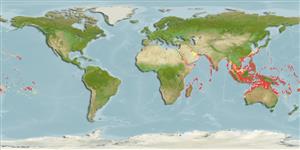
| Native range | All suitable habitat | Point map | Year 2050 |
|
| This map was computer-generated and has not yet been reviewed. |
| Nebrius ferrugineus AquaMaps Data sources: GBIF OBIS |
分類 / 名前 共通名の | 類義語 | Catalog of Fishes(部類, 種) | ITIS | CoL | WoRMS | Cloffa
板鰓亜鋼(サメとエイ類) (sharks and rays) > Orectolobiformes (Carpet sharks) > Ginglymostomatidae (Nurse sharks)
Etymology: Nebrius: Nebrius ferrugineus (Lesson 1831) (See ETYFish); ferrugineus: Latin for rust-colored, referring to brown coloration (See ETYFish).
Etymology: Nebrius: Nebrius ferrugineus (Lesson 1831) (See ETYFish); ferrugineus: Latin for rust-colored, referring to brown coloration (See ETYFish).
環境:環境 / 気候帯 / 深さの範囲 / 分布範囲 生態学
海 関連する礁; 深さの範囲 0 - 70 m (Ref. 106604), usually 5 - 30 m (Ref. 43278). Tropical; 36°N - 27°S, 32°E - 136°W
分布 領土 | 国連食糧農業機関の区域 | エコシステム | 事件 | 目的のマップ | 導入 | Faunafri
Indo-Pacific: Persian Gulf (Ref.80050), Red Sea and East Africa to the Tuamoto Islands, north to southern Japan, south to Australia.
初回成熟時の長さ / サイズ / 重さ / 年齢
成熟: Lm ?, range 230 - ? cm
Max length : 320 cm TL オス/雌雄の選別がない; (Ref. 247); common length : 250 cm TL オス/雌雄の選別がない; (Ref. )
Max length : 320 cm TL オス/雌雄の選別がない; (Ref. 247); common length : 250 cm TL オス/雌雄の選別がない; (Ref. )
簡単な記述 検索表 | 形態学 | 形態計測学
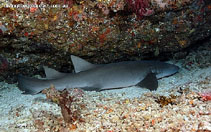
背面の脊椎 (合計) : 0; 肛門の骨: 0. This large, bulky nurse shark is distinguished by the following features: side of body without lateral ridges; precaudal tail shorter than trunk; spiracles much smaller than eyes; nostrils close to front of snout, with short barbels and nasoral grooves connecting them with the mouth but without circumnarial grooves and folds; snout wedge-shaped in lateral view; two dorsal fins, both with angular apices, the origin of the first about over the pelvic-fin origins and its insertion slightly behind the pelvic-fin insertions; second dorsal fin slightly smaller than first; caudal fin about 1/3 of total length, strongly asymmetrical. Colour tan dorsally, paler ventrally and fins slightly dusky (Ref. 9999, 90102).
Body shape (shape guide): elongated; Cross section: angular.
Body shape (shape guide): elongated; Cross section: angular.
Found on continental and insular shelves, from the intertidal down to at least 70 m (Ref. 247). Occurs on or near the bottom in lagoons or along the outer edges of coral and rocky reefs, sandy areas near reefs and off sandy beaches (Ref. 247, 43278). Primarily nocturnal, but may be active during the day (Ref. 247). Prefers crevices and caves on reefs but may be found hiding in more exposed areas (Ref. 247). Forms resting aggregations, and often seen piled across or on top of one another (Ref. 247). Feeds on a wide variety of bottom invertebrates, small fishes (Ref. 247), including cephalopods, crustaceans and sea urchins (Ref. 37816), corals (Ref. 68964). Docile and known to allow itself to be touched, but a few non-fatal attacks have been recorded (Ref. 247). Ovoviviparous (Ref. 43278). 4 or more young are born per litter (Ref. 37816). Survives in captivity (Ref. 247). Marketed fresh and dried-salted; fins dried for the oriental sharkfin trade; liver processed for vitamins and oil; offal processed for fishmeal; hide potentially valuable for leather (Ref. 247).
ライフサイクルと交尾行動 成熟 | 繁殖 | 放精 | 卵 | 生産力 | 幼生
Ovoviviparous, with number of young at least four per uterus (Ref. 247); gives birth to litters of at about 8 pups (Ref.58048). Described as an oviparous or post-oviparous shark that retains the egg-cases until they hatch and the young are born. Size at birth 40 cm (TL, Ref.58048) to 60 cm (Ref. 9999). Also Ref. 205.
主な参考文献
参考文献のアップロード | 参考文献 | コーディネーター : Compagno, Leonard J.V. | 協力者
Compagno, L.J.V., 1984. FAO Species Catalogue. Vol. 4. Sharks of the world. An annotated and illustrated catalogue of shark species known to date. Part 1 - Hexanchiformes to Lamniformes. FAO Fish. Synop. 125(4/1):1-249. Rome, FAO. (Ref. 247)
CITES
Not Evaluated
人間に対する脅威
Traumatogenic (Ref. 247)
人間の用途
水産業: 商業; ゲームフィッシュ: はい
FAO - 水産業: 種の外形; Publication: search | FishSource | 私達の周りの海
より多くの情報
生理学
体組成
栄養素
酸素消費
水泳タイプ
泳ぐ速さ
視覚色素
フィッシュ・サウンド
病気と寄生虫
毒性(LC50)
体組成
栄養素
酸素消費
水泳タイプ
泳ぐ速さ
視覚色素
フィッシュ・サウンド
病気と寄生虫
毒性(LC50)
用具
特記事項
XMLをダウンロードして下さい
インターネットの情報源
AFORO (otoliths) | Aquatic Commons | BHL | Cloffa | Websites from users | Check FishWatcher | CISTI | Catalog of Fishes: 部類, 種 | DiscoverLife | ECOTOX | FAO - 水産業: 種の外形; Publication: search | Faunafri | Fishipedia | Fishtrace | GloBI | Google Books | Google Scholar | Google | IGFA World Record | 国のデーターベース | OneZoom | Open Tree of Life | Otolith Atlas of Taiwan Fishes | 公共の水族館 | PubMed | Reef Life Survey | Socotra Atlas | TreeBase | 生命の木 | Wikipedia: 行く, 検索する | World Records Freshwater Fishing | 動物に関する記録
モデルに基づく推定値
好ましい温度 (参照 123201): 24.7 - 29, mean 28 °C (based on 1466 cells).
系統多様性指数 (参照 82804): PD50 = 1.0625 [Uniqueness, from 0.5 = low to 2.0 = high].
Bayesian length-weight: a=0.00417 (0.00158 - 0.01100), b=3.08 (2.85 - 3.31), in cm total length, based on LWR estimates for this (Sub)family-body shape (Ref. 93245).
栄養段階 (参照 69278): 4.1 ±0.4 se; based on diet studies.
回復力 (参照 120179): 非常に低い, 14年以上の倍増期間の最小個体群 (Fec=4).
栄養素 (Ref. 124155): Calcium = 7.35 [1.66, 30.19] mg/100g; Iron = 0.365 [0.085, 1.034] mg/100g; Protein = 19.7 [17.5, 21.8] %; Omega3 = 0.0735 [, ] g/100g; Selenium = 43 [12, 125] μg/100g; VitaminA = 34.8 [12.7, 93.7] μg/100g; Zinc = 0.538 [0.259, 1.091] mg/100g (wet weight);