



Cyphomyrus discorhynchus (Peters, 1852)
Zambesi parrotfish
muatnaik fotos/gambar dan video
Gambar | imej Google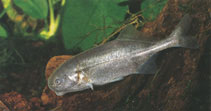 Cyphomyrus discorhynchus
foto/gambar oleh Seegers, L.
Gambar | imej Google
foto/gambar oleh Seegers, L.
klasifikasi / Nama Nama-nama umum | Sinonim (persamaan) | Catalog of Fishes(Marga, Jenis) | ITIS | CoL | WoRMS | Cloffa
Lingkungan: lingkungan / zona iklim / kisaran kedalaman / jangkauan distribusi Ekologi
; air tawar dasar (demersal). Tropical; 22°C - 24°C (Ref. 12468); 11°S - 21°S
Penyebaran Wilayah | Daerah-daerah FAO | Ekosistem | Kemunculan | peta titik | Introduksi | Faunafri
Africa: Cunene, Okavango, Buzi, Pungwe (Ref. 52193), Zambezi (Ref. 3203, 52193, 95585), Save (Ref. 13337) and Cubango Rivers (Ref. 3203). Absent from the Kafue River (Ref. 7248, 52193, 95585). Also in Malagarasi River, Lake Rukwa (Ref. 27292), lakes Tanganyika and Malawi (Ref. 3203, 52193). In the Congo basin known from the Lindi-Tshopo (Ref. 106290), upper Kasai (middle Congo River basin)(Ref. 2970), Lualaba (Ref. 45434), upper Lualaba (Ref. 2970, 45434) and the Mweru-Luapula-Bangweulu area (Ref. 13337, 95585).
Panjang pada saat jatuh tempo pertama / Ukuran / Berat / umur
Kematangan: Lm 11.0 range ? - ? cm
Max length : 31.0 cm SL jantan/; (Ref. 4967); Berat maksimum terpublikasi: 1.1 kg (Ref. 52193)
Max length : 31.0 cm SL jantan/; (Ref. 4967); Berat maksimum terpublikasi: 1.1 kg (Ref. 52193)
deskripsi pendek Kunci identifiaksi (pengenalan) | Morfologi | Morfometrik
Duri punggung (Keseluruhan (total)) : 0; duri punggung lunak (Keseluruhan (total)) : 28 - 37; Duri dubur: 0; Sirip dubur lunak: 23 - 27; vertebrata, bertulang belakang: 39 - 41. Diagnosis: Dorsal fin up to 1.5 times in length of anal fin; origin of dorsal fin in advance of anal fin (Ref. 52193). Snout rounded, in front of mouth; eye well above mouth; chin with fleshy bulge (Ref. 4967). For distinguishing between specimens of Cyphomyrus discorhynchus en C. cubangoensis, the most useful anatomical characters are: longer dorsal fin length, longer anal fin length, higher number of dorsal fin rays and anal fin rays, and a higher caudal peduncle depth and caudal peduncle length ratio in C. discorhynchus than in C. cubangoensis (Ref. 119538).
Body shape (shape guide): fusiform / normal; Cross section: oval.
Body shape (shape guide): fusiform / normal; Cross section: oval.
Nocturnal shoaling species; favors large river channels with a soft bottom and fringing vegetation (Ref. 7248, 52193). Found mainly in sheltered bays, lagoons and swampy areas; occurs also in typical sandy or rocky rivers (Ref. 13337). Feeds on bottom-living invertebrates (Ref. 52193) and insect larvae at night (Ref. 5595). Known to migrate up tributary rivers of Lake Kariba during rainy season, though it is not yet clear whether this is a breeding migration (Ref. 13337). Breeds during summer rainy season; females carry up to 5,000 eggs (Ref. 7248).
Siklus hidup dan perilaku kawin Kematangan | Reproduksi, perkembang biakan | Pemijahan | telur-telur | Fekunditas | Larva
rujukan utama
Unggah referensi Anda | Acuan | Koordinator | mitra
Gosse, J.-P., 1984. Mormyridae. p. 63-122. In J. Daget, J.-P. Gosse and D.F.E. Thys van den Audenaerde (eds.) Check-list of the freshwater fishes of Africa (CLOFFA). ORSTOM, Paris and MRAC, Tervuren. Vol. 1. (Ref. 3203)
Status IUCN Red List (Ref. 130435: Version 2025-2 (Global))
kurang bimbang (LC) ; Date assessed: 20 February 2025
CITES
Not Evaluated
ancaman kepada manusia
Harmless
penggunaan manusia
Perikanan: nilai komersial kecil; Akuarium: Komersial
FAO - Publication: search | FishSource |
informasi lanjut
Dinamika populasi
Parameter pertumbuhan
Maks. usia / ukuran
Panjang-berat rel.
Panjang-panjang rel.
ukuran frekuensi
Konversi massa
pemulihan
Kelimpahan
Parameter pertumbuhan
Maks. usia / ukuran
Panjang-berat rel.
Panjang-panjang rel.
ukuran frekuensi
Konversi massa
pemulihan
Kelimpahan
Siklus hidup
Reproduksi, perkembang biakan
Kematangan
Kedewasaan / insang rel.
Fekunditas
Pemijahan
Agregasi pemijahan
telur-telur
pekembangan telor
Larva
Dinamika larva
Reproduksi, perkembang biakan
Kematangan
Kedewasaan / insang rel.
Fekunditas
Pemijahan
Agregasi pemijahan
telur-telur
pekembangan telor
Larva
Dinamika larva
Anatomi
Area insang
Otak
Otolith
Area insang
Otak
Otolith
Fisiologi
Komposisi tubuh
Nutrisi
Konsumsi oksigen
Jenis renang
Kecepatan berenang
Pigmen visual
Suara ikan
Penyakit & Parasit
Toksisitas (LC50)
Komposisi tubuh
Nutrisi
Konsumsi oksigen
Jenis renang
Kecepatan berenang
Pigmen visual
Suara ikan
Penyakit & Parasit
Toksisitas (LC50)
Genetika
genom
Genetika
Heterozigositas
Diturunkan
Keanekaragaman Genetik
genom
Genetika
Heterozigositas
Diturunkan
Keanekaragaman Genetik
Yang berhubungan dengan manusia
Sistem akuakultur
profil budidaya air
Strain
Kasus Ciguatera
Perangko, koin, dll.
Sistem akuakultur
profil budidaya air
Strain
Kasus Ciguatera
Perangko, koin, dll.
Alat, peralatan
Kuis organik | E-book | Penuntun lapangan | Kunci identifiaksi (pengenalan) | tanda freqkuenci panjang | peringkat sejarah hidup | peta titik |
Tangkap-MSY |
laporan khas
muat turun XML
Sumber internet
AFORO (otoliths) | Aquatic Commons | BHL | Cloffa | Websites from users | semak peneliti ikan | CISTI | Catalog of Fishes: Marga, Jenis | DiscoverLife | ECOTOX | FAO - Publication: search | Faunafri | Fishipedia | Fishtrace | GloBI | Google Books | Google Scholar | Google | IGFA World Record | OneZoom | Open Tree of Life | Otolith Atlas of Taiwan Fishes | PubMed | Reef Life Survey | Socotra Atlas | TreeBase | Tree of Life | Wikipedia: pergi, Cari | World Records Freshwater Fishing | Catatan Zoologi
Estimasi berdasarkan model
Indeks keanekaragaman filogenetik (Acuan 82804): PD50 = 0.5010 [Uniqueness, from 0.5 = low to 2.0 = high].
Bayesian length-weight: a=0.01413 (0.00818 - 0.02439), b=2.81 (2.66 - 2.96), in cm total length, based on LWR estimates for this species & (Sub)family-body (Ref. 93245).
Tingkat Trofik (Acuan 69278): 3.2 ±0.40 se; based on food items.
Generation time: 7.0 ( na - na) years. Estimated as median ln(3)/K based on 1 growth studies.
Daya lenting (Acuan 120179): sedang, Waktu penggandaan populasi minimum 1.4 - 4.4 tahun (K=0.16).
Nutrisi (Ref. 124155): Calcium = 150 [68, 369] mg/100g; Iron = 1.41 [0.64, 2.99] mg/100g; Protein = 17.5 [15.1, 19.8] %; Omega3 = 0.519 [0.199, 1.391] g/100g; Selenium = 66.3 [24.7, 158.1] μg/100g; VitaminA = 52 [18, 156] μg/100g; Zinc = 1.89 [1.22, 3.87] mg/100g (wet weight);