



Palmoliparis beckeri Balushkin, 1996
Gloved snailfish
把你的觀察加入 Fish Watcher
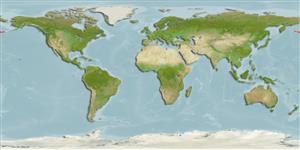
| Native range | All suitable habitat | Point map | Year 2050 |
|
| This map was computer-generated and has not yet been reviewed. |
| Palmoliparis beckeri AquaMaps Data sources: GBIF OBIS |

分類 / 名稱 俗名 | 同種異名 | Catalog of Fishes(屬, 種) | ITIS | CoL | WoRMS | Cloffa
Teleostei > Perciformes/Cottoidei (Sculpins) 鮋形目 (Sculpins) > Liparidae (Snailfishes) 獅子魚科 (Snailfishes)
Etymology: Palmoliparis: Latin, palma = palm + Greek, liparis = fat (Ref. 45335); beckeri: The name is dedicated to Vladimir Eduardovich Becker (1925-1995), a remarkable man and an outstanding Russian ichthyologist (Ref. 27673).
Eponymy: Vladimir Eduardovich Becker (1925–1995) was a Russian ichthyologist at the Institute of Oceanology, Moscow. [...] (Ref. 128868), visit book page.
Etymology: Palmoliparis: Latin, palma = palm + Greek, liparis = fat (Ref. 45335); beckeri: The name is dedicated to Vladimir Eduardovich Becker (1925-1995), a remarkable man and an outstanding Russian ichthyologist (Ref. 27673).
Eponymy: Vladimir Eduardovich Becker (1925–1995) was a Russian ichthyologist at the Institute of Oceanology, Moscow. [...] (Ref. 128868), visit book page.
環境: 環境 / 氣候帶 / 深度上下限 / 配送範圍 生態學
分布 領土 | FAO區域 | 生態系 | 發現紀錄 | 分布圖 | 簡介 | Faunafri
Northwest Pacific: northern Kuril Islands
西北太平洋。
西北太平洋。
大小 / 重量 / 年齡
成熟度: Lm ? range ? - ? cm
Max length : 42.0 cm TL 雄魚/尚未辨別雌雄; (Ref. 56381); common length : 29.6 cm TL 雄魚/尚未辨別雌雄; (Ref. 56381); 最大體重: 1.1 kg (Ref. 56381); 最大年齡: 8 年 (Ref. 56381)
Max length : 42.0 cm TL 雄魚/尚未辨別雌雄; (Ref. 56381); common length : 29.6 cm TL 雄魚/尚未辨別雌雄; (Ref. 56381); 最大體重: 1.1 kg (Ref. 56381); 最大年齡: 8 年 (Ref. 56381)
簡短描述 檢索表 | 型態特徵 | 形態測量圖
背棘 (總數) : 16; 背的軟條 (總數) : 37; 臀鰭軟條: 45; 脊椎骨: 57 - 58. Head strongly compressed, upper side of head flattened, interocular space wide due to large, rounded slopes of frontalia prominent above eye. Snout not prominent beyond maxilla. Mouth terminal, horizontal. Maxilla short, reaching posteriad not beyond anterior edge of orbit. Teeth small, tricuspid; nostril tubular. Gill slit small, not reaching downwards to the first ray of pectoral fin. Opercular lobe triangular. Body deep. Gradually narrowing towards tail. Skin naked, thin and loose (Ref. 27673).
Body shape (shape guide): fusiform / normal.
頭部非常扁長形的, 被平的頭部的上側面, 眼間間隔很寬由於 frontalia 突出的眼睛上方的大又圓形斜坡。 吻不是突出超過顎骨。 口端位, 水平的。 顎骨短,達到 posteriad 不超過眼窩的前緣。 齒小的, 三尖瓣; 鼻孔管狀的。 鰓縫小的, 不達到向下對胸鰭的第一個鰭條。 鰓蓋葉三角形的。 身體縱深的。 逐漸地向尾部狹窄的。 皮膚裸露的, 細的與解放.(參考文獻 27673)
Body shape (shape guide): fusiform / normal.
頭部非常扁長形的, 被平的頭部的上側面, 眼間間隔很寬由於 frontalia 突出的眼睛上方的大又圓形斜坡。 吻不是突出超過顎骨。 口端位, 水平的。 顎骨短,達到 posteriad 不超過眼窩的前緣。 齒小的, 三尖瓣; 鼻孔管狀的。 鰓縫小的, 不達到向下對胸鰭的第一個鰭條。 鰓蓋葉三角形的。 身體縱深的。 逐漸地向尾部狹窄的。 皮膚裸露的, 細的與解放.(參考文獻 27673)
生命週期和交配行為 成熟度 | 繁殖 | 產卵場 | 卵 | 孕卵數 | 仔魚
西北太平洋。
主要參考資料
上傳您的推薦信 | 參考文獻 | 合作者 | 合作者
Balushkin, A.V., 1996. A new genus and species of liparid fish Palmoliparis beckeri from the northern Kurile Islands (Scorpaeniformes, Liparidae) with consideration of phylogeny of the family. J. Ichthyol. 36(4):281-287. (Ref. 27673)
CITES
Not Evaluated
對人類具威脅
無害處的
人類使用
漁業: 沒有興趣
FAO - Publication: search | FishSource |
更多資訊
解剖學
鰓區
腦部
耳石
鰓區
腦部
耳石
生理學
身體成分
營養素
耗氧量
游泳類型
游泳速度
視覺色素
魚聲
疾病與寄生蟲
毒性 (LC50s)
身體成分
營養素
耗氧量
游泳類型
游泳速度
視覺色素
魚聲
疾病與寄生蟲
毒性 (LC50s)
遺傳學
基因組
遺傳學
異種性
遺傳率
遺傳多樣性
基因組
遺傳學
異種性
遺傳率
遺傳多樣性
工具
特別的報告
下載 XML
網路資源
AFORO (otoliths) | Aquatic Commons | BHL | Cloffa | Websites from users | 檢查 FishWatcher | CISTI | Catalog of Fishes: 屬, 種 | DiscoverLife | ECOTOX | FAO - Publication: search | Faunafri | Fishipedia | Fishtrace | GloBI | Google Books | Google Scholar | Google | IGFA World Record | OneZoom | Open Tree of Life | Otolith Atlas of Taiwan Fishes | PubMed | Reef Life Survey | Socotra Atlas | TreeBase | 樹狀分類階層 | Wikipedia: 去, 搜尋 | World Records Freshwater Fishing | Zoobank | 動物學的記錄
基於模型的估計
系統發育多樣性指數 (參考文獻 82804): PD50 = 1.0000 [Uniqueness, from 0.5 = low to 2.0 = high].
Bayesian length-weight: a=0.01380 (0.00674 - 0.02829), b=3.03 (2.84 - 3.22), in cm total length, based on LWR estimates for this species & (Sub)family-body (Ref. 93245).
營養階層 (參考文獻 69278): 3.7 ±0.62 se; based on food items.
Generation time: 2.9 ( na - na) years. Estimated as median ln(3)/K based on 1 growth studies.
回復力 (參考文獻 120179): 中等的, 族群倍增時間最少 1.4 - 4.4年 (Preliminary K or Fecundity.).