This website uses cookies to enhance your browsing experience and ensure the functionality of our site. For more detailed information about the types of cookies we use and how we protect your privacy, please visit our Privacy Information page.
×
Cookie Settings
This website uses different types of cookies to enhance your experience. Please select your preferences below:
> Cyprinodontiformes (Rivulines, killifishes and live bearers) > Rivulidae (Rivulines) > Cynolebiinae
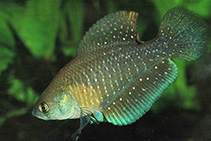
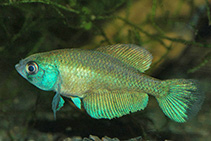
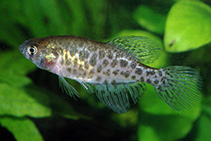
Etymology: Austrolebias:Composed from Austro = the south + see under Lebias. Eponymy: Cristoforo Bellotti (1823–1919) was an Italian ichthyologist and palaeontologist, who was also very interested in the breeding of silkworms. [...] (Ref. 128868), visit book page. More on author: Steindachner.
Entorno: milieu / zona climática / rango de profundidad / gama de distribución Ecología
South America: Lower Paraná and Uruguay River basins.
Tamaño / Peso / Edad
Madurez: Lm? range ? - ? cm Max length : 7.0 cm TL macho / no sexado; (Ref. 27139); edad máxima reportada: 1.00 años (Ref. 12193)
Seasonal toothcarp living in waters that dry up during the dry season. The adult fishes die but the eggs survive in the mud and hatch in the next rainy season. They feed on worms, crustaceans and insects (Ref. 7020). Bottom spawners, 4 months incubation. Is easy to maintain in the aquarium (Ref. 27139).
Ciclo vital y comportamiento de apareamiento Madurez | Reproducción | Puesta | Huevos | Fecundidad | Larva
Huber, J.H., 1996. Killi-Data 1996. Updated checklist of taxonomic names, collecting localities and bibliographic references of oviparous Cyprinodont fishes (Atherinomorpha, Pisces). Société Française d'Ichtyologie, Muséum National d'Histoire Naturelle, Paris, France, 399 p. (Ref. 27139)
Situación en la Lista Roja de la UICN (Ref. 130435: Version 2025-2 (Global))
Dinámica de la población Coeficiente del crecimiento para Edades / tallas máximas Longitud-peso rel. Longitud-longitud rel. Longitud-frecuencias Conversión de masas Reclutamiento Abundancia
Ciclo de vida Reproducción Madurez Madurez/Gills rel. Fecundidad Puesta Agregaciones de desove Huevos Desarrollo de los huevos Larva Dinámica larvaria
Fisiología Composición corporal Nutrientes Consumo del oxígeno Tipo de natación Velocidad de natación Pigmentos visuales Sonido de peces Enfermedades y parásitos Toxicidad (CL50)
Índice de diversidad filogenética (Referencia 82804): PD50 = 0.5039 [Uniqueness, from 0.5 = low to 2.0 = high].
Bayesian length-weight: a=0.01995 (0.00906 - 0.04395), b=3.01 (2.83 - 3.19), in cm total length, based on all LWR estimates for this body shape (Ref. 93245).
Nivel trófico (Referencia 69278): 3.3 ±0.40 se; based on food items.
Resiliencia (Referencia 120179): Alto, población duplicada en un tiempo mínimo inferior a 15 meses (tmax=1).
Vulnerabilidad pesquera (Ref. 59153): Low vulnerability (10 of 100). 🛈