



Gastroscyphus hectoris (Günther, 1876)
Hector's clingfish
Waarneming toevoegen in Fish Watcher
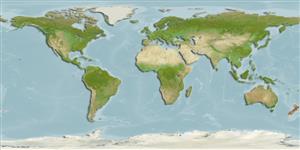
| Native range | All suitable habitat | Point map | Year 2050 |
|
| This map was computer-generated and has not yet been reviewed. |
| Gastroscyphus hectoris AquaMaps Data sources: GBIF OBIS |
Uploaden van uw Foto's en video's
Afbeeldingen | Google afbeelding Gastroscyphus hectoris
Afbeelding van Conway, K.W.
Afbeeldingen | Google afbeelding
Afbeelding van Conway, K.W.
Classificatie / Namen Lokale namen | Synoniemen | Catalog of Fishes(Genus, Soort(en)) | ITIS | CoL | WoRMS | Cloffa
> Gobiesociformes (Clingfishes) > Gobiesocidae (Clingfishes and singleslits) > Haplocylicinae
Etymology: Gastroscyphus: Greek, gaster = stomach + Greek, kyphos = curved, bent (Ref. 45335); hectoris: Named after Sir James Hector, natural historian and Director of the Colonial Museum (Ref. 9003).
Eponymy: Dr Sir James Hector (1834–1907) was a Scottishborn Canadian geologist who took his medical degree at Edinburgh and, as both geologist and surgeon, was part of the Palliser expedition to western North America (1857–1860). [...] (Ref. 128868), visit book page.
More on author: Günther.
Etymology: Gastroscyphus: Greek, gaster = stomach + Greek, kyphos = curved, bent (Ref. 45335); hectoris: Named after Sir James Hector, natural historian and Director of the Colonial Museum (Ref. 9003).
Eponymy: Dr Sir James Hector (1834–1907) was a Scottishborn Canadian geologist who took his medical degree at Edinburgh and, as both geologist and surgeon, was part of the Palliser expedition to western North America (1857–1860). [...] (Ref. 128868), visit book page.
More on author: Günther.
Milieu: milieu / Klimaatzone / Diepte / verspreidingsgebied Ecologie
marien demersaal; diepte 0 - 10 m (Ref. 9003). Temperate
Verspreiding Gebieden | FAO regio's | Ecosystemen | Voorkomen | Verspreidingskaart | Introducties | Faunafri
Southwest Pacific: endemic to New Zealand.
Grootte / Gewicht / Leeftijd
Maturiteit: Lm ? range ? - ? cm
Max length : 6.4 cm SL mannelijk / geslacht onbekend; (Ref. 9003); max. gerapporteerde leeftijd: 4 Jaren (Ref. 9003)
Max length : 6.4 cm SL mannelijk / geslacht onbekend; (Ref. 9003); max. gerapporteerde leeftijd: 4 Jaren (Ref. 9003)
Korte beschrijving Determinatiesleutels | Morfologie | Morfometrie
Dorsale stekels (totaal) : 0; Dorsale zachte stralen (totaal) : 6 - 8; Anale stekels: 0; Anale zachte stralen: 6 - 7. Color uniform or blotched reddish to olive green or brown dorsally, paler ventrally. A bar of lighter color along the head between the eyes and a narrow horizontal dark stripe from the snout to the gill cover separating the darker dorsal pigment from the paler lower surface. Occasionally a variable row of white spots along the side of the body. Distinguished from other clingfish by its distinctive body form (robust and tapers abruptly behind the dorsal and anal fins).
Body shape (shape guide): elongated.
Body shape (shape guide): elongated.
Commonly amongst brown algae (Cystophora) in rock pools at the low tide level and subtidal areas. Sometimes found on seaweed exposed at low tide. Swims towards cover and positions itself like drifting algae (heads up tail down position, sculling with the pectoral fins) when disturbed.
Levenscyclus en paargedrag Maturiteit | Voortplanting | Paaien | Eieren | Fecunditeit | Larven
Hoofdreferentie
Upload uw referenties | Referenties | Coördinator : Williams, Jeffrey T. | Medewerkers
Paulin, C. and C. Roberts, 1992. The rockpool fishes of New Zealand (Te ika aaria o Aotearoa). Museum of New Zealand (Te Papa Tongarewa). 177 p. (Ref. 9003)
Status op de Rode Lijst van het IUCN (Ref. 130435: Version 2025-2 (Global))
Niet bedreigd (LC) ; Date assessed: 19 March 2024
CITES
Not Evaluated
Gevaar voor de mens
Harmless
Gebruik door de mens
FAO - Publication: search | FishSource |
Meer informatie
Trofische ecologie
Voedsel (prooien)
Dieetsamenstelling
Voedselconsumptie
Voedselrantsoenen
Predatoren
Voedsel (prooien)
Dieetsamenstelling
Voedselconsumptie
Voedselrantsoenen
Predatoren
Ecologie
Ecologie
Ecologie
Populatiedynamica
Groeiparameters
Max. leeftijden / maten
Lengte-gewicht rel.
Lengte-lengte rel.
Lengtefrequenties
Massaconversie
Rekrutering
Abundantie
Groeiparameters
Max. leeftijden / maten
Lengte-gewicht rel.
Lengte-lengte rel.
Lengtefrequenties
Massaconversie
Rekrutering
Abundantie
Levenscyclus
Voortplanting
Maturiteit
Rijpheid/kieuwen rel.
Fecunditeit
Paaien
Paaibestanden
Eieren
Ontwikkeling van de eieren
Larven
Larvale populatiedynamiek
Voortplanting
Maturiteit
Rijpheid/kieuwen rel.
Fecunditeit
Paaien
Paaibestanden
Eieren
Ontwikkeling van de eieren
Larven
Larvale populatiedynamiek
Anatomie
Kieuwoppervlak
Hersenen
Otoliet
Kieuwoppervlak
Hersenen
Otoliet
Fysiologie
Lichaamssamenstelling
Voedingsstoffen
Zuurstofverbruik
Type zwemmen
Zwemsnelheid
Visuele pigmenten
Vis geluid
Ziekten en parasieten
Toxiciteit (LC50)
Lichaamssamenstelling
Voedingsstoffen
Zuurstofverbruik
Type zwemmen
Zwemsnelheid
Visuele pigmenten
Vis geluid
Ziekten en parasieten
Toxiciteit (LC50)
Genetica
genoom
Genetica
Heterozygositeit
Erfelijkheid
Genetische diversiteit
genoom
Genetica
Heterozygositeit
Erfelijkheid
Genetische diversiteit
Menselijk gerelateerd
Aquacultuursystemen
Aquacultuurprofielen
Kweeklijnen
Ciguatera gevallen
Postzegels, munten, diversen.
Aquacultuursystemen
Aquacultuurprofielen
Kweeklijnen
Ciguatera gevallen
Postzegels, munten, diversen.
Tools
Speciale rapporten
Bekijk gegevens voor het houden in een aquarium | Bekijk Fact Sheets voor de soort | Bekijk Aquacultuur Fact Sheets
Download XML
Internetbronnen
AFORO (otoliths) | Aquatic Commons | BHL | Cloffa | Websites from users | Bekijk FishWatcher | CISTI | Catalog of Fishes: Genus, Soort(en) | DiscoverLife | ECOTOX | FAO - Publication: search | Faunafri | Fishipedia | Fishtrace | GloBI | Google Books | Google Scholar | Google | IGFA World Record | OneZoom | Open Tree of Life | Otolith Atlas of Taiwan Fishes | PubMed | Reef Life Survey | Socotra Atlas | TreeBase | Tree of Life | Wikipedia: ga naar, zoek | | Zoological Record
Schattingen op basis van modellen
|
Fylogenetische diversiteitsindex (Ref. 82804) |
PD50 = 1.0000 [Uniqueness, from 0.5 = low to 2.0 = high]. |
| Bayesian length-weight | a=0.00398 (0.00162 - 0.00977), b=3.13 (2.91 - 3.35), in cm total length, based on LWR estimates for this (Sub)family-body shape (Ref. 93245). |
|
Trofisch niveau (Ref. 69278) |
3.3 ±0.3 se; based on size and trophs of closest relatives |
|
Weerstandsvermogen (Ref. 120179) |
Gemiddeld, minimale populatieverdubbelingstijd 1,4-4,4 jaar (tmax=4). |
|
Kwetsbaarheid van de visserij (Ref. 59153) |
Moderate vulnerability (36 of 100). 🛈 |