This website uses cookies to enhance your browsing experience and ensure the functionality of our site. For more detailed information about the types of cookies we use and how we protect your privacy, please visit our Privacy Information page.
×
Cookie Settings
This website uses different types of cookies to enhance your experience. Please select your preferences below:
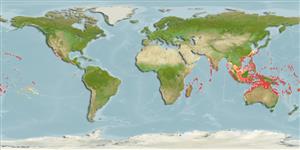
Indo-Pacific and Eastern Pacific: widest ranging member of the genus, from East Africa to the Revillagigedo and Galapagos islands. Replaced by Calotomus viridescens in the Red Sea (Ref. 37816). Presence in Somalia to be confirmed (Ref. 30573).
Taille / Poids / Âge
Maturité: Lm? range ? - ? cm Max length : 54.0 cm TL mâle / non sexé; (Ref. 5490)
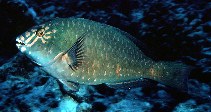
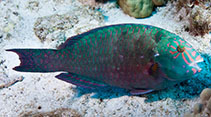
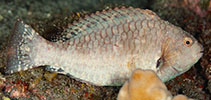
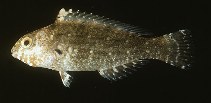
Épines dorsales (Total) : 9; Rayons mous dorsaux (Total) : 10; Épines anales: 3; Rayons mous anaux: 9; Vertèbres: 25. Grayish brown when fresh with scales with fine whitish markings, shading to brownish red ventrally; head paler ventrally, an indistinct orange-brown line from orbit to upper lip; posterior to orbit, 3 short dull reddish lines. Flexible dorsal spines. Caudal fin rounded in juveniles, double emarginate with slightly prolonged lobes in large males. Skin black around anus. Lateral line interrupted. Brownish red pelvic fins with blotches or spots. Dull reddish-brown iris. Body shape (shape guide): fusiform / normal; Cross section: compressed.
Inhabits subtidal reef flats, and lagoon and seaward reefs to a depths of at least 27 m (Ref. 1602). Found in coral, rubble, seagrass (Ref. 41878, 58302) and weedy areas (Ref. 9710). Benthopelagic (Ref. 58302). Found singly or in small groups (Ref. 9710). Feeds on a variety of benthic encrusting algae, e.g., Padina (Ref. 37816) and seagrasses. A protogynous hermaphrodite which may only have secondary males. Caught with nets and other types of artisanal gear.
Cycle de vie et comportement reproducteur Maturité | Reproduction | Frai | Œufs | Fécondité | Larves
Spawning observed to occur off the reef front on the falling tide at the Aldabra Atoll.
Bruce, R.W. and J.E. Randall, 1985. A revision of the Indo-West Pacific parrotfish genera Calotomus and Leptoscarus (Scaridae: Sparisomatinae). Indo-Pac. Fish. (5):32 p. (Ref. 525)
Statut dans la liste rouge de l'IUCN (Ref. 130435: Version 2025-2 (Global))
Cycle de vie Reproduction Maturité Maturité/épines rel. Fécondité Frai Agrégats de frai Œufs Développement de l'œuf Larves Dynamique des populations larvaires
Physiologie Composition corporelle Nutriments Consommation d'oxygène Type de natation Vitesse de nage Pigments visuels Son de poisson Maladies et parasites Toxicité (CL50)