



Lupinoblennius nicholsi (Tavolga, 1954)
Highfin blenny
Загрузить свой Фото и Видео
изображения | Изображение на Google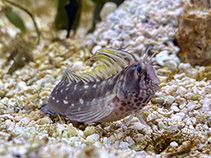 Lupinoblennius nicholsi
Изображение сделано Lawryniuk, P.
изображения | Изображение на Google
Изображение сделано Lawryniuk, P.
Классификация / Имена народные названия | синонимы | Catalog of Fishes(род, виды) | ITIS | CoL | WoRMS | Cloffa
> Blenniiformes (Blennies) > Blenniidae (Combtooth blennies) > Salariinae
Etymology: Lupinoblennius: Latin, lupinus, lupus = wolf + Greek, blennios = mucus (Ref. 45335).
Eponymy: John Treadwell Nichols (1883–1958) was an American ichthyologist, mammalogist and ornithologist. [...] (Ref. 128868), visit book page.
Etymology: Lupinoblennius: Latin, lupinus, lupus = wolf + Greek, blennios = mucus (Ref. 45335).
Eponymy: John Treadwell Nichols (1883–1958) was an American ichthyologist, mammalogist and ornithologist. [...] (Ref. 128868), visit book page.
Окружающая среда: среда / климатическая зона / пределы глубины / диапазон распространения экология
морской; солоноватоводный ассоциированный с рифами. Subtropical
распространение Территории | регионы FAO | Экосистемы | места находок | карта точек | интродукции | Faunafri
Western Atlantic: northeastern Florida, Gulf of Mexico (known only from near Englewood, Florida) and Texas in USA, and northeastern Mexico.
Размер / Вес / Возраст
Краткое описание определительные ключи | морфология | морфометрия
колючие лучи спинного плавника (общее число) : 12; колючие лучи анального плавника: 2. Species distinguished by: anterior dorsal-fin spines longer than posterior rays (greatly elongate in males); dorsal fin not separated into 2 portions by deep notch; dorsal-fin spines usually 12, the last easy to see; total dorsal-fin elements 25 to 30; pectoral-fin soft rays usually 13; total dorsal-fin elements 25 to 27; segmented caudal-fin soft rays usually 13; segmented pelvic-fin rays 3 or 4; cirri present only on eyes; a single, simple cirrus on each eye; ventral edge of upper lip smooth; gill opening continuous from one side of head to other across ventral surface of head, extending ventrally to about midlevel of pectoral-fin base or further (may extend completely around lower side of head and form common opening with gill opening of opposite side); no teeth on vomer; lateral line never consisting of 2 disconnected, overlapping portions. Common amongst Blenniids: small, slender fishes, largest species to about 13 cm SL, most under 7.5 cm SL. Eyes high on sides of head; mouth ventral, upper jaw not protractile. A single row of incisor-like teeth in each jaw and often an enlarged canine-like tooth posteriorly on each side of lower jaw and sometimes upper jaw; no teeth on palatines. Dorsal and anal fins long, their spines usually flexible; dorsal fin with fewer spines than segmented (soft) rays; 2 spines in anal fin, scarcely differentiated from the segmented rays, the first not visible in females, both often supporting fleshy, bulbous, rugose swellings at their tips in males; pelvic fins inserted anterior to base of pectoral fins, with 1 spine (not visible) and segmented rays; all segmented fin rays, except those of caudal fin, unbranched (simple), caudal-fin rays of adults branched. All species lack scales (Ref.52855).
Body shape (shape guide): elongated.
Body shape (shape guide): elongated.
Oviparous. Eggs are demersal and adhesive (Ref. 205), and are attached to the substrate via a filamentous, adhesive pad or pedestal (Ref. 94114). Larvae are planktonic, often found in shallow, coastal waters (Ref. 94114).
Жизненный цикл и брачное поведение половая зрелость | размножение | нерест | икра | Плодовитость | личинки
Oviparous, distinct pairing (Ref. 205).
Основная ссылка
Загрузите свои рекомендации | ссылки | координатор : Williams, Jeffrey T. | соавторы
Robins, C.R. and G.C. Ray, 1986. A field guide to Atlantic coast fishes of North America. Houghton Mifflin Company, Boston, U.S.A. 354 p. (Ref. 7251)
Статус Красного Списка МСОП (Ref. 130435: Version 2025-2 (Global))
Не вызывающий беспокойства (LC) ; Date assessed: 18 January 2019
CITES
Not Evaluated
Угроза для людей
Harmless
Использование человеком
рыболовство: интереса не представляет
FAO - Publication: search | FishSource |
дополнительная информация
Трофическая экология
Пищевые предметы (добыча)
состав пищи
потребление пищи
Продовольственные пайки
хищники
Пищевые предметы (добыча)
состав пищи
потребление пищи
Продовольственные пайки
хищники
экология
экология
экология
Динамика численности населения
Параметры роста
Макс. возраст / размер
Отношение длины к весу.
Отношение длины к длине.
Размерный состав
Преобразование массы
пополнение
численность
Параметры роста
Макс. возраст / размер
Отношение длины к весу.
Отношение длины к длине.
Размерный состав
Преобразование массы
пополнение
численность
Жизненный цикл
размножение
половая зрелость
Зрелость/Жиры относительно.
Плодовитость
нерест
Нерестовые скопления
икра
Развитие икры
личинки
динамика численности личинок
размножение
половая зрелость
Зрелость/Жиры относительно.
Плодовитость
нерест
Нерестовые скопления
икра
Развитие икры
личинки
динамика численности личинок
Анатомия
жаберная область
Мозг
Отолит
жаберная область
Мозг
Отолит
Физиология
Состав тела
Питательные вещества
Потребление кислорода
Тип плавания
Скорость плавания
Зрительные пигменты
Звук рыбы
Болезни и паразиты
Токсичность (LC50s)
Состав тела
Питательные вещества
Потребление кислорода
Тип плавания
Скорость плавания
Зрительные пигменты
Звук рыбы
Болезни и паразиты
Токсичность (LC50s)
генетика
Геном
генетика
Гетерозиготность
наследуемость
Генетическое разнообразие
Геном
генетика
Гетерозиготность
наследуемость
Генетическое разнообразие
Связанные с человеком
Системы аквакультуры
особенности рыбоводства
степень растяжения
Случаи заболевания сигуатерой
Марки, монеты и прочее.
Системы аквакультуры
особенности рыбоводства
степень растяжения
Случаи заболевания сигуатерой
Марки, монеты и прочее.
инструменты
Электронная книга | полевой определитель | определительные ключи | Длина-Частота | онтогенез | карта точек |
Catch-MSY |
Специальные отчеты
Проверить содержание в аквариумах | Проверить опубликованные видовые данные | Проверить опубликованные данные по аквакультуре
Скачать в формате XML
ресурсы в Интернет
AFORO (otoliths) | Aquatic Commons | BHL | Cloffa | Websites from users | Проверить FishWatcher | CISTI | Catalog of Fishes: род, виды | DiscoverLife | ECOTOX | FAO - Publication: search | Faunafri | Fishipedia | Fishtrace | GloBI | Google Books | Google Scholar | Google | IGFA World Record | OneZoom | Open Tree of Life | Otolith Atlas of Taiwan Fishes | PubMed | Reef Life Survey | Socotra Atlas | TreeBase | Tree of Life | Wikipedia: Вперёд, поиск | World Records Freshwater Fishing | Зоологическая летопись
Оценки, основанные на моделях
Индекс филогенетического разнообразия (ссылка 82804): PD50 = 0.6250 [Uniqueness, from 0.5 = low to 2.0 = high].
Bayesian length-weight: a=0.00776 (0.00354 - 0.01702), b=3.00 (2.81 - 3.19), in cm total length, based on LWR estimates for this (Sub)family-body shape (Ref. 93245).
устойчивость к внешним воздействиям (ссылка 120179): высокий, минимальное время удвоения популяции до 15 месяцев (Preliminary K or Fecundity.).