



Noturus leptacanthus Jordan, 1877
Speckled madtom
Uploaden van uw Foto's en video's
Afbeeldingen | Google afbeelding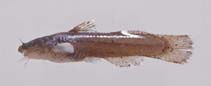 Noturus leptacanthus
Afbeelding van Page, L.M.
Afbeeldingen | Google afbeelding
Afbeelding van Page, L.M.
Classificatie / Namen Lokale namen | Synoniemen | Catalog of Fishes(Genus, Soort(en)) | ITIS | CoL | WoRMS | Cloffa
> Siluriformes (Catfishes) > Ictaluridae (North American freshwater catfishes)
Etymology: Noturus: Greek, noton = back + Greek, oura = tail; refred to the position of the tail over the back (Ref. 45335); leptacanthus: From the words leptos, meaning slender; and canthos, spine (Ref. 10294).
More on author: Jordan.
Etymology: Noturus: Greek, noton = back + Greek, oura = tail; refred to the position of the tail over the back (Ref. 45335); leptacanthus: From the words leptos, meaning slender; and canthos, spine (Ref. 10294).
More on author: Jordan.
Milieu: milieu / Klimaatzone / Diepte / verspreidingsgebied Ecologie
; zoet water demersaal; standvastig (Ref. 126106). Subtropical; 35°N - 29°N
Verspreiding Gebieden | FAO regio's | Ecosystemen | Voorkomen | Verspreidingskaart | Introducties | Faunafri
North America: Atlantic and Gulf Slope drainages from Edisto River in South Carolina, USA to Amite-Comite River in Louisiana, USA; south in peninsular Florida to St. John's River drainage.
Grootte / Gewicht / Leeftijd
Maturiteit: Lm ? range ? - ? cm
Max length : 9.4 cm TL mannelijk / geslacht onbekend; (Ref. 5723); common length : 5.5 cm TL mannelijk / geslacht onbekend; (Ref. 12193); max. gerapporteerde leeftijd: 3.00 Jaren (Ref. 12193)
Max length : 9.4 cm TL mannelijk / geslacht onbekend; (Ref. 5723); common length : 5.5 cm TL mannelijk / geslacht onbekend; (Ref. 12193); max. gerapporteerde leeftijd: 3.00 Jaren (Ref. 12193)
Adults inhabit gravel-sand runs and rocky riffles of creeks and small to medium rivers, near vegetation (Ref. 5723, 10294). They feed on midge larvae (Ref. 10294).
Levenscyclus en paargedrag Maturiteit | Voortplanting | Paaien | Eieren | Fecunditeit | Larven
Hoofdreferentie
Upload uw referenties | Referenties | Coördinator | Medewerkers
Page, L.M. and B.M. Burr, 1991. A field guide to freshwater fishes of North America north of Mexico. Houghton Mifflin Company, Boston. 432 p. (Ref. 5723)
Status op de Rode Lijst van het IUCN (Ref. 130435: Version 2025-2 (Global))
Niet bedreigd (LC) ; Date assessed: 01 March 2012
CITES
Not Evaluated
Gevaar voor de mens
Harmless
Gebruik door de mens
FAO - Publication: search | FishSource |
Meer informatie
Trofische ecologie
Voedsel (prooien)
Dieetsamenstelling
Voedselconsumptie
Voedselrantsoenen
Predatoren
Voedsel (prooien)
Dieetsamenstelling
Voedselconsumptie
Voedselrantsoenen
Predatoren
Ecologie
Ecologie
Ecologie
Populatiedynamica
Groeiparameters
Max. leeftijden / maten
Lengte-gewicht rel.
Lengte-lengte rel.
Lengtefrequenties
Massaconversie
Rekrutering
Abundantie
Groeiparameters
Max. leeftijden / maten
Lengte-gewicht rel.
Lengte-lengte rel.
Lengtefrequenties
Massaconversie
Rekrutering
Abundantie
Levenscyclus
Voortplanting
Maturiteit
Rijpheid/kieuwen rel.
Fecunditeit
Paaien
Paaibestanden
Eieren
Ontwikkeling van de eieren
Larven
Larvale populatiedynamiek
Voortplanting
Maturiteit
Rijpheid/kieuwen rel.
Fecunditeit
Paaien
Paaibestanden
Eieren
Ontwikkeling van de eieren
Larven
Larvale populatiedynamiek
Anatomie
Kieuwoppervlak
Hersenen
Otoliet
Kieuwoppervlak
Hersenen
Otoliet
Fysiologie
Lichaamssamenstelling
Voedingsstoffen
Zuurstofverbruik
Type zwemmen
Zwemsnelheid
Visuele pigmenten
Vis geluid
Ziekten en parasieten
Toxiciteit (LC50)
Lichaamssamenstelling
Voedingsstoffen
Zuurstofverbruik
Type zwemmen
Zwemsnelheid
Visuele pigmenten
Vis geluid
Ziekten en parasieten
Toxiciteit (LC50)
Menselijk gerelateerd
Aquacultuursystemen
Aquacultuurprofielen
Kweeklijnen
Ciguatera gevallen
Postzegels, munten, diversen.
Aquacultuursystemen
Aquacultuurprofielen
Kweeklijnen
Ciguatera gevallen
Postzegels, munten, diversen.
Tools
Speciale rapporten
Bekijk gegevens voor het houden in een aquarium | Bekijk Fact Sheets voor de soort | Bekijk Aquacultuur Fact Sheets
Download XML
Internetbronnen
AFORO (otoliths) | Aquatic Commons | BHL | Cloffa | Websites from users | Bekijk FishWatcher | CISTI | Catalog of Fishes: Genus, Soort(en) | DiscoverLife | ECOTOX | FAO - Publication: search | Faunafri | Fishipedia | Fishtrace | GloBI | Google Books | Google Scholar | Google | IGFA World Record | OneZoom | Open Tree of Life | Otolith Atlas of Taiwan Fishes | PubMed | Reef Life Survey | Socotra Atlas | TreeBase | Tree of Life | Wikipedia: ga naar, zoek | World Records Freshwater Fishing | Zoobank | Zoological Record
Schattingen op basis van modellen
Fylogenetische diversiteitsindex (Ref. 82804): PD50 = 0.5000 [Uniqueness, from 0.5 = low to 2.0 = high].
Bayesian length-weight: a=0.00589 (0.00256 - 0.01357), b=3.07 (2.87 - 3.27), in cm total length, based on LWR estimates for this (Sub)family-body shape (Ref. 93245).
Trofisch niveau (Ref. 69278): 3.3 ±0.4 se; based on size and trophs of closest relatives
Weerstandsvermogen (Ref. 120179): Hoog, minimale populatieverdubbelingstijd minder dan 15 maanden (tmax=3).