



Semotilus atromaculatus (Mitchill, 1818)
Creek chub
ارفع صور و مقاطع فيديو
صور | صور قوقل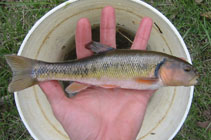 Semotilus atromaculatus
Male صورة بواسطة Seelig, C.
صور | صور قوقل
Male صورة بواسطة Seelig, C.
التصنيف / الأسماء الأسماء الشائعة | مرادفات | Catalog of Fishes(جنس, الانواع) | ITIS | CoL | WoRMS | Cloffa
> Cypriniformes (Carps) > Leuciscidae (Minnows) > Plagopterinae
Etymology: Semotilus: Greek, sema = banner (dorsal fin) + Greek, tilos = spotted; used by Rafinesque (Ref. 45335); atromaculatus: From the words ater, meaning black; and maculatus, spotted (Ref. 10294).
More on author: Mitchill.
Etymology: Semotilus: Greek, sema = banner (dorsal fin) + Greek, tilos = spotted; used by Rafinesque (Ref. 45335); atromaculatus: From the words ater, meaning black; and maculatus, spotted (Ref. 10294).
More on author: Mitchill.
البيئة: الوسط / المنطقة المناخية / نطاق العمق / نطاق التوزيع البيئة
التوزيع الأقاليم | مناطق الفاو | النظام البيئي | الظهور | نقطة علي الخريطة | مقدمة | Faunafri
North America: most of east USA and southeast Canada in Atlantic, Great Lakes, Hudson Bay, Mississippi, and Gulf basins as far west as Saskatchewan, Wyoming, and Brazos River in Texas, but absent from Florida and south Georgia; isolated population in the upper Pecos and Canadian River systems, New Mexico. Introduced elsewhere in USA.
الحجم / وزن / العمر
النضج: Lm ? range ? - ? cm
Max length : 30.3 cm TL ذكر/ مختلط الجنس; (Ref. 10294); common length : 19.1 cm TL ذكر/ مختلط الجنس; (Ref. 12193); العمر: 8 سنين (Ref. 12193)
Max length : 30.3 cm TL ذكر/ مختلط الجنس; (Ref. 10294); common length : 19.1 cm TL ذكر/ مختلط الجنس; (Ref. 12193); العمر: 8 سنين (Ref. 12193)
وصف مختصر مفاتيح التعريف | الوصف الخارجي | قياسات المظهر الخارجي
الأشعة الظهرية الناعمة (المجموع) : 8. Semotilus atromaculatus is distinguished by having the following characters: body barely compressed at front, compressed at caudal peduncle; mouth pointed; 47-65 scales on lateral line; dorsal fin with 8 rays; large black spot at front of dorsal fin base, black caudal spot (not distinct in large individuals); large terminal mouth reaching past front of eye. Coloration consists of gray-brown above, dark stripe along back; herringbone lines on upper side in young; dusky black stripe (darkest on young) along olive-silver side, around snout and onto upper lip; black bar along back of gill cover; and orange at dorsal base, orange lower fins, blue on side of head, pink on lower half of head and body, and 6-12 large tubercles on head in breeding males (Ref. 86798).
Adults inhabit rocky and sandy pools of headwaters, creeks and small rivers (Ref. 5723, 86798). Mostly found in tiny, intermittent streams. Young feed on small aquatic invertebrates while adults consume small fish, crayfish and other large invertebrates (Ref. 10294). One of the most common fishes in eastern North America (Ref. 86798).
دورة الحياة وسلوك التزاوج النضج | التكاثر | وضع البيض | بيض | الخصوبة | اليرقات
Male digs a pit in the stream bottom by removing mouthful of gravel, guards the pit and attempts to attract females. Spawning occurs over the pit. Male guards the nest from intruders. As eggs are deposited in the pit, the male covers them with stones and excavates another pit immediately downstream. As spawning continues and the male covers the eggs, a long ridge of gravel develops.
المرجع الرئيسي
قم بتحميل مراجعك | مراجع | المنظم | المتعاونين
Page, L.M. and B.M. Burr, 2011. A field guide to freshwater fishes of North America north of Mexico. Boston : Houghton Mifflin Harcourt, 663p. (Ref. 86798)
حالة القائمة الحمراء للاتحاد الدولي لحفظ الطبيعة والموارد الطبيعية (Ref. 130435: Version 2025-2 (Global))
Least Concern (LC) ; Date assessed: 01 March 2012
CITES
Not Evaluated
خطر للأنسان
Harmless
استخدامات بشرية
FAO - Publication: search | FishSource |
مزيد من المعلومات
علم البيئة الغذائية
المواد الغذائية (الفرائس)
التركيبة الغذائية
استهلاك الأغذية
الحصص الغذائية
مفتريسات
المواد الغذائية (الفرائس)
التركيبة الغذائية
استهلاك الأغذية
الحصص الغذائية
مفتريسات
الديناميكيات السكانية
معاملات النمو
الحد الأقصى للأعمار/الأحجام
علاقة الطول بالوزن.
علاقة الطول بالطول.
الطول- الترددات
التحويل الجماعي
توظيف
الوفرة
معاملات النمو
الحد الأقصى للأعمار/الأحجام
علاقة الطول بالوزن.
علاقة الطول بالطول.
الطول- الترددات
التحويل الجماعي
توظيف
الوفرة
التشريح
منطقة الخياشيم
الدماغ
الأوتوليث
منطقة الخياشيم
الدماغ
الأوتوليث
علم وظائف الأعضاء
تكوين الجسم
المغذيات
استهلاك الأوكسجين
نوع السباحة
سرعة السباحة
الأصباغ البصرية
صوت السمك
الأمراض والطفيليات
السمية (LC50s)
تكوين الجسم
المغذيات
استهلاك الأوكسجين
نوع السباحة
سرعة السباحة
الأصباغ البصرية
صوت السمك
الأمراض والطفيليات
السمية (LC50s)
ذات الصلة بالبشر
أنظمة الاستزراع المائي
ملامح تربية الأحياء المائية
سلالات
حالات سيغواتيرا
طوابع بريدية وعملات معدنية ومتنوعة
أنظمة الاستزراع المائي
ملامح تربية الأحياء المائية
سلالات
حالات سيغواتيرا
طوابع بريدية وعملات معدنية ومتنوعة
أدوات
اختبار عضوي | كتاب إلكتروني | دليل الميدان | مفاتيح التعريف | معالج تردد الطول-التردد | أداة تاريخ الحياة | نقطة علي الخريطة |
Catch-MSY |
تقارير خاصة
البحث عن صيانت الأحواض المائيه | التحقق من وجود صفحات حقائق الأنواع | البحث عنا حقائق حول الأحواض المائيه
تنزيل XML
مصادر علي الأنترنت
AFORO (otoliths) | Alien/Invasive Species database | Aquatic Commons | BHL | Cloffa | Websites from users | البحث في مراقبي الأسماك | CISTI | Catalog of Fishes: جنس, الانواع | DiscoverLife | ECOTOX | FAO - Publication: search | Faunafri | Fishipedia | Fishtrace | GloBI | Google Books | Google Scholar | Google | IGFA World Record | OneZoom | Open Tree of Life | Otolith Atlas of Taiwan Fishes | PubMed | Reef Life Survey | Socotra Atlas | TreeBase | شجرة الحياة | Wikipedia: ذهب, بحث | World Records Freshwater Fishing | سجلات علم الحيوانات
تقديرات تستند إلى النماذج
مؤشر التنوع الشُعبي الوراثي (مرجع 82804): PD50 = 0.5625 [Uniqueness, from 0.5 = low to 2.0 = high].
Bayesian length-weight: a=0.00617 (0.00251 - 0.01514), b=3.05 (2.83 - 3.27), in cm total length, based on LWR estimates for this (Sub)family-body shape (Ref. 93245).
مستوى غذائي (مرجع 69278): 4.0 ±0.5 se; based on diet studies.
Generation time: 3.9 ( na - na) years. Estimated as median ln(3)/K based on 1 growth studies.
المرونه (مرجع 120179): وسيط, الحد الزمني الأدني لتضاعف عدد أفراد المجتمع 1.4-4.4 سنة (tmax=8; tm=2.5; K=0.41; Fec=2,225).