



Hypophthalmichthys molitrix (Valenciennes, 1844)
Silver carp
Загрузить свой Фото и Видео
изображения | Марки, монеты и прочее. | Изображение на Google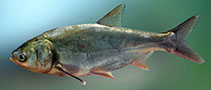 Hypophthalmichthys molitrix
Изображение сделано Ramani Shirantha
изображения | Марки, монеты и прочее. | Изображение на Google
Изображение сделано Ramani Shirantha
Классификация / Имена народные названия | синонимы | Catalog of Fishes(род, виды) | ITIS | CoL | WoRMS | Cloffa
> Cypriniformes (Carps) > Xenocyprididae (East Asian minnows)
Etymology: Hypophthalmichthys: Greek, hypo = under + Greek, ophthalmos = eye + Greek, ichthys = fish (Ref. 45335); molitrix: molitrix, approximately grinder (referring to the pharyngeal grinding apparatus) (Ref. 10294).
More on author: Valenciennes.
Etymology: Hypophthalmichthys: Greek, hypo = under + Greek, ophthalmos = eye + Greek, ichthys = fish (Ref. 45335); molitrix: molitrix, approximately grinder (referring to the pharyngeal grinding apparatus) (Ref. 10294).
More on author: Valenciennes.
Окружающая среда: среда / климатическая зона / пределы глубины / диапазон распространения экология
; пресноводный; солоноватоводный донно-пелагический; мигрирует в реке (Ref. 126106); пределы глубины 0 - 20 m (Ref. 6898). Subtropical; 6°C - 30°C (Ref. 37797); 63°N - 8°N, 73°E - 148°E (Ref. 120939)
распространение Территории | регионы FAO | Экосистемы | места находок | карта точек | интродукции | Faunafri
Asia: Native to most major Pacific dainages of East Asia from Amur to Xi Jiang, China (Ref. 59043) and Hanoi, Vietman (Ref. 120939). Introduced around the world for aquaculture and control of algal blooms. Several countries report adverse ecological impact after introduction (Ref. 1739). Often confused with Hypophthalmichthys nobilis (Ref. 59043).
Длина при первой зрелости / Размер / Вес / Возраст
половая зрелость: Lm 51.7 range ? - ? cm
Max length : 120 cm TL самец/пол неопределен; (Ref. 86798); common length : 18.0 cm SL самец/пол неопределен; (Ref. 35840); наибольший вес (опубликованные данные): 50.0 kg (Ref. 30578); наибольший возраст (опубликованны данные): 20 годы (Ref. 121658)
Max length : 120 cm TL самец/пол неопределен; (Ref. 86798); common length : 18.0 cm SL самец/пол неопределен; (Ref. 35840); наибольший вес (опубликованные данные): 50.0 kg (Ref. 30578); наибольший возраст (опубликованны данные): 20 годы (Ref. 121658)
Краткое описание определительные ключи | морфология | морфометрия
колючие лучи спинного плавника (общее число) : 0; членистые (мягкие) лучи спинного плавника (общее число) : 7 - 10; колючие лучи анального плавника: 0; членистые (мягкие) лучи анального плавника: 11 - 17. Diagnosis: Body olivaceous to silvery. Barbels absent. Keels extend from isthmus to anus. Edge of last simple dorsal ray not serrated. Branched anal rays 12-13.5 (Ref. 13274). It differs from Hypophthalmichthys nobilis by having sharp scaleless keel from pectoral region to anal origin, 650-820 long, slender gill rakers, head length 24-29% of standard length, and plain pale coloration, greenish grey above, whitish below (Ref. 59043).
Body shape (shape guide): fusiform / normal; Cross section: oval.
Body shape (shape guide): fusiform / normal; Cross section: oval.
Adults are found in their natural range in rivers with marked water-level fluctuations and overwinters in middle and lower stretches, swimming just beneath the surface. They feed in shallow (0.5-1.0 m deep) and warm (over 21°C) backwaters, lakes and flooded areas with slow current on phytoplankton and zooplankton (Ref. 30578, 10294). Bigger individuals from about 1.5 cm SL feed only on phytoplankton while larvae and small juveniles prey on zooplankton (Ref. 59043). Breeding occurs in rivers or tributaries over shallow rapids with gravel or sand bottom, in upper water layer or even at surface during floods when the water level increases by 50-120 cm above normal level. Conditions for spawning include high current (0.5-1.7 m/s), turbid water, temperatures above 15°C (usually 18-26°C) and high oxygen concentrations (Ref. 59043). Spawning ceases if conditions change (especially sensitive to water-level fall) and resumes again when water level increases. Juveniles and adults form large schools during spawning season. Mature individuals undertake long distance upriver migration at start of a rapid flood and water-level increase, able to leap over obstacles up to 1 m. After spawning, adults migrate to foraging habitats, In autumn, adults move to deeper places in main course of river where they remain without feeding. Larvae drift downstream and settle in floodplain lakes, shallow shores and backwaters with little or no current (Ref. 59043). In aquaculture, it can survive brackish water (up to 7 ppt) when released into estuaries and coastal lakes (Ref. 59043). Escape from fish farms are widely known even as they are stocked in large rivers and almost all still water bodies like lakes and ponds. Utilized fresh for human consumption and also introduced to many countries where its ability to clean reservoirs and other waters of clogging algae is appreciated even more than its food value (Ref. 9987). One of among 3 or 4 species of cyprinids whose world production in aquaculture exceeds 1 million tons per year (Ref. 30578).
Жизненный цикл и брачное поведение половая зрелость | размножение | нерест | икра | Плодовитость | личинки
Основная ссылка
Загрузите свои рекомендации | ссылки | координатор | соавторы
Skelton, P.H., 1993. A complete guide to the freshwater fishes of southern Africa. Southern Book Publishers. 388 p. (Ref. 7248)
Статус Красного Списка МСОП (Ref. 130435: Version 2025-2 (Global))
Близок к исчезновению (NT) ; Date assessed: 20 January 2011
CITES
Not Evaluated
Угроза для людей
Potential pest
Использование человеком
рыболовство: коммерческий; аквакультура (рыбоводство): коммерческий
FAO - Системы аквакультуры: Видовой профиль, production search; рыболовство: Видовой профиль, landings search; Publication: search | FishSource | Море вокруг нас
дополнительная информация
Трофическая экология
Пищевые предметы (добыча)
состав пищи
потребление пищи
Продовольственные пайки
хищники
Пищевые предметы (добыча)
состав пищи
потребление пищи
Продовольственные пайки
хищники
Динамика численности населения
Параметры роста
Макс. возраст / размер
Отношение длины к весу.
Отношение длины к длине.
Размерный состав
Преобразование массы
пополнение
численность
Параметры роста
Макс. возраст / размер
Отношение длины к весу.
Отношение длины к длине.
Размерный состав
Преобразование массы
пополнение
численность
Жизненный цикл
размножение
половая зрелость
Зрелость/Жиры относительно.
Плодовитость
нерест
Нерестовые скопления
икра
Развитие икры
личинки
динамика численности личинок
размножение
половая зрелость
Зрелость/Жиры относительно.
Плодовитость
нерест
Нерестовые скопления
икра
Развитие икры
личинки
динамика численности личинок
Анатомия
жаберная область
Мозг
Отолит
жаберная область
Мозг
Отолит
Физиология
Состав тела
Питательные вещества
Потребление кислорода
Тип плавания
Скорость плавания
Зрительные пигменты
Звук рыбы
Болезни и паразиты
Токсичность (LC50s)
Состав тела
Питательные вещества
Потребление кислорода
Тип плавания
Скорость плавания
Зрительные пигменты
Звук рыбы
Болезни и паразиты
Токсичность (LC50s)
Связанные с человеком
Системы аквакультуры
особенности рыбоводства
степень растяжения
Случаи заболевания сигуатерой
Марки, монеты и прочее.
Системы аквакультуры
особенности рыбоводства
степень растяжения
Случаи заболевания сигуатерой
Марки, монеты и прочее.
инструменты
Электронная книга | полевой определитель | определительные ключи | Длина-Частота | онтогенез | карта точек |
Catch-MSY |
Специальные отчеты
Проверить содержание в аквариумах | Проверить опубликованные видовые данные | Проверить опубликованные данные по аквакультуре
Скачать в формате XML
ресурсы в Интернет
AFORO (otoliths) | Alien/Invasive Species database | Aquatic Commons | BHL | Cloffa | Websites from users | Проверить FishWatcher | CISTI | Catalog of Fishes: род, виды | DiscoverLife | ECOTOX | FAO - Системы аквакультуры: Видовой профиль, production search; рыболовство: Видовой профиль, landings search; Publication: search | Faunafri | Fishipedia | Fishtrace | GloBI | Google Books | Google Scholar | Google | IGFA World Record | национальные базы данных | OneZoom | Open Tree of Life | Otolith Atlas of Taiwan Fishes | общественные аквариумы | PubMed | Reef Life Survey | Socotra Atlas | TreeBase | Tree of Life | Wikipedia: Вперёд, поиск | | Зоологическая летопись
Оценки, основанные на моделях
|
Индекс филогенетического разнообразия (ссылка 82804) |
PD50 = 0.6250 [Uniqueness, from 0.5 = low to 2.0 = high]. |
| Bayesian length-weight | a=0.00891 (0.00772 - 0.01029), b=3.10 (3.06 - 3.14), in cm total length, based on LWR estimates for this species (Ref. 93245). |
|
Трофический уровень (ссылка 69278) |
2.3 ±0.1 se; based on diet studies. |
| Generation time | 5.6 (4.5 - 6.8) years. Estimated as median ln(3)/K based on 10 growth studies. |
|
устойчивость к внешним воздействиям (ссылка 120179) |
средний (среднего размера), минимальное время удвоения популяции 1.4-4.4 года (K=0.16-0.29; tm=2-6). |
|
Уязвимость рыбной ловли (Ref. 59153) |
High vulnerability (55 of 100). 🛈 |
|
Категория цены (Ref. 80766) |
Unknown. |
|
Питательные вещества (Ref. 124155) |
Calcium = 37.9 [16.1, 116.8] mg/100g; Iron = 1.37 [0.69, 2.65] mg/100g; Protein = 17.3 [16.1, 18.5] %; Omega3 = 0.306 [0.176, 0.554] g/100g; Selenium = 30.1 [16.4, 59.9] μg/100g; VitaminA = 8.45 [2.15, 37.85] μg/100g; Zinc = 0.445 [0.263, 0.805] mg/100g (wet weight); based on nutrient studies. |